Surprising fact: 1/6th of UK population has never used the internet. So what does google do to change this? It goes offline. Prints leaflets! http://bit.ly/dyEkEX Imagine what will the poster look like?
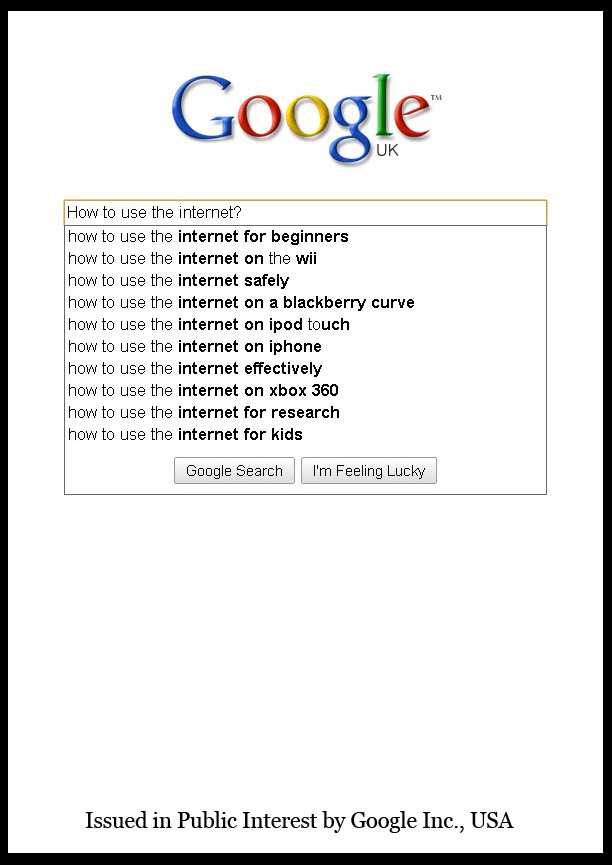
Surprising fact: 1/6th of UK population has never used the internet. So what does google do to change this? It goes offline. Prints leaflets! http://bit.ly/dyEkEX Imagine what will the poster look like?
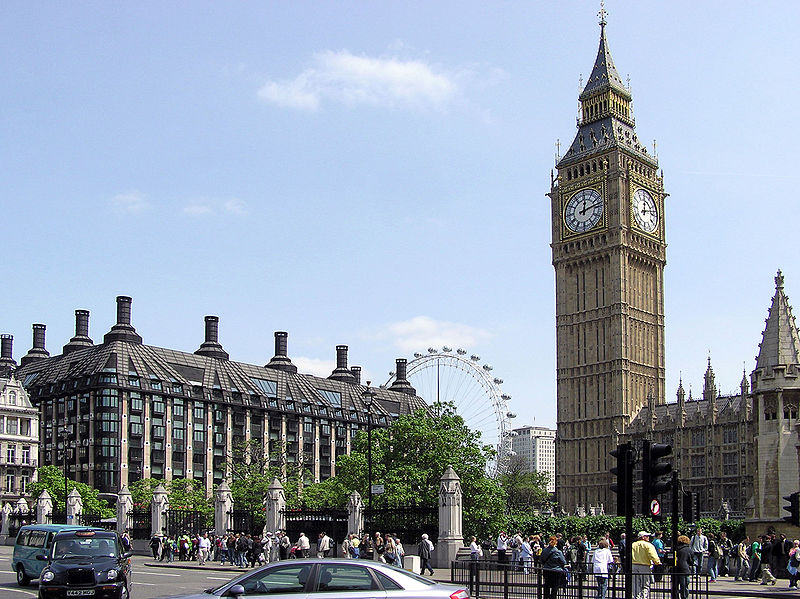
Being invited to London for a workshop on Science Policy was reason enough to excite me but when I came to know that it is going to take place in Portcullis House, a place where the real action behind law making in the UK happens, I could not control my excitement. This relatively modern building is situated opposite the British Houses of Parliament & Big Ben on one side and opposite the London Eye on the other side. As I enter through the revolving doors into a huge foyer with hefty security guards breathing on my neck, I cannot stop wondering about the powerful things that might be happening within the confines of these walls. There is a brief wait and plenty of security checks before I am handed a badge with my picture printed on it (where the hell was the camera??) and the words VISITOR in bold. As you enter the foyer that seemed so far away a little while back, the glass partitioning of the spaces within become obvious. There are four different entrances which are all guarded by more intimidating security men. As I knew which room the workshop was going to be held in and that I had seen a sign on the screen saying where the entrance to that room is, I headed for another revolving door only to be stopped by the all-black (literally) security guard.
“Where?”, said he. “Grimond Room”, said I.
“Why?”, said he. “Workshop”, trying to seem confident said I.
“What workshop?”, remaining firm said he.
“Newton’s apple workshop”, sounding meek said I.
“Spoke to the receptionist?”, in harsher voice said he. “No”, almost whispering said I.
“Wrong entrance.” finishing the conversation and looking away he said finally.
After talking to the receptionist and being directed to the right entrance, I took the flight of stairs to first floor and followed the directions to the Grimond room. Outside the room stood many students in their awkward “Hi I am Dave” stance waiting to enter the room. There were still 15 minutes for the workshop to start, thus not missing the opportunity I exchanged pleasantries and introduced myself to a group standing closer to me.

After a brief wait, all of us entered the room and Dr. Michael Elves, the host for the evening introduced himself. We were given seats along a semi-circular table (Committee bench) with instructions to leave the top four seats empty. Perpendicular to this formation was a table with five seats (the Witness bench), behind which there were many chairs for the general public. We were the guests for the evening, or so it seemed. I chose a seat that had the view of the Thames, Big Ben and the House of Lords from it.
The speakers for the evening entered the room and took their places. Dr. Elves started with a PowerPoint presentation introducing science policy in the UK. It was an interesting talk which gave us a picture of how things work theoretically and what we scientists can do to participate in this process. What followed after was a MP’s perspective of real life scenarios surrounding science policy. David Curry gave a cynics view of how things really work, telling us how little science actually gets discussed in any of the parliamentary houses. Only very political and controversial topics get the attention of the politicians. Most of the decision making occurs but outside the house under consultation with scientists.
Next was Dr Robert Doubleday, a post-doctoral fellow at Cambridge University who is spending a year as a civil servant who spoke about his experience working in the Department of Business, Innovation & Skills. He said most of what goes on within the department are mundane but important things. Yet, as civil servants there are opportunities to make real difference to the decision making process if one remains enthusiastic.
Finally, it was Dr. Stephen Benn from the Royal Society of Chemistry who spoke about the role of learned societies in process policy making. He spoke of the various initiatives that the RSC has, that can help us get involved in the process. He also countered some of the cynical points made my MP Curry to end the talks on a positive note.
During the question & answers session, students asked very direct and practical questions. It was a great feeling to have the opportunity to talk to an ex-minister of state and get frank opinions. Many questions were pertaining to funding and funding allocations but unfortunately the answers that came gave nothing but a curt explanation: the funding allocation is taken care of by the many research councils that form part of the RCUK and the minister cannot be held responsible for it. As for the overall funding, Dr. Benn said that raising awareness amongst the masses about science will ensure increased funding.
All in all, it was a great experience and we walked out knowing a little more about science policy making in the UK and the possible ways of making an impact. And of course, before leaving the building I made it a point to thank the all-black security guard.
Today, as the world looks at the great possibility of life extension it sees Aubrey de Grey lead the field from the front. He may not be the guy who has achieved all the great science that is trying to fight aging but he is certainly the one trying to make the choice available to our generation. He is often, and controversially so, is quoted to have said that “The first 1000 year old man is walking the earth now”.
It was a pleasure to hear him speak at the Oxford University Scientific Society (OUSS) recently. He is an interesting public speaker and his campaign against aging has attracted a lot of debate. His talk featured much more hard science than his TED talk. After which Aubrey opened the floor for questions. It was my longest Q & A session at an OUSS talk and one which was conducted with grace. He never rubbished a question, even if it was one of those common-sense questions. Sometimes the answers did not make complete sense because some words came from his mouth and just got lost in his beard. But apart from that this was amongst the best Aubrey talks I’ve seen.
After the Q & A, we had the rare opportunity for a personal interaction. But it’s alcohol first, after a glass of white wine and two glasses of red wine at the post-talk drinks, Aubrey was in a mood to hit the Lamb & Flag. At the pub, the questions ranged from aging to the gandolph beard to computer science (his formal education!) to alcohol. Here’s a short summary of the most interesting questions:
A de G: Because I met the right woman. There is a 19 year difference between us, I met her when she was 45 while I was at Cambridge. As scientists we spoke about science a lot. And we spoke a lot about the problem of aging and the more I read about it the more I got worked up about the problem. Now, 100,000 people die every day because of aging, which is not a joke
A de G: Luck has played an important role. When I wrote the first Bioessay in 1997, the editor of the journal was highly impressed with the essay and asked me to write a book. I finished the book before the given deadline in Spring 1998 but the publishing house was in trouble. It took them a whole year to stand up on their feet and before they could publish my book they asked me to review it. In a year, I knew a lot more biology than before. I changed the bad job I had done into something that I am proud of even now.
A de G: I believe that scientists can change fields easily and sometimes make bigger impact in the new fields they enter. I think it’s because people who move do not look at the same problem from the traditional point-of-view. This enables them to come up with unique solutions. We are not trapped by dogma and if we are bold we can rise quickly.
A de G: Boarding school made me an arrogant kid, Cambridge humbled me but allowed me to be bold yet not arrogant. This combined with my understanding of aging gave me the confidence to be a brave person. I also got the opportunity to interact with people well-established in the field and debate with them. That was the way I judged my knowledge about this area.
A de G: Oh no! Having students is like having kids. No thank you.
A de G: No, I am happy doing what I am doing. I am speeding up research if not getting involved myself. I know that my work at the most will make these technologies available 10 years before time but in terms of the lives it will save, it would be a huge achievement. That’s what I work towards.
A de G: As of now nothing, but I keep a close watch on my biological factors. Right now I am at a biological age of 29. I drink quite a lot but that’s because I have a good capacity to metabolise alcohol. It gives me energy. I also eat mars bars and candy. As soon as I see signs of deterioration I will stop.
By the end of this conversation, he was on his 3rd beer. The chat was so engrossing that we had to be kicked out of Lamb & Flag at mid-night that day. To end, I will quote Nick Bostrom from his TED talk, “Godspeed Aubrey de Grey and the likes. May these technologies be available to us soon!”

 Akshat Rathi