Curious Bends — commoner panthers, space diplomacy, big data sells big cars and more

1. Why the GM debate in India won’t abate

It is a sign of its inadequacy that the debate on genetically modified crops in India is still on, with no end in sight. Although public consensus is largely polarised, the government has done its bit to postpone resolution. For one, decisions on GM crops are made as if they were “technical answers to technical questions”. For another, no formal arena of debate exists that also addresses social anxieties. (8 min read)

2. Black panthers are commoner in India than thought

Camera traps installed by the Wildlife Conservation Society of India have shown that about one in ten of all leopard images belong to black leopards (that is, black panthers). These melanistic big cats have been spotted in wildlife reserves in Kerala and Karnataka, and seem commoner in the wetter forests of the Western Ghats. In fact, written records of sightings in these parts date from 1879, and could aid conservation efforts in a country that lost its cheetahs in 1960. (2 min read)

3. One foot on Earth and another in the heavens

For smaller and middle income nations, strengthening institutional and technical capacity on the ground might be a better option than to launch satellites because more than vanity, the choice makes them better positioned to gather useful data. And if such a nation is in South Asia, then India’s planned SAARC satellite could make that choice easier, providing a finer balance between “orbital dreams and ground realities”. (5 min read)

+ The author, Nalaka Gunawardene, is a journalist and science writer from Colombo, Sri Lanka.

4. Do big carmakers know their way around big data?

When sales slumped, Mahindra & Mahindra, an Indian car-maker, used data gleaned from the social media to strip its former best-selling XUV500 model of some features and sell it cheaper. The company declined to give further details. This isn’t unique—big car-makers around the world are turning to big data to widen margins. But do they know how best to use the data or is it just that putting the squeeze on this lemon is a fad? (6 min read)

5. A geothermal bounty in the Himalayas

As the developing world edges toward an energy sufficiency crisis, scientists, environmental conservationists and governments get closer to a Mexican standoff. This is no better highlighted than with the gigawatts of geothermal energy locked up in the Himalayas. A 20-MW plant could “save three million litres of diesel”, $2 million and 28,000 tons of carbon dioxide in northern India per year. Why isn’t it being used? (2 min read)

Chart of the week

20140726_irc374-e1406691005265

“Both [female genital mutilation and child marriage] stem from deeply rooted social norms which can only be changed by educating parents about the harm they cause. Making foreign aid conditional on results gives governments an extra incentive not just to pass laws, but to enforce them. Police and women’s activists in some countries have set up phone hotlines and safe houses for victims or girls at risk. Most important is to make sure that girls go to school and finish their studies.” The Economist has more.

If you learnt something new from Curious Bends, why not spread the word? Forward this email to your friends and ask them to subscribe. Have a good day!
Curious Bends – hearing tests, radiation-resistant cells, sign language and more

1. Poor children deserve better hearing tests; an Indian entrepreneur may have the solution

An estimated 63 million people in India suffer from hearing problems. But children are not tested for such impairment at a young age because of the costs of testing. Early detection and intervention is crucial for improving the difficulties with cognition and language skills. Now, a Bangalore-based inventor has come up with a solution that sharply lowers the cost of testing if a newborn can hear properly. (3 min read)

2. What makes cells resistant to radiation?

Radiation can damage cell’s DNA, and sometimes make them cancerous. But not all cells are affected by such radiation. Previously, it was thought that such ability was down to the DNA repair mechanisms in place in every one of them, but a new study shows that cells have more weapons to fight this invisible attack. (2 min read)

3. What sign language teaches us about the brain

As she took a course to learn sign language, a question kept nagging this neurobiologist: does the brain treat the visual language differently from spoken languages? Turns out, for the most part, they don’t. And yet brain studies of deaf people who use sign language helps bust a few myths about how our brains work. (5 min read)

+ The author of this piece, Sana Suri, is a neurobiologist at the University of Oxford.

4. Another biotech startup accelerator opens up in Bangalore. Can it deliver?

India’s biotech industry is supposed to be undergoing a boom. It was projected that revenues would reach $5 billion by 2009, but that hasn’t happened yet. Industry watchers remain optimistic, claiming that revenues will reach $100 billion by 2020. Can a startup accelerator help achieve this dream? (5 min read)

5. BRICS can boost their research by setting up collaborations, but there seems to be no will

The recent BRICS summit in Brazil saw the launch of the New Development Bank, which has been setup to rival the World Bank and the International Monetary Fund. But there was little progress on setting aside joint funds to boost scientific collaboration. There is a huge potential here but no one is interested in tapping it. (2 min read)

Chart of the week

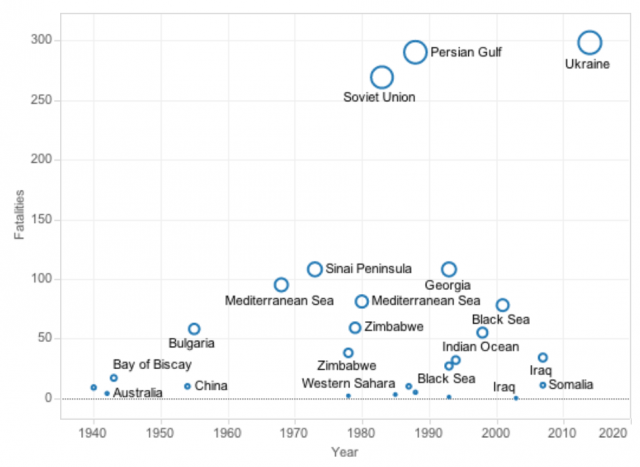
It has been a terrible week for the civilian aviation industry with Malaysia Airlines Flight 17 shot down over Ukraine and an ongoing investigation of Air Algerie Flight 5017 that crashed in Mali. Vasudevan Mukunth (one of the curators of Curious Bends) has collected the data of all such past events in one interactive chart.

Screen Shot 2014-07-26 at 11.35.28

If you enjoyed the links, please forward this to friends and ask them to subscribe to the newsletter.

Curious Bends – finding quake shelters, breaking bad in Punjab, rice-wheat divide & more

The green revolution in India increased food production but the agrochemicals it used could also have set off a “cancer epidemic”. A three-year study by Punjabi University, Patiala, revealed no confounding factors across demographics except pesticides. Many patients, some of whom travel thousands of kilometres for affordable care, are from the revolution’s belt. (3 min read)

2. A socially cognizant tool to identify quake shelters

Nepali and German scientists have devised a method called Open Space Suitability Index to rank the suitability of public shelters that could be used as quake shelters. Uniquely for it, it assesses both physical and social vulnerability (that is, the risks people, businesses and governments face). (2 min read)

3. Spare the mafia, spoil the smuggler, dealer and consumer

Punjab has a drug problem. Despite widespread efforts by the state to blow it off, then blow it away, its Walter Whites and Jesse Pinkmans persist. One is a cop, the other might be a BSF jawan. Effectively, the Narcotics Control Bureau is lost for ideas, and it might be because the state is targeting the victims instead of the drug mafia. (29 min read)

+ The author of this piece, Ushinor Majumdar, is an ex-lawyer and a journalist with Tehelka.

4. Delayed survey derails health monitoring

As it is India lacks key data to better govern its people. Now, its main source of health statistics, the National Family Health Survey (NFHS), has been delayed. The NFHS is a large-scale household sample survey and produces internationally accepted estimates of fertility, mortality, contraceptive use, violence against women and, crucially, malnutrition. The latest survey should have been held in 2010, and it means for the last four years health workers have been blindsided. (2 min read)

5. Forget your 15 minutes of fame, think about your 15% chance of depression

Clinical depression has the dubious distinction of being the second most common cause of suffering in terms of burden of illness. The WHO has predicted it will become the leading cause of death by 2020. If this isn’t alarming, then sample this: new research says that every person in the world has a 15% chance of experiencing their first episode between the ages of 25 and 35. (4 min read)

Chart of the week

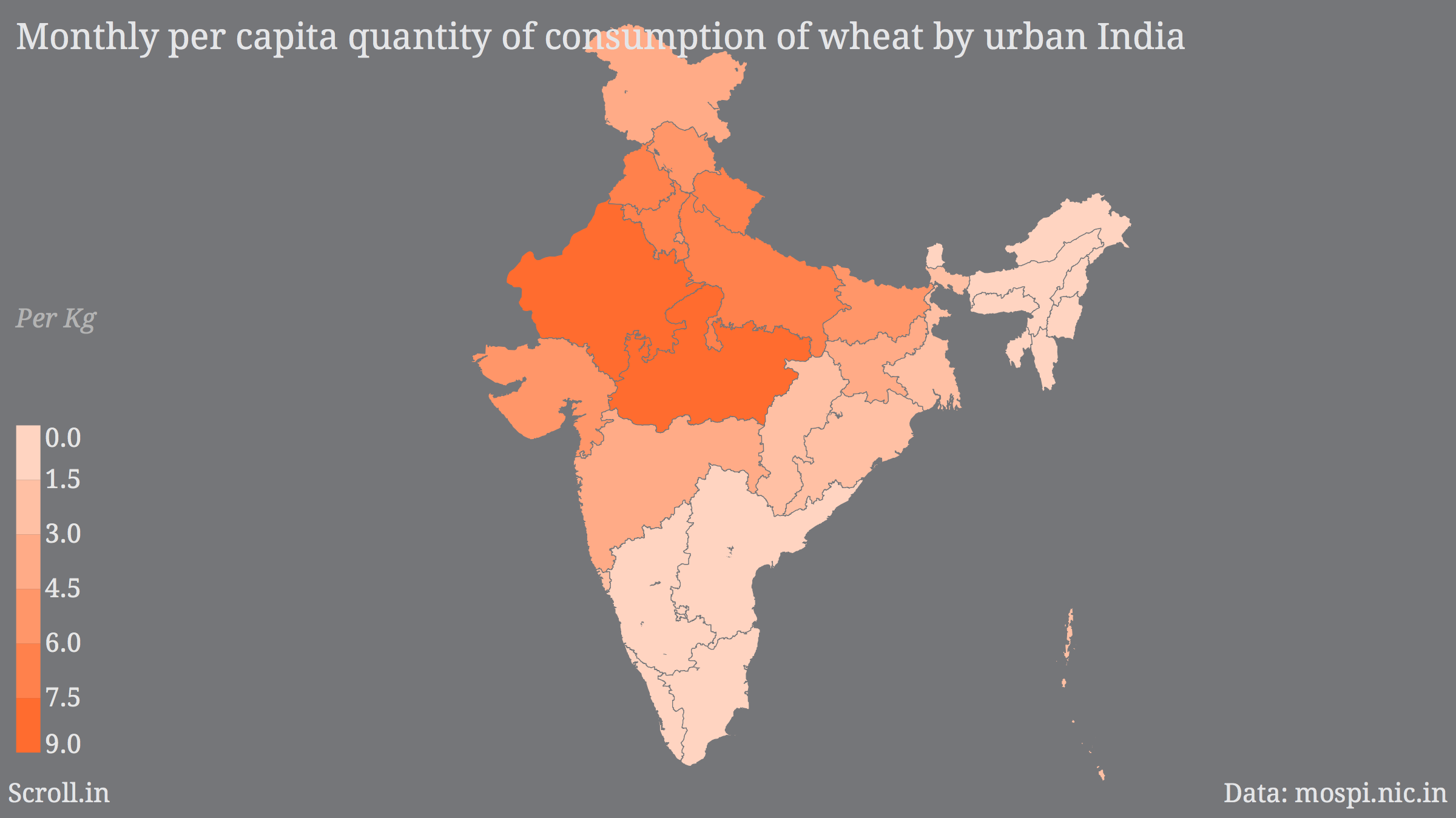
According to the 68th National Sample Survey (2011-2012), the consumption of rice has fallen marginally in a seven-year period while that of wheat is on the rise. There is a perceivable split between the Hindi heartland and the southern and eastern states which prefer wheat and rice, respectively. There is also an urban-rural and, intriguingly, a Jammu-Kashmir divide. Read more about it on Scroll.in.


1405379295-1003_Monthly-pc-qt-consumption-wheat-urban

If you’re curious for more, follow Akshat and Mukunth on Twitter.

If you have something to tell us, give it a go at curiousbends@gmail.com. Enjoy your week!