Turning salt into exotic chemicals under high pressure

Everything around you is made of elements that scientists have studied in quite some detail over the last 200 years. But all that understanding breaks down when these elements are subjected to high pressure and temperature. Now, using an advanced theoretical understanding and extreme conditions, researchers have converted table salt into exotic chemicals.

Salt is made from one part sodium (Na) and one part chlorine (Cl). If somehow salt were transported to the centre of the Earth, where the pressure is three million times that on the surface, its crystalline structure would change but the ratio of those two elements would remain the same.

Vitali Prakapenka at the University of Chicago and his colleagues wanted to find out what happens if there were an excess of either sodium or chlorine at such high pressures. Would the ratio between the elements change? “It might,” said Prakapenka, “because chemistry completely changes in such conditions.” If it did, the result would not just be formation of a new compound, but a serious revision of what we think about chemistry.

Elemental behaviour changes at such high pressures. For example, molecules of oxygen, which normally contain two atoms, break down at increased pressures, and the element forms an eight-atom box. Raise the pressure some more to about 300,000 atmospheres, and it starts to superconduct. Chemists are trying to develop chemicals that exhibit similar properties but are stable under normal conditions – learning about these exotic compounds can help them achieve that goal.

Sodium chloride (NaCl ie table salt) is a different beast. It is bound in a one-to-one ratio by very strong ionic bonds. However, calculations done by Prakapenka’s colleague and lead researcher Artem Oganov at the State University of New York in Stony Brook indicated that even sodium chloride could be twisted to produce exotic chemicals. Those calculations, just published in the journal Science, gave them precise pressures at which, in presence of excess sodium or chlorine, salt could be transformed.

The calculations indicated that NaCl3, Na3Cl, Na2Cl, Na3Cl2, and NaCl7 could all be stable at pressures ranging from 20GPa to 142GPa, where 1GPa is about 10,000 atmospheres of pressure. High pressure physicists have many models to predict behaviour of elements under extreme conditions, but rarely do those models agree with experiment.

Remarkably their calculations stood the test of experiment in at least two cases: Na3Cl and NaCl3. To run such an experiment, you need a fancy device called the diamond anvil cell. Chemicals are added between two diamonds, which can be compressed to produce pressures up to 300GPa. This is what Prakapenka’s colleague used to make Na3Cl and NaCl3, structures that were verified by Prakapenka using X-ray analysis.

“Nobody thought this could happen, given how strong the bond is between sodium and chlorine,” said Prakapenka. “What we have shown is that theory can be translated into experiment, which doesn’t happen often in high pressure physics.”

Malcolm McMahon, professor of high pressure physics at the University of Edinburgh, said, “These are surprising results, and they are guided by remarkable theoretical predictions. Without tools like the ones they have built, we would not have been able to think that sodium chloride could be transformed this way.”

There may not be any immediate application for these results. Instead, the researchers have opened the doors for scientists to start probing other chemicals in the hope of making exotic combinations that can remain stable at room temperature. Diamonds are a good example of that. In nature, they are formed deep inside the Earth when carbon is subjected to extreme pressure. Once formed, they remain stable even at ambient conditions. So there may be other diamond-like materials that we can make, ones that our current understanding of chemistry hasn’t even predicted could exist.

Other implications are non-terrestrial. Each planet in our Solar System and beyond has a lot of material held at extreme pressures. For example, Jupiter is predicted to have metallic hydrogen, where hydrogen’s electrons are free to move as they please. This material is expected to be a superconductor at room temperature. Understanding how chemicals we know about behave in those conditions would be vital to predicting the conditions in the host of exoplanets we are discovering.

If nothing else, Oganov and Prakapenka’s work shows that even something as simple as table salt can be successfully transformed – meaning we still have much to discover about the elements that we all know (and some of us love).The Conversation

First published at The Conversation.

Image credit: richard_jones
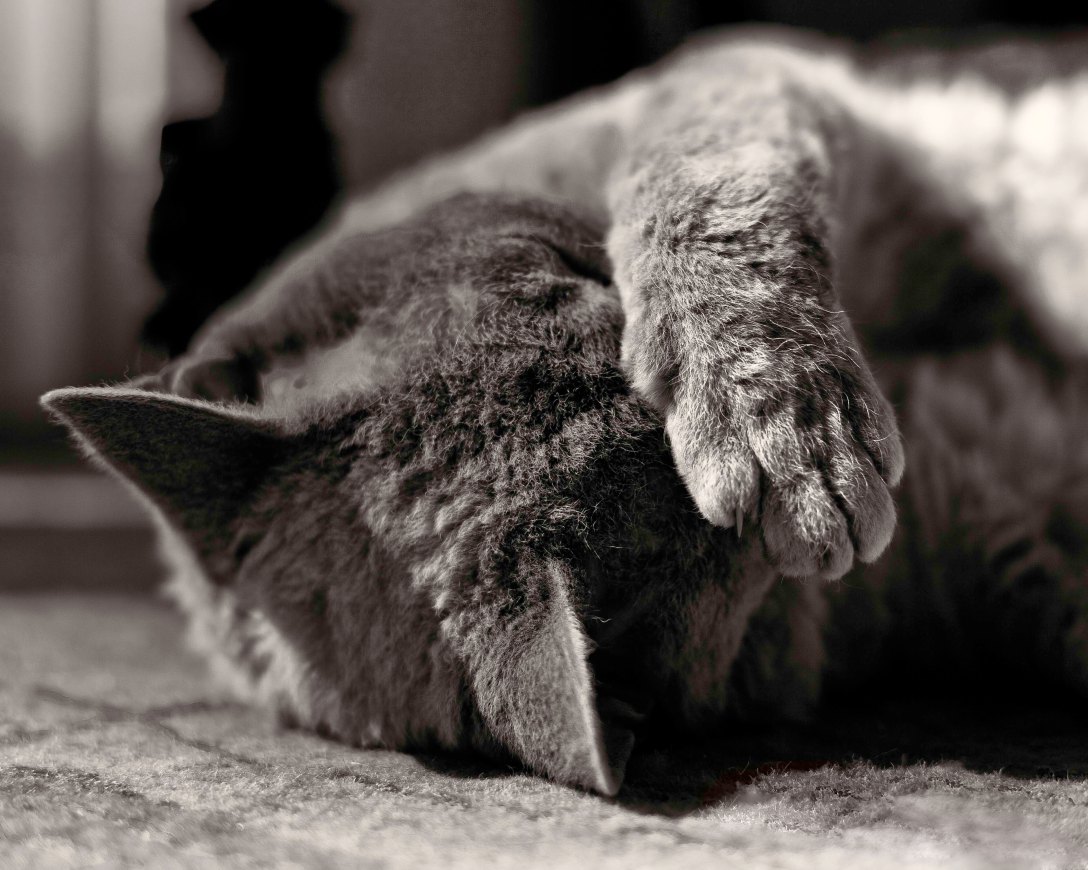
Earliest evidence of cat domestication found in China

There has been much debate about how cats went from hunting in the wild to a much-loved pet. That is because we know little about their domestication. Now researchers have found the earliest case of cat domestication, which happens to be in China, along with the first direct evidence of how it may have happened.

The oldest record of a cat’s association with humans comes from Cyprus where, about 9,500 years ago, a young wildcat was buried with a human. Egyptian art and cat mummies reveal that, by 4,000 years ago, cats had become loved pets. So it is clear that domestication happened in between these two dates. But many questions remains: how, where and when did it happen?

In a new study, just published in the Proceedings of the National Academy of Sciences, Yaowu Hu of the Chinese Academy of Sciences, Fiona Marshall of Washington University in St Louis, and their colleagues try to answer those questions. “We have never before been able to show the nature of the relationship that resulted in domestication, especially for an animal that is solitary like cats and so rare in archaeological sites. So it was surprising to be able to document this at all,” Marshall said.

Like most evolutionary adaptations, domestication of animals can happen in multiple ways. A mutually-beneficial relationship can drive small changes that lead to a permanent change in behaviour, with or without direct human meddling. Or it could be that a prey’s numbers dwindled because of excessive hunting, which forced humans to come up with smarter animal management ideas, such as herding, that led to domestication.

The latter happened to sheep, goats and cattle. The former it was thought must have happened to cats, dogs and pigs. And thanks to Hu and Marshall, we now have evidence in case of cats. It comes from Quanhucun, a site in central China, that was a human settlement about 6,000 years ago. Archaeologists have discovered houses, storage pits, pottery, and some floral and faunal remains there, but few human burials. Piecing all the evidence together makes a compelling case for how domestication of cats may have happened.

The floral remains show that the settlement cultivated millet on a large scale. And the faunal remains of cats, dogs, deer and other animals tell us what these animals present at the site ate.

The isotopes in bones can tell us how old they are, but the ratio of carbon and nitrogen isotopes can also reveal an animal’s diet. These bones were about 5,300 years old. The dietary analysis showed that dogs, pigs and rodents mostly ate millet, and, not surprisingly, cats mostly hunted animals that ate millet (probably rodents). The archaeological dig revealed a rodent burrow near a storage pit, which meant farmers had a rodent problem, something that cats could help with.

“Cats were probably brought into the human environment by farming and the rodents and other food available to them in farming villages,” Marshall said. “This might have made it possible to domesticate an animal that was nocturnal and not social.”

There are other clues that show that humans had a closer relationship with the felids. The remains of one cat indicate that it got more nutrition from millet than did by hunting, which may mean that humans fed the cat. Hu and Marshall also found a cat bone that showed it had survived well into its old age, again indicating that humans may have cared for the animal, allowing it to live longer.

There is one problem that has left Marshall perplexed. Most cats today are the descendants of Felis silvestris lybica, or the Near Eastern Wildcat. But Marshall cannot be certain that Quanhucun cats belong to that lineage, because they could not find enough DNA data to probe lineages. “That is main limitation of the paper – the uncertainty of the cat species,” Hu said.

Comparison of Hu and Marshall’s data with that of domesticated cats shows that Quanhucun cats were domesticated or very close to being domesticated. However, without evidence of the lineage, we cannot be certain that what happened in Quanhucun ended up producing all modern domesticated cats.The Conversation

First published at The Conversation.

Image: mobilestreetlife

Media more stressful for some than witnessing Boston bombs

Those who experience a terrorist attack firsthand are prone to suffer from acute stress. That much is obvious. But does living that experience repeatedly through the media’s coverage of the event cause even more stress?

This is the question Roxane Cohen Silver of the University of California Irvine and her colleagues have asked in the aftermath of the Boston Marathon bombing. And the answer seems to be that those who followed media coverage for long enough did indeed have a greater chance of suffering from symptoms of high acute stress, sometimes even more than those who were present at the site.

The April 2013 bombing was the first major terrorist attack in the US since September 2001. The changed nature of traditional media and the introduction of social media in the intervening period presented an opportunity for researchers to understand how people cope depending on their exposure to such events.

For the study, just published in the Proceedings of the National Academy of Sciences, they conducted an internet-based survey of nearly 5,000 Americans in the two to four weeks after the bombing. About 1% of respondents were present at the site of the event, a further 9% had someone close who was near the site and some 9% were also directly affected by the aftermath (because of Boston lockdown or other such reasons).

Contrasting this subgroup’s answers with those who were exposed to the event through the media, be it television, radio or via the internet, gave a clear result – acute stress occurs even among those who were not directly present at the event.

What was surprising was that if a person spent more than six daily hours exposed to bombing-related coverage, he or she was nine times more likely to report symptoms of high acute stress. It did not matter whether this person was directly exposed on the day of the event or whether the person lived in Boston or New York. While only 5% of the respondents reported suffering from those symptoms, there was a direct correlation between acute stress symptoms shown and the number of hours of bombing-related media exposure.

PNAS

Andrew Smith, professor of psychology at Cardiff University, said, “These results don’t surprise me entirely. But one has to be cautious about the simplistic conclusion drawn here.” And indeed the study has many caveats.

First, Silver said, the study’s conclusions are not causal. So they cannot be certain that media coverage led to increase in acute stress symptoms. But a study following the September 2001 attacks did give similar results, in which those exposed to 9/11-related TV reported post-traumatic stress symptoms.

Second, there is a good chance that people who suffered from acute stress might have been the people who consumed media coverage as a way of coping with the experience. Sometimes this is beneficial but repeated exposure can push the viewer into a “self-perpetuating cycle of distress”, writes Silver. She tried to remove those biases by comparing the mental health histories from before the bombings of all those respondents whose data was available, and that is why she considers these findings robust.

Third, and this may be the biggest limitation, the study lacks a control group, where a similarly sized group of individuals on whom the bombing may not have had the same influence were asked to fill out the same questionnaire. Such an excercise could run into other problems such as differences between various cultures’ ability to deal with stress.

Finally, Neil Ferguson, a political psychologist at Liverpool Hope University, points out that the measurement Silver used to measure acute stress may not be water-tight. The SASRQ (Stanford Acute Stress Reaction Questionnaire) does not differentiate between stress-related questions from dissociation-related questions. This matters because dissociation, which involves detaching yourself from an event consciously or unconsciously, can be either a coping mechanism or a stress-inducing mechanism.

Perception matters

Based on the results, Ferguson said, “those who were less likely to be well-educated, employed and well-off financially were also more likely to be suffering from acute stress symptoms following the bombing and bombing-related media”. Which in itself isn’t surprising, but it is something worth factoring in when hinting at a causal link between media coverage of the event and acute stress symptoms.

To be doubly sure, however, Silver compared data of those exposed to 9/11 attacks, superstorm Sandy and the Sandy Hook Elementary School shootings, either directly or via the media. She found that, in case of the 9/11 attacks and the Sandy Hook shootings, media exposure was associated with reports of acute stress. But in the case of superstorm Sandy, it wasn’t.

Brooke Rogers, lecturer on risk and terror at King’s College London, said, “This is a good example of how public perception of risk affects how we deal with a stressful event. Research has shown that public perception of risk depends on factors like fairness, ability to control events, trust in institutions that deal with the aftermath, familiarity to the event and if the event is natural or man-made.”

In case of superstorm Sandy, the event was considered to be a natural disaster, which no one had control over. Storms are something Americans are more familiar with. Also, having dealt with events like this before, people have more trust in the authorities.

“We must also remember that one of the main findings of the article is the tremendous resilience populations show,” Rogers said. Nearly 95% of the population was able to find a way of coping with the aftermath of the bombing.

Smith pointed out that there are many studies which have looked at stress caused by an event or by the media coverage of an event, but none till now have looked to compare which of those two correlate to more stress.

Despite the caveats, the study’s main conclusion is worth remembering. In Silver’s words: “Media outlets should recognise that repeatedly showing gruesome, distressing images is not in the public interest.”The Conversation

First published in The Conversation.

Image: rantes