What is the impact of the iPhone on the mobile market?
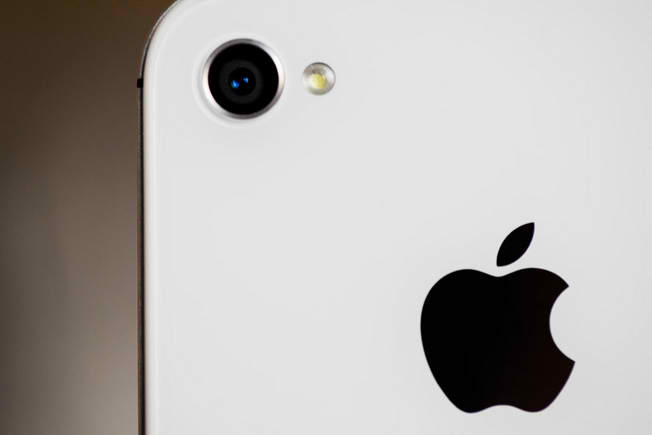
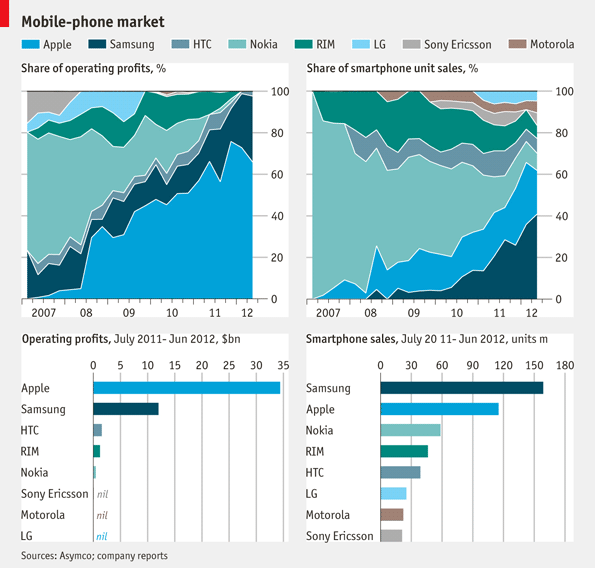
Millions of iFans eagerly await the new iPhone, which is expected to be revealed on September 12th and to go on sale later this month. Analysts expect it to outsell Samsung’s Galaxy SIII, its nearest rival, which has shifted over 20m units worldwide since its launch in May. Each new model of the iPhone has sold as many units as all previous versions combined. Since the launch of the original iPhone in 2007, it has brought in $150 billion in sales revenue, with $74 billion of that in the past year. The iPhone is Apple’s biggest product, accounting for 53% of the company’s revenue. Indeed, if the iPhone were spun out as a separate company it would be bigger than Microsoft, whose revenues were $73 billion last year. According to Asymco, a market-research firm, Apple claims two-thirds of the profits among handset-makers, despite having a smartphone market share of 21%, as the charts below show. The iPhone has been the world’s bestselling smartphone for five consecutive years, but will its run last? In 2011 Apple spent only 2% of its revenue on research, while Google and Microsoft both spent 13%.
Here is a podcast I did for The Economist on September 12, 2012. We discuss the domain host Go Daddy and its outage, a new less sensitive but more powerful explosive material, and Apple’s new iPhone
Researchers have developed novel ways to tap the pharmacological potential of an infamous and deadly gas
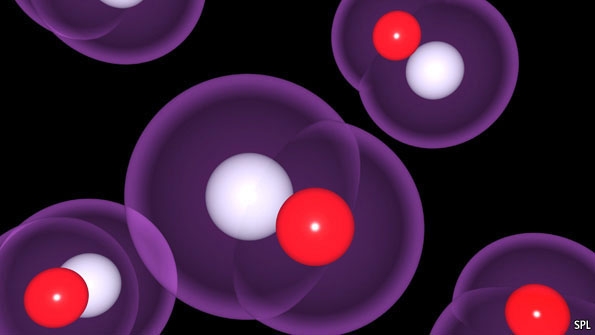
Carbon monoxide gets a bad rap. The gas, produced by incomplete combustion of hydrocarbons, causes hundreds of deaths every year by poisoning and sends many thousands to hospital. Most of these are the result of leaking cooking and heating equipment, but the colourless, odourless and tasteless substance, known to chemists as CO, has also aided many a suicide. Most horrifically, Nazis used it in gas chambers.
But there is more to the “silent killer”, as CO is sometimes called. It is produced by many cells in the human body, where its molecules play a crucial role in activating enzymes involved in controlling the dilation of blood vessels, and thus blood flow. Mice in which the gene for producing the compound has been knocked out develop faulty organs and die young.
Exploiting this insight, researchers have successfully used CO to treat a number of ailments in lab animals. These include pulmonary hypertension, an otherwise incurable disease in which thickened arteries obstruct the flow of blood, leading to heart failure. The gas can also keep inflammation in check, in particular after organ transplants.
Frederick Montgomery and Duncan Bathe think they have come up with a way to hit the sweet spot. Their Coke-can-sized gizmo, which they devised while working at Ikaria, an American drug firm that both have since left, contains a cartridge of pressurised CO, a tube to deliver the gas to the patient’s nose, and a few buttons to set the required dose. A sensor connected to a nozzle at the end of the tube constantly measures the patient’s breathing rate and adjusts the amount of CO dispensed with each breath. Safety features, including automatic shutdown if anything seems amiss, are meant to eliminate the risk of CO overdose and ensure that none leaks out, endangering others.
Scientists at another American pharmaceutical company, Sangart, meanwhile, have been encasing the gas—or, strictly speaking, CO-ferrying haemoglobin—in a polymer pouch. Kim Vandegriff and her colleagues have been using polymer wrappers a mere nanometre (a billionth of a metre) across. These can be designed to break open only where their payload is needed. Early trials have shown promise in treating sickle-cell anaemia, a disease caused by a faulty haemoglobin gene.
Unlike most drugs, CO is not broken down by the body. Instead, once its job is done, it is transported to the lungs and exhaled. As a result, it produces no side-effects. Given the right dose, then, it can heal silently, too.
 Akshat Rathi