What if we were to go back to the 80’s

My mum told me a story which moved me and made me think about a bunch of things. Before I tell you those things, here’s the story:

I was born in 1987 in Nashik. Only a few days after I was born, my Dad got a job in Calcutta. He moved from Nashik to Calcutta at a short notice leaving me with my mum and my nani (mum’s mum).

Without dad, my mum and my nani did a lot for me. She developed a very close connection to me spending all day and night taking care of me. Then after three months, my Dad came back to take my mum and me with him to Calcutta.

Suddenly, all the joys of having a baby around disappeared. My nani felt very lonely. At the time, the only means of keeping in touch were letters and trunk calls. Of course, I couldn’t write a letter so the only communication that happened between nani and me was that when, during a very expensive and rare trunk call, she heard me make some noises. That almost always made her cry.

If I were born today, things would have been so different for the relationship that my nani would have developed with me. We would have the modern forms of communication – she could talk to me on the mobile phone even if my dad earned the same salary as then, she could see me grow up on Skype and if she really really missed me she could even take a flight to Calcutta (because they’ve become so much cheaper than those days!).

The story made me wonder about how much technology has affected us. I tried hard to understand what it must’ve been to have a relationship in that era but I am unable to. Sure, people must’ve dealt with it and got on with things. But I am more interested in the quality of the relationship of those times. We may never realise what it meant to long for someone.

I remember my mum telling me that when my Dad went to Europe in the early 80’s, he used to write her a letter a day which she usually received in bunches after a couple of weeks. Letters from India to Europe took even longer and because my dad was travelling, I am not sure how many times he actually heard back from mum. What must it have been to be my dad who had a one-sided dialogue with his newly wed wife for months?

Somehow, I am not sure that everything is better because of newer technology. We seek immediate responses and quick replies. Many have forgotten the art of letter writing. We’ve developed LOLspeak and gotten addicted to IM. Knowing people’s ‘status’ makes us happy even if you don’t know what is really going on their life.

Don’t get me wrong, I am not trying to be a Luddite. Technology has done lots to help. A frequent story that is repeated to show the power of technology is that of an Indian farmer who can now afford to make calls to the local market to figure out a better price for his crop. The grassroots have definitely been strengthened. 884 million Indians have a mobile phone today, that’s 73% of the population!

Even in my case, technology has done plenty. Skype is such a blessing. Every weekend when I talk to my parents for an hour or two, I leave the conversation feeling satisfied. It’s not just about knowing what they are doing but also seeing them and hearing them (so much is communicated through body language).

And yet, stories like the one about my nani make me think about the time without the internet, without mobile phones, without social media… 

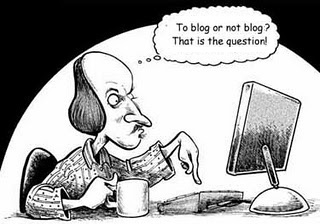
The blogging dilemma

I have two opposing arguments in my head. One that wants me to support blogging and one that makes me ignore it. I can’t seem to convince myself to choose a side. But does it really matter if I choose a side?

The internet has given everyone a platform to publish. An ability to share their views and thoughts on absolutely anything with those of their choosing or with the world at large. Surely that is a good thing but as a consumer of media, I feel overwhelmed with the sheer volume of things being created. There is just too much to keep up with.

We have so many quality newspapers, great TV channels, lots of interesting people to follow on twitter, good friends to keep up with on facebook and of course, there is the non-virtual life stuff. With a limited 24 hours daily, I would be surprised to find anyone who is able to keep abreast with everything and not feel overpowered by it all.

My solution to the problem was the information diet. Oh yes, it works if followed like the bible. But unlike a normal diet, this diet is much harder because all it takes to break the diet is the click of a mouse. I do my best to keep up with the diet and what allows me to keep going this way is the presence of a cheat day. It is that one day a week when I allow myself the luxury of reading/watching/stalking whatever I like.

It’s on the cheat day that I open my google reader to find 100+ unread blog posts. I quickly skim through and read what I like (a few). It’s rare that I ever reach the end of the list before the end of the day. Those unread blog posts usually remain unread and the number of unread posts keeps growing. It’s those unread blog posts which have incited me to write this blog post (what an irony!)

I look at that growing number on my google reader and I feel like saying ‘what a waste!’. All those hours that really good people have spent writing those blog posts have gone to waste. And even if I forget the ones that I did not read, what is it that I gain from the ones that I do end up reading? May be a few moments of pleasure and wonder. If that’s all that blog posts are worth and if most will remain as unread posts in someone’s reader then isn’t blogging a big waste of time? These are thoughts that pursue me to ignore blogging.

But then I remember. Every week I derive immense pleasure in being able to share my thoughts here on this blog. I know people read the posts (at least a few). If their two minutes were spent reading this then I better write something that is worth their time. But it’s not just about them (although readers are very important), it’s also about me.  I learn every day. I can see a part of myself evolve with every blog post. There is a peculiar sense of joy in being able to convert a thought into a well-written piece of prose.

Beyond the reader’s pleasure and mine, there is something that we tend to ignore about the power of blogs. They can be places to gain some really good ideas. Steven Johnson explains this is in a superb talk (only 4 mins). He says that good ideas usually come from a process he calls the slow hunch. That usually, a good idea is a combination of two or more part ideas. This combination occurs when you allow them to brew in your head for sometime. This time allows them to come together in your head, if you have all the part ideas, or allows you to gather the remaining part ideas from people you meet, places you visit and things you learn.

Reading blogs can more often than not serve that purpose. A blog is usually a place where raw ideas are shared and they are given for free to the readers for use. You can find parts of that great idea which has been waiting for its remaining parts and waiting to mature. I subscribe to a selected few blogs through email. These are the blogs that I religiously read and I’ve found many really good ideas through them. It’s probably because I’ve taken the time to grab everything that is on offer which meant that I did not miss out on that part idea which I was looking for.

There is one another advantage of reading blogs which is commonly ignored. If you read someone’s blog and read enough of it, you connect with the person in a way which is very different from any other connection that you can have with the person. Whenever I have to look someone up on the web, I try to look if they have a personal website or blog. If it’s someone you want to impress then just the words, “I read on your blog..” are enough to make the person take notice of you and give you a great first impression.

So should I support blogging or ignore it? As with most answers in life, there isn’t a yes or no answer to this. There are certainly a lot of poor blogs out there. They simply don’t deserve your attention but then there are some which absolutely do deserve your attention. It’s for you to find them. As for whether you should blog or not? I think it’s a very personal choice and one that only you can make. May be this extended conversation on blogging will be of some help.

Written while listening to Chillout radio on Last.fm.

The information diet

I have had a blog post in the drafts section for some time now, it is titled ‘rethinking our digital lives’. I will publish it some day soon but what actually got me thinking about writing that post was the fact that all of us spend a lot of our time on the internet. It may be for work or pleasure, doesn’t matter. The fact is that the ease of opening a new browser window or tab means that distractions are only a click away. That’s been a bit a of a problem for me and I suspect for many others. Something needs to be done about that and so I’ve decided to go on an information diet.

Here’s what I am going to do:

  1. Check email only three times a day.
  2. Check facebook and twitter once a day for not more than 30 minutes in total.
  3. Check my blog only when I decide to publish something.
  4. Any article which I deem worth reading, I will send to my Kindle. Thus, I can get to it when I have the time.
  5. 30 minutes of video everyday including YouTube.

Being able to restrict social media won’t be that hard but to deal with email I am going to need some help because I essentially use it as my to-do list. I’ve installed Boomerang for Gmail which will help me schedule replies, bring emails to my inbox when they need to be dealt with, etc. For reading articles I’ve been using SENDtoREADER which simply re-formats the article like Readability and sends it to my Kindle.

Just like food, there is some information that is good for you and some that is bad. Being able to focus on the good in this world of distractions is a hard thing and that’s why I think there is much value in choosing to do this. My experience with dieting is only a recent one but along with my polyphasic sleep experiment it has give me enough confidence in my ability to discipline myself that I think I can take on this task.

Finally, unlike the slow-carb diet experiment, this will not be a four-week experiment. I want to make this information diet a habit so that the extra time I get are put in meaningful work.