The solution is in the theory of relativity

Whenever we think about problems, although getting solutions to the problem should be our first concern, it is not. What comes first is always the fear of failure. It is the first hurdle even before we start the process of prioritisation. This bogs us down as it affects our state of mind from handling the problem in the full capacity that we could have. And somehow every problem seems like a big problem.

So how to handle this? I think the solution lies in the theory of relativity. Oh yes, it took Albert Einstein’s extra large brain to come up with the solution to this. Well, not really. What I’m suggesting is to take a step back and use the power of comparison. I’m asking you to compare your problem with those who have to think whether they will get to eat the next meal before they finish the meal they are having or with those who have to take decisions that will decide the fate of millions of people. Putting two problems of completely different dimensions side by side gives a sense of the actual difficulties involved in it and clears the difficulties that our mind manifested earlier.

Well, if that does not work try this. How about you look at yourself from the camera of a satellite and then you zoom out. From your head to the town you live in, to the country you live, to the planet you have lived on all your life. How about you try to feel that you are just a speck in the universe, whose problems are not the problems that cannot be solved. I find this humbling experience helps me put my problems back in perspective and start afresh on a stronger base.

Subscribe to this blog by Email

On a mission: To be a good writer

I started blogging because I wanted to write better and become a writer. Even after blogging for three years, that still remains my strongest driving force.  However, I’ve never done any serious research on good writing, so I thought I should get to it.

Like any generic google search the “How to be a good writer” search is full of links that don’t have enough content in them to be valued so high on the search results. I thought it would be valuable for the community if I utilise my time by demoting links which weren’t useful. It turned out I had to demote two results for every one that I found useful. Nevertheless, I persisted on my mission and I am now about to write a gist of what I learnt.

The wikiHow is a good start but just like most wikis has a lot of content but little structure within the content. Yet, I think the most valuable points from the wiki are that one must try and write everyday. Reading a lot will help improve vocabulary and grammar. Improving one’s vocabulary though will require active effort not just reading. Maintaining a vocabulary notebook might be a good idea. Plan your writing but write the first draft quickly. Be specific and tailor your writing to the audience.

MD Weems notes that one must start with what you know and start with small articles. “Your writing must instill confidence in a mind that is inclined to doubt you” says Robert Warren who makes two very good points on how to keep the reader on the writer’s side by being bold and confident and maintaining an optimistic, positive tone.

Most people seemed to suggest that one must always read their own writing and make edits and to gauge one’s writing it is best to have someone else read it and get their opinion. Reading will help you gain knowledge about different styles of writing and explore new perspectives.

To conclude, I would like to share some interesting quotes on good writing:

  • “Write without pay until somebody offers pay” and “When you catch adjectives, kill most of them — then the rest will be valuable. They weaken when they are close together; they give strength when they are wide apart.” — Mark Twain
  • The abstract is seldom as effective as the concrete. — John Gardner
  • Vigorous writing is concise. — William Strunk Jr.
  • Don’t write about Man, write about a man. — E.B. White
  • Is every word doing new work? — William Zinsser
  • Never use the passive where you can use the active. — George Orwell
  • Pick up every sentence in turn, asking ourselves if we can possibly make it shorter. — Sheridan Baker
  • We don’t reject writers; we reject pieces of paper with typing on them — Isaac Asimov
  • Ptahotep noted, “Happy is the heart of him who writes; he is young each day.” Yes, but only if he writes from the heart, and not just for copious beer. — Marvin Olasky
  • “The first million words you write will be crap” — Anonymous

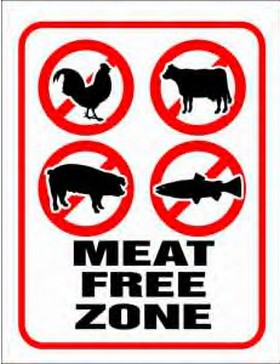
Why am I giving up meat?

A recent article in h+ magazine, has prompted me to do something I had wanted to do for a long time. I am giving up on meat, I am bracing Pescetarianism now and will move onto become a vegetarian soon. My reasons for doing this are scientific first and then ethical.

I never had meat till the age of 14. Even then, the only place I could get meat was at my friend’s place. The frequency some what increased during my undergrad days in Mumbai because of the mix of friends and the fact that I enjoyed the sheer variety of choices I had. My girl-friend then was a vegetarian and I was secretly proud of that, but I never took the inspiration to go all the way. After coming to Oxford, my meat consumption sky-rocketed. Food in the college hall had fewer veg options, so was the case in most restaurants and fast-food chains. I lived with a Russian who was a meat-lover and a fantastic cook, it was hard to resist his delicious recipes. I used to tell myself that I am having meat only for survival in this country but secretly I was learning to savour it. I marked my favourite meat salad in college, I enjoyed lasagna and beef burgers. Whenever we had house parties and people asked me if you have a diet preference, I liked saying “No, I eat everything.”

Now, I am glad that reality struck me sooner. There are a lot of reasons why it is good to choose a non-meat diet but I am going to concentrate on only a few. One of the most important reason is the looming water crisis. I was introduced to the concept of virtual water which is defined as the total volume of freshwater that is used to produce the commodities, goods and services consumed. Meat requires excessively large amounts of water to produce. Most developed countries like the UK end up importing food, and statistics show that only 38% of UK’s total water use comes from its own resources. Thus, a western lifestyle is not just luxury but it is draining water resources from other countries. A meat and dairy-based diet consumes about 5,000 litres of virtual water a day while a vegetarian diet uses about 2,000 litres. Experts call fresh water as the “new oil”. The water crisis is only going to get worse with the changing climate, which is another reason to be on a vegetarian diet. Just like water, a much greater amount of energy is needed to produce  meat than vegetables. Another recent article in The Times, goes to the extent of saying “Give up meat to save the planet“.

Now delving a little into fringe science, as a transhumanist, I have been reading a lot about life extension and during this summer was considering a calorie restricted diet. I actually followed it for a few days but realised for many practical reasons that it is not possible for me to do it with my current lifestyle. Hank Hyena’s article struck a note, may be because I was trying to find excuses not to follow calorie restriction, but also because he spoke about healthy living for longevity. A recent article in the Times of India also spoke about the effects of methionine on aging. Although, these tests have been done only on flies and mice, 40% life extension is quite a promising figure compared to the 10-15% offered by calorie restriction.

With all this data which shouts out to me, I find it extremely hard to continue eating meat. It is now more than three weeks since I left meat and I think I am doing well to keep up. I worry about the climate quite often and finding ways in which I can reduce my impact gives me a great sense of satisfaction. I don’t try and convince people to give up meat. I have come across people who do that and have observed the debate. Most meat-eaters raise controversial points like a no-meat diet is not nutritious enough, leads to lower performance, that we humans are meant to be carnivores and so on. But all I would say is, even if those reasons are not taken into consideration for either diets, the data above is proof enough to show the ill-effects of a meat diet on the environment. As reasonable beings, I hope we wouldn’t need anymore convincing.