The best hack for a healthy diet

Summary: Eat anything you want, as long as you cook it yourself.

In less than a century, we have gone from fearing impending famines to worrying about controlling a global obesity crisis. Those most affected by this are urban-dwellers. If experts are asked to choose the biggest cause for the obesity epidemic, they blame the growing demand for processed and packaged food.

It is not hard to understand why. The aim of food corporations is to ensure that they sell as much as they can. To do that, through years of research in the “cravability” department, they have figured out the ingredients that make their products tempting to buyers—salt, sugar and fat—all of which they use in unhealthy amounts.

Given the scale of the problem, people have come up with many solutions to dealing with obesity. Most common among them is to diet. I’m not obese but I wanted to understand how difficult it is to go on a diet, so I tried the slow carb diet recommended by writer Tim Ferriss. I managed to lose 3.5kg in four weeks. Some of my friends have tried the 5:2 diet and have made it work too.

While fasting has benefits beyond keeping you healthy, there are easier ways to maintaining a healthy diet. The best hack I know to achieve this is to eat anything you want, as long as you cook it yourself.

The rationale is simple: when you choose to cook yourself, you will avoid making foods like french fries or chocolate brownies on an everyday basis, just because of the amount of effort that goes into making them. You will also use salt, sugar and fat in conservative amounts. The result is you will eat healthier food without having to set up strict rules around what you eat and when.

I used to think that cooking for one person is just an inefficient use of my time. But I’ve changed my mind. The amount of time you cook is actually a very good investment given the health benefits.

Implementation: It is impractical to think you will be able to cook every meal. So there are two tricks that might help you cook as many of your meals as possible. First, when you cook, make enough to last you two or three meals. Eating the same tasty food you cooked three times is not boring. Second, allow cheat days for when you have to or you choose to eat out. Relying on my slow carb algorithm, a rule of one cheat day a week is preferable.

Bonus: In 2010, I wrote a series of posts on tasty quick fix recipes. Their aim was to live up to my mum’s words: “There is always something you can make from whatever you have in the kitchen.” Since then I’ve come up with many more such recipes, and it’s time to revive that series.

This is a post in “the best hack series”, where the aim is to find small ideas that have a big impact in improving everyday life.

Image: chezmichelle, CC-BY-NC
Curious Bends – hearing tests, radiation-resistant cells, sign language and more

1. Poor children deserve better hearing tests; an Indian entrepreneur may have the solution

An estimated 63 million people in India suffer from hearing problems. But children are not tested for such impairment at a young age because of the costs of testing. Early detection and intervention is crucial for improving the difficulties with cognition and language skills. Now, a Bangalore-based inventor has come up with a solution that sharply lowers the cost of testing if a newborn can hear properly. (3 min read)

2. What makes cells resistant to radiation?

Radiation can damage cell’s DNA, and sometimes make them cancerous. But not all cells are affected by such radiation. Previously, it was thought that such ability was down to the DNA repair mechanisms in place in every one of them, but a new study shows that cells have more weapons to fight this invisible attack. (2 min read)

3. What sign language teaches us about the brain

As she took a course to learn sign language, a question kept nagging this neurobiologist: does the brain treat the visual language differently from spoken languages? Turns out, for the most part, they don’t. And yet brain studies of deaf people who use sign language helps bust a few myths about how our brains work. (5 min read)

+ The author of this piece, Sana Suri, is a neurobiologist at the University of Oxford.

4. Another biotech startup accelerator opens up in Bangalore. Can it deliver?

India’s biotech industry is supposed to be undergoing a boom. It was projected that revenues would reach $5 billion by 2009, but that hasn’t happened yet. Industry watchers remain optimistic, claiming that revenues will reach $100 billion by 2020. Can a startup accelerator help achieve this dream? (5 min read)

5. BRICS can boost their research by setting up collaborations, but there seems to be no will

The recent BRICS summit in Brazil saw the launch of the New Development Bank, which has been setup to rival the World Bank and the International Monetary Fund. But there was little progress on setting aside joint funds to boost scientific collaboration. There is a huge potential here but no one is interested in tapping it. (2 min read)

Chart of the week

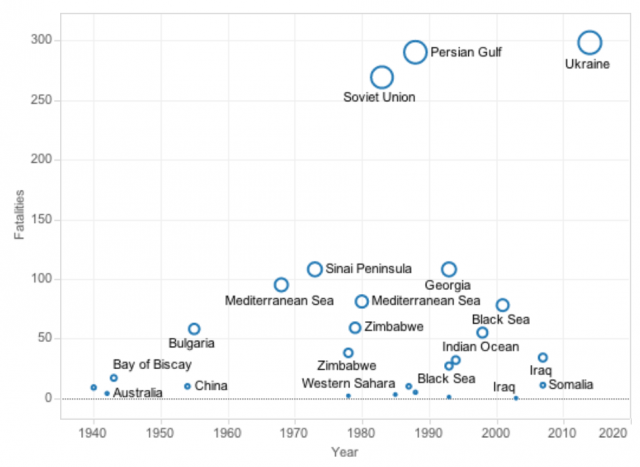
It has been a terrible week for the civilian aviation industry with Malaysia Airlines Flight 17 shot down over Ukraine and an ongoing investigation of Air Algerie Flight 5017 that crashed in Mali. Vasudevan Mukunth (one of the curators of Curious Bends) has collected the data of all such past events in one interactive chart.

Screen Shot 2014-07-26 at 11.35.28

If you enjoyed the links, please forward this to friends and ask them to subscribe to the newsletter.

Curious Bends – finding quake shelters, breaking bad in Punjab, rice-wheat divide & more

The green revolution in India increased food production but the agrochemicals it used could also have set off a “cancer epidemic”. A three-year study by Punjabi University, Patiala, revealed no confounding factors across demographics except pesticides. Many patients, some of whom travel thousands of kilometres for affordable care, are from the revolution’s belt. (3 min read)

2. A socially cognizant tool to identify quake shelters

Nepali and German scientists have devised a method called Open Space Suitability Index to rank the suitability of public shelters that could be used as quake shelters. Uniquely for it, it assesses both physical and social vulnerability (that is, the risks people, businesses and governments face). (2 min read)

3. Spare the mafia, spoil the smuggler, dealer and consumer

Punjab has a drug problem. Despite widespread efforts by the state to blow it off, then blow it away, its Walter Whites and Jesse Pinkmans persist. One is a cop, the other might be a BSF jawan. Effectively, the Narcotics Control Bureau is lost for ideas, and it might be because the state is targeting the victims instead of the drug mafia. (29 min read)

+ The author of this piece, Ushinor Majumdar, is an ex-lawyer and a journalist with Tehelka.

4. Delayed survey derails health monitoring

As it is India lacks key data to better govern its people. Now, its main source of health statistics, the National Family Health Survey (NFHS), has been delayed. The NFHS is a large-scale household sample survey and produces internationally accepted estimates of fertility, mortality, contraceptive use, violence against women and, crucially, malnutrition. The latest survey should have been held in 2010, and it means for the last four years health workers have been blindsided. (2 min read)

5. Forget your 15 minutes of fame, think about your 15% chance of depression

Clinical depression has the dubious distinction of being the second most common cause of suffering in terms of burden of illness. The WHO has predicted it will become the leading cause of death by 2020. If this isn’t alarming, then sample this: new research says that every person in the world has a 15% chance of experiencing their first episode between the ages of 25 and 35. (4 min read)

Chart of the week

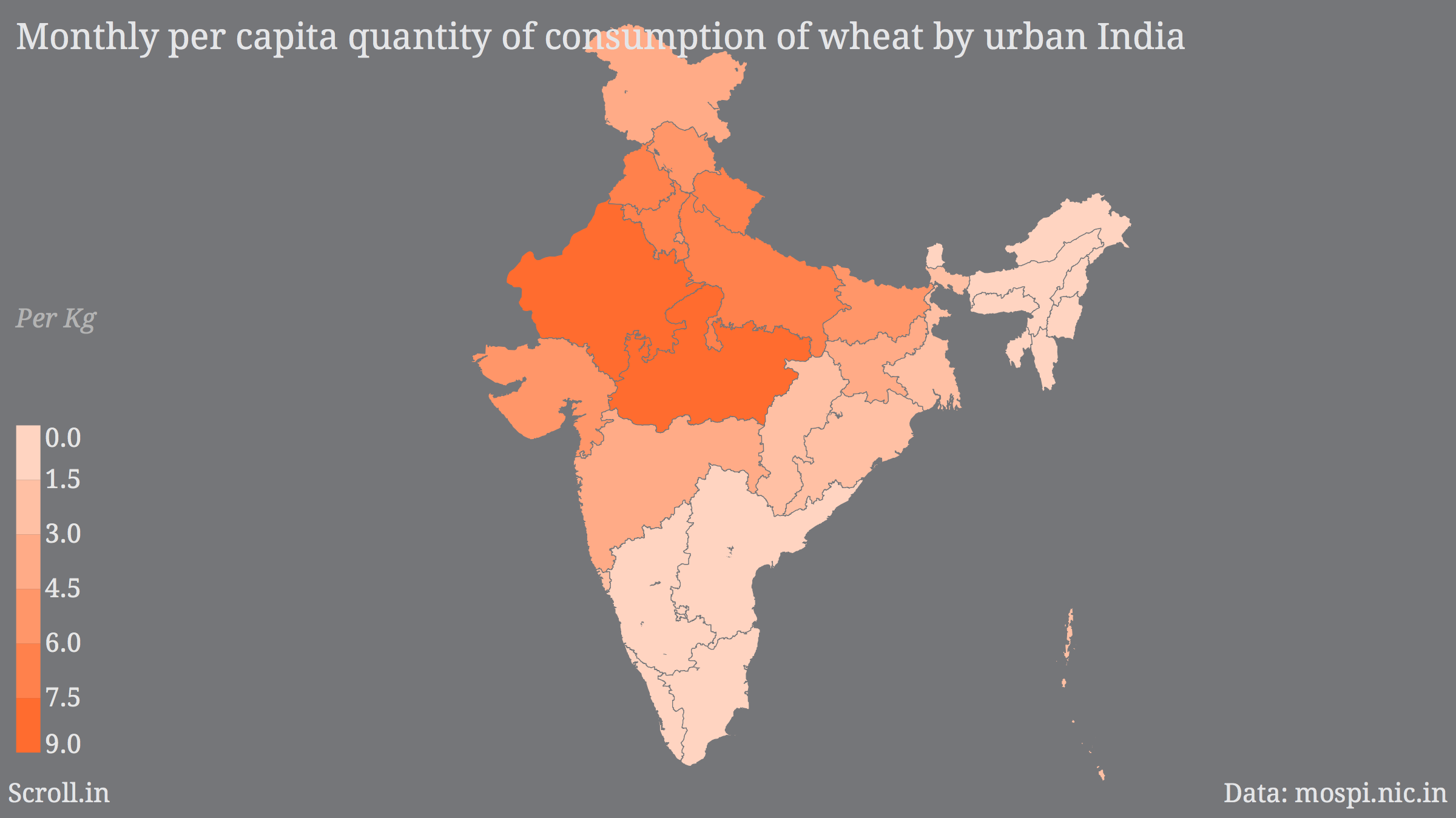
According to the 68th National Sample Survey (2011-2012), the consumption of rice has fallen marginally in a seven-year period while that of wheat is on the rise. There is a perceivable split between the Hindi heartland and the southern and eastern states which prefer wheat and rice, respectively. There is also an urban-rural and, intriguingly, a Jammu-Kashmir divide. Read more about it on Scroll.in.


1405379295-1003_Monthly-pc-qt-consumption-wheat-urban

If you’re curious for more, follow Akshat and Mukunth on Twitter.

If you have something to tell us, give it a go at curiousbends@gmail.com. Enjoy your week!