Scientists pinpoint when harmless bacteria became flesh-eating monsters

Bacterial diseases cause millions of deaths every year. Most of these bacteria were benign at some point in their evolutionary past, and we don’t always understand what turned them into disease-causing pathogens. In a new study, researchers have tracked down when this switch happened in a flesh-eating bacteria. They think the knowledge might help predict future epidemics.

The flesh-eating culprit in question is called GAS, or Group A β-hemolytic streptococcus, a highly infective bacteria. Apart from causing flesh-eating disease, GAS is also responsible for a range of less harmful infections. It affects more than 600m people every year, and causes an estimated 500,000 deaths.

These bacteria appeared to have affected humans since the 1980s. Scientists think that GAS must have evolved from a less harmful streptococcus strain. The new study, published in the Proceedings of the National Academy of Sciences, reconstructs that evolutionary history.

James Musser of the Methodist Hospital Research Institute and lead researcher of the study said, “This is the first time we have been able to pull back the curtain to reveal the mysterious processes that gives rise to a virulent pathogen.”

Genetic gymnastics

Musser’s work required analysis of the bacterial genetic data from across the world – a total of about 3,600 streptococcus strains were collected and their genomes recorded. It revealed that a series of distinct genetic events turned this bacteria rogue.

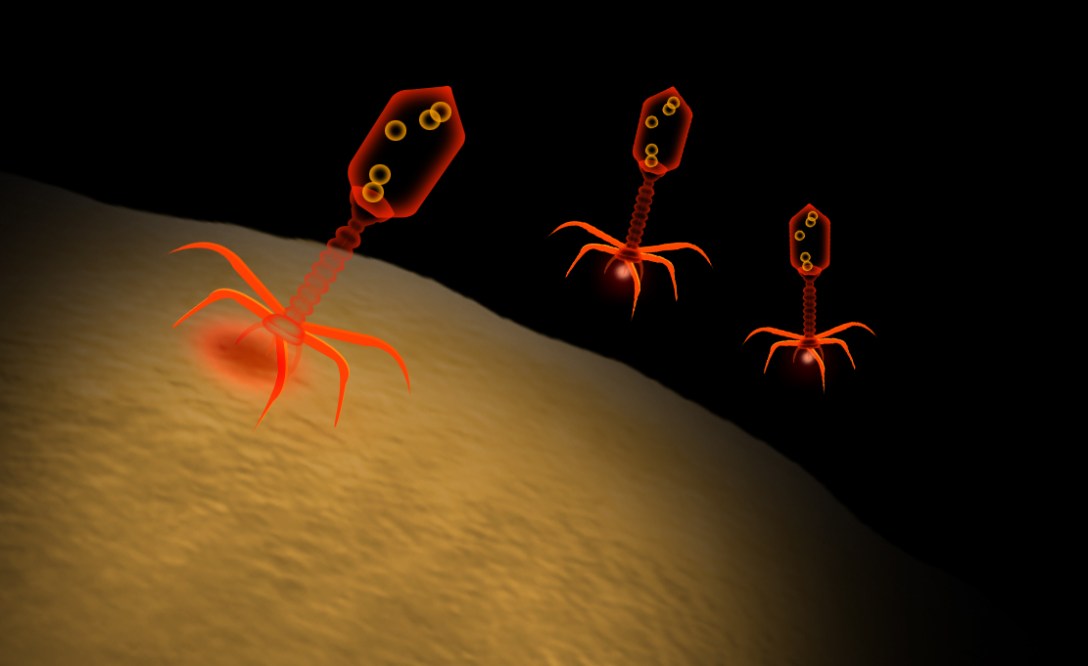
First, foreign DNA moved into the original harmless streptococcus by horizontal gene transfer – a phenomenon that is common among bacteria. Such DNA is often provided by bacteriophages, viruses that specifically target bacteria. Picking up foreign genes can be useful because it can improve the bacteria’s survival.

In this case, the foreign DNA that was incorporated in the host’s genome allowed the streptococcus cell to produce two harmful toxins. A further mutation to one of these toxin genes made it even more virulent.

According to Musser, another horizontal gene transfer event made a good disease-causing pathogen into a very good one. The additional set of genes allowed it to produce proteins that suppress the immune system of those infected, making the infection worse.

Marco Oggioni of the University of Leicester said, “Because this study used data of the entire genome, all the genetic change could be observed. This makes it possible to identify molecular events responsible for virulence, as you get the full picture.”

Musser could also accurately date the genetic changes in GAS by using statistical models to, as it were, turn back the clock on evolution. They say the last genetic change, which made GAS a highly virulent bacteria, must have occurred in 1983.

Continental drift

That timing makes a lot of sense. “The date we deduced coincided with numerous mentions of streptococcus epidemics in the literature,” Musser said. Since 1983, there have been several outbreaks of streptococcus infections across the world. For example, in the UK, streptococcus infections increased in number and severity between 1983 and 1985.

It is the same story for many other countries, with Sweden, Norway, Canada and Australia falling victim to what is now an inter-continental epidemic. The symptoms ranged from pharyngitis to the flesh-eating disease, necrotizing fasciitis.

“In the short term, this discovery will help us determine the pattern of genetic change within a bacteria, and may help us work out how often bacterial vaccines need to be updated,” Musser said. “In the long term, this technique may have an important predictive application – we may be able to nip epidemics in the bud before they even start.”

What Musser is suggesting is that if enough bacterial genomes are regularly recorded and monitored, there is a chance that mutations or gene transfers, such as those GAS experienced, could be found ahead of time.

But Oggioni is sceptical. “While making such predictions may not be possible, this research will have other applications,” he said. “Knowing which genetic changes happen when can help tailor drug discovery research in a certain direction.”

Oggioni added that Musser’s work with GAS is only a model. Using Musser’s methods to record the evolutionary histories of other pathogens could be quite useful to tackle the diseases they cause now and, perhaps, even those that they may cause in the future.The Conversation

Written with Declan Perry. First published on The Conversation. Image credit: Zappys Technology

Massive asteroid may have kickstarted the movement of continents

Earth was still a violent place shortly after life began, with regular impactors arriving from space. For the first time, scientists have modelled the effects of one such violent event – the strike of a giant asteroid. The effects were so catastrophic that, along with the large earthquakes and tsunamis it created, this asteroid may have also set continents into motion.

The asteroid to blame for this event would have been at least 37km in diameter, which is roughly four times the size of the asteroid that is alleged to have caused the death of dinosaurs. It would have hit the surface of the Earth at the speed of about 72,000kmph and created a 500km-wide crater.

At the time of the event, about 3.26 billion years ago, such an impact would have caused 10.8 magnitude earthquakes – roughly 100 times the size of the 2011 Japanese earthquake, which is among the biggest in recent history. The impact would have thrown vapourised rock into the atmosphere, which would have encircled the globe before condensing and falling back to the surface. During the debris re-entry, the temperature of the atmosphere would have increased and the heat wave would have caused the upper oceans to boil.

AGU

Donald Lowe and Norman Sleep at Stanford University, who published their research in the journal Geochemistry, Geophysics, Geosystems, were able to say all this based on tiny, spherical rocks found in the Barberton greenstone belt in South Africa. These rocks are the only remnants of the cataclysmic event.

According to Simon Redfern at the University of Cambridge, there are two reasons why Lowe and Sleep were able to find these rocks. First, the Barberton greenstone belt is located on a craton, which is the oldest and most stable part of the crust. Second, at the time of the event, this area was at the bottom of the ocean with ongoing volcanic activity. The tiny rocks, after having been thrown into the atmosphere, cooling, and falling to the bottom of the ocean, then ended up trapped in the fractures created by volcanic activity.

This impact may have been among the last few major impacts from the Late Heavy Bombardment period between 3 and 4 billion years ago. The evidence of most of these impacts has been lost because of erosion and the movement of the Earth’s crust, which recycles the surface over geological time.

However, despite providing such rich details about the impact, Lowe and Sleep are not able to pinpoint the location of the impact. It would be within thousands of kilometres of the Barberton greenstone system, but that is about all they can say. The exact location may not be that important, Lowe argued: “With this study, we are trying to understand the forces that shaped our planet early in its evolution and the environments in which life evolved.”

One of the most intriguing suggestions the authors make is that this three-billion-year-old impact may have initiated the the movement of tectonic plates, which created the continents that we observe on the planet.

The continents ride on plates that make up Earth’s thin crust; the crust sits on top of the mantle, which is above a core of liquid iron and nickel. The heat trapped in the mantle creates convection, which pushes against the overlying plates.

All the rocky planets in our solar system – Mercury, Venus, Earth and Mars – have the same internal structure. But only Earth’s crust shows signs of plate motion.

A possible reason why Earth has moving plates may be to do with the heat trapped in the mantle. Other planets may not have as much heat trapped when they formed, which means the convection may not be strong enough to move the plates.

However, according to Redfern: “Even with a hot mantle you would need something to destabilise the crust.” And it is possible that an asteroid impact of this magnitude could have achieved that.The Conversation

First published on The Conversation.

Cassini points to a hidden ocean on Saturn’s icy moon

Finding liquid water on a celestial body within the solar system is exciting. The only thing that is probably more exciting is finding an ocean full of it. Today such news comes via Cassini, which has made measurements that show that Saturn’s moon Enceladus has a hidden ocean beneath its icy surface.

While orbiting Saturn in 2005, Cassini found jets of salty water spewing from the south polar region of Enceladus. According to Luciano Iess of Sapienza University of Rome, lead author of the new study published in Science, “The discovery of the jets was unexpected.”

Geysers require liquid water, and we wouldn’t expect Enceladus to have any. It is too far from the Sun to absorb much energy and too small (just 500km in diameter) to have trapped enough internal energy to keep its core molten. The answer to how the water got there might lie in the details of the moon’s internal structure.

Water beneath an icy crust

The data to understand Enceladus’s internal structure came from by measuring changes in Cassini’s speed as it flew close to the moon. When passing the denser parts of the moon, it sped up by a few extra thousandths of a metre per second. That minute change was tracked through recordings of the radio signals Cassini was sending to NASA’s Deep Space Network station.

In making such tiny measurements, scientists had to filter out other factors that could influence Cassini’s speed. These include pressure on the spacecraft from sunlight, the nudge from heat radiating from its nuclear-powered electrical generator, and the drag of the particles it strikes as it passes through the south polar plumes.

Iess and his colleagues have produced a model of the internal structure of Enceladus using the measurements. They conclude that there is a core that is roughly 200km in diameter; above that lies a 10km-thick layer of liquid water, which is followed by 40km of ice crust. The water layer may extend all the way to the north pole, but its thickest part lies at the south pole.

NASA/JPL-Caltech

It is possible that Saturn’s powerful gravity is responsible for the liquid water under Enceladus’s surface. Its pull could heat up the interior through a process called tidal kneading, which creates tides in the ocean causing internal friction and thus heat.

After the initial discovery of the plumes, Cassini’s minders put a lot of effort into determining Enceladus’s internal structure, but it still took nearly ten years to do so. This is because the time the spacecraft spends around Saturn is very valuable, and there are lots of other things worth studying.

Cassini can only make a handful of flybys near Enceladus while still paying attention to other moons, such as Titan. When approaching Enceladus, the controllers also had to make a choice about how to study the moon because of a limitation in how Cassini’s instruments are arranged. When making gravitational recordings it needs to point its antenna towards Earth, but in doing so all its other instruments face away from Enceladus. Of the 19 flybys, only three were used to make gravitational recordings.

“After spending eight years in the Saturnian system, one may think that the measurements are becoming repetitive and that Cassini has discovered everything in the reach of its instruments. This is far from being true,” Iess said.

Time is running out

“The evidence adds up to a large and active body of water under Enceladus’s southern polar region”, Helen Maynard-Casely of Australian Nuclear Science and Technology Organisation said. But she warned, “It is going to be a long time before we can verify if this ocean is there, if ever.”

The plutonium-powered spacecraft has enough energy to power itself till 2017. The trouble is that, in three years, it will only be able to make three more flybys of Enceladus, which is not enough to take more gravity data. Its end is slated to come when controllers drive it into Saturn’s atmosphere for incineration, because scientists are keen to avoid having it crash into Saturn’s pristine moons.

There is a push to send another mission to Saturn, but Jupiter’s moon Europa might be a better candidate to search for life. At 3,100km in diameter, it is much larger than Enceladus, and, in December, astronomers spotted water vapour coming from its south pole, as well.

The possibility of finding a large amount of liquid water is exciting because, for life to exist as we understand it, we need liquid water. Even on Earth, whenever untouched sources of liquid water, such as Lakes Vostok and Ellsworth under Antarctica, are studied, there is always the hope that we may discover new forms of life.The Conversation

First published on The Conversation. Image credit: NASA/JPL/SSI/J Major