2013 Medicine Nobel

The 2013 Nobel Prize in Medicine has been awarded to Thomas Südhof, James Rothman and Randy Schekman for their discoveries of how the transport mechanism in cells works.

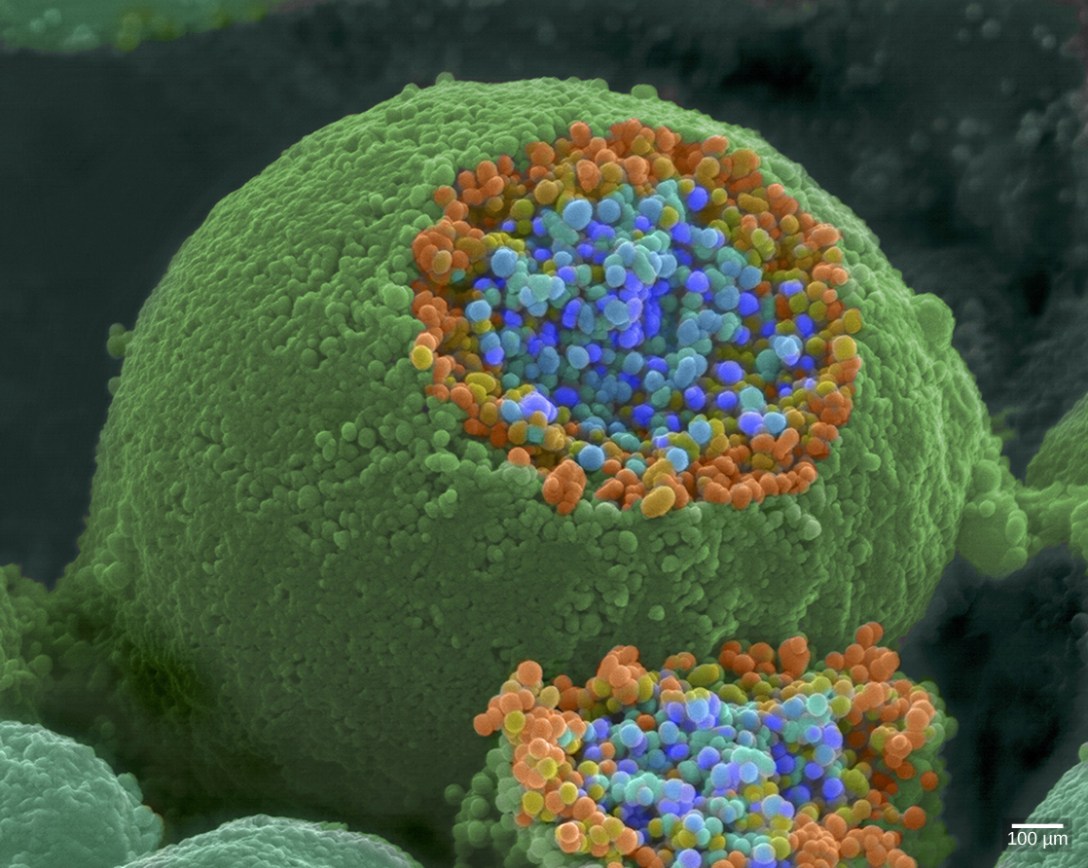
Cells are the basic units of life. Each of the billions of cells that make up the human body are packed with machinery to help them perform their special roles. Brain cells (neurons), for instance, need to produce and release neurotransmitters to pass important signals to other brain cells. Other key chemicals such as enzymes and hormones also need to be similarly moved.

Before the work of these pioneering scientists, others had discovered that tiny fat globules called vesicles that were involved in the transport system. But little was known about how these vesicles perform their job, delivering key chemicals at the right place and at the right time.

Fascinated by this problem, in the 1970s, Schekman, now at the University of California, Berkeley, worked with yeast cells to figure out the details. He used cells with defective transport machinery to reveal the genes responsible for causing the problems. These genes fell in three classes, each handling a different part of the tightly regulated transport system.

Kathryn Ayscough, a molecular biologist at the University of Sheffield, said, “I still work with yeast cells to understand how cells work. This recognition with a Nobel Prize shows how elegant studies based on simple organisms can reveal intricate details of how all cells work.”

Rothman, now at Yale University, wanted to investigate further. At the time it was believed that the tightly bound space within a cell was somehow responsible in helping each vesicle reach its particular target. But by isolating key proteins that he believed were involved in vesicle transportation, Rothman discovered that the transport system worked perfectly even in a test-tube.

It turned out that the genes identified by Schekman also coded for the proteins Rothman isolated. “Taking different approaches to explain the same phenomenon is often the best way of doing science,” Mike Cousin, a cell biologist at the University of Edinburgh said.

With the cell’s internal machinery somewhat understood, Südhof, now at Stanford University, was interested in finding out how neurotransmitters were released in such a precise manner in neurons. This carefully orchestrated transfer of neurotransmitters is the basis of how our brain functions.

He found that when electrical signals travel along a neuron, they attract calcium ions and enter the cell through temporarily activated channels. These calcium ions activate proteins on the surface of the vesicles, which forces them to fuse with the membrane to off-load their fill of neurotransmitters. Südhof’s work identified the proteins involved in the fusion process.

“Without his work, we would still be looking for the molecules responsible in the fusion process,” Cousin said. Instead, in the years since Südhof’s work was published, researchers have identified that many neurodegenerative diseases, such as Alzheimer’s, are caused by the malfunctioning of fusion proteins.

“The prize-winning work shows it often takes a long time for basic research to be recognised for its impact,” Ayscough said. The researchers set out to understand how a cell works, but their work is now being used to develop medicines for some of the most debilitating diseases.The Conversation

First published on The Conversation.

Image credit: neuroimages

Computer simulations reveal war drove the rise of civilisations

According to British historian Arnold Toynbee, “History is just one damned thing after another.” Or is it? That is the question Peter Turchin of the University of Connecticut in Storrs tries to answer in a new study just published in the Proceedings of the National Academy of Sciences. He and his colleagues show history may be deterministic, at least to a certain extent. Their computer simulations show that warfare may have been the main driver behind the formation of empires, bureaucracies and religions.

Historians may be a bit leery about scientists making this sort of attempt, since history is driven by a complex set of of events, some of them seemingly one-time only. But Turchin thinks otherwise. Through an approach he calls cliodynamics (named after Clio, the Greek muse of history), he wants to unravel the past by testing hypotheses against data.

For his latest work, he joined with Thomas Currie, a lecturer in cultural evolution at the University of Exeter. In the new study, they use a computer simulation to model the largest societies in the years between 1500 BCE and 1500 CE.

Their model uses a map of Africa and Eurasia split up into cells that are 100 kilometres on each side. The properties of each cell are its natural landscape, height above sea level and the possibility of agriculture (which was the main driving force behind societies). The borders are seeded with military technology, starting with the use of horses. That technology then spreads as societies fight it out virtually. What emerges is the probability that each cell of land could or could not be occupied by civilisations as time progresses.

Red depict higher probability of existence of a civilisation and green lower. Thomas Currie

“Remarkably, when the results from the simulation are compared with real data from the past, the model predicts the rise of empires with 65% accuracy,” Currie said. If military technology is removed as a factor, the model’s accuracy falls to a mere 16%. “It seems warfare created intense pressure that drove these societies.”

Other researchers such as Jared Diamond and James Robinson have suggested, respectively, that agriculture and social institutions drove civilisations. They undoubtedly contributed, but Turchin and Currie argue that their results show that competition through warfare may have played a more important role.

Peter Richerson, emeritus professor at the University of California at Davis, studies cultural evolution and is impressed by cliodynamics. “It is early days yet, so the specific hypothesis tested here is liable to prove wrong or at least incomplete,” he said. “The model fails to predict the emergence of large empires in Central Asia. Something not in the current model is going on there.”

Currie agrees. “Our results are a good fit because of the broad scale. We are aware we are glossing over many complexities,” he said. Still, there is lots of potential value in building these models. The global database of historical events has many gaps. With efforts underway to grow these databases through all the information that historians, archaeologists and social scientists can find, the models are bound to get better.The Conversation

First published on The Conversation.

Image credit: kaptainkobold

Seeing bonds

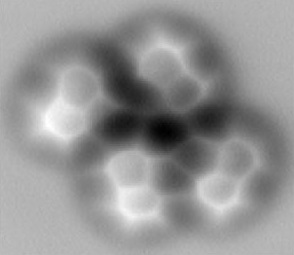
Peering at molecular structures is what chemists do. Technology that can improve the way that they see this world can have a huge impact on the field. In one such leap, researchers in China report the first visualisation of a hydrogen bond using atomic force microscopy (AFM).

First pictures of hydrogen bonds unveiledChemistry World, 26 September 2013.

Image credit: Xiaohui Qiu