Crowdsourcing ideas

What if you could use a lensless, portable microscope to detect microbes in the air? This did not occur to the designers of the apparatus, which cost hundreds of thousands of pounds to develop but was lying unused in a storeroom at Oxford University. But it did occur to James Dash, a 15-year-old pupil at John Hampden Grammar School in High Wycombe, Buckinghamshire. His winning proposal was one of 51 entries in a competition run by Marblar, a website for crowdsourcing ideas.

CyMap, researchers’ name for the device, is one of countless clever gizmos and techniques mothballed as solutions in search of a problem. An estimated 95% of all technologies coming out of universities never make it to the real world. Marblar, which was launched in September by a bunch of PhD students in Britain, aims to harness the collective imagination to prevent such waste. Other ongoing competitions invite people to come up with uses for a new kind of foam, a probe inspired by a wasp sting or paint-guns to squirt layers of paint just few molecules across.

The original inventors pay a small fee to post a challenge on Marblar’s website, using videos and slideshows to explain in plain English how their technology works. Geeks of all ages then submit their ideas about what it might be used for. Other users rate these before the inventors themselves pick the winner, who typically receives a cash prize of about £500 ($800). In future, says Daniel Perez, one of Marblar’s co-founders, winners may be invited to partner with the inventors and gain a stake in the commercialisation of their joint intellectual effort.

Marblar will not eliminate all waste. Many inventions have straightforward uses, says Lita Nelsen, director of the (rather busy) technology-licensing office of the Massachusetts Institute of Technology, all they need is better marketing. This is something technology transfer officers, often business-minded boffins who are able both to identify prospective licensees and explain the research to a non-scientist, may be better placed to do.

But Marblar is definitely onto something. IP group, a British venture-capital firm that invests in innovations spun out of universities, has ploughed about $600,000 into the start-up. It is already considering creating a company to commercialise a technology to glue strands of DNA without using an enzyme. In another challenge, a PhD student from Cambridge noticed that this is just the sort of thing he needed in his work on novel methods for drug delivery.

First published on economist.com.

Image credit: Marblar

Smells of hell

In 1991 a volcanic eruption occurred on the island of Luzon, near the Philippines. In a short period of time Mount Pinatubo had injected into the atmosphere 10 billion tonnes of magma and 20 million tonnes of sulfur dioxide. In the months that followed, global temperature had fallen by 0.5 °C. The cooling occurred because of the formation of a thin layer of sulfuric acid that reflected the sun’s radiation.

Sulfur: Smells of hellIonic Magazine, 1 December 2012.

Illustration by Carlos D Toledo-Suárez.

Tobacco in India

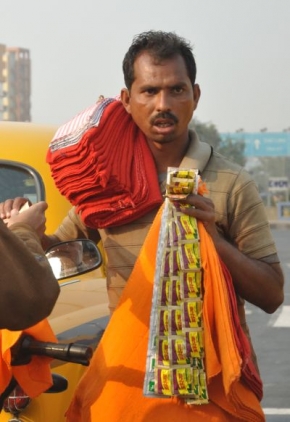
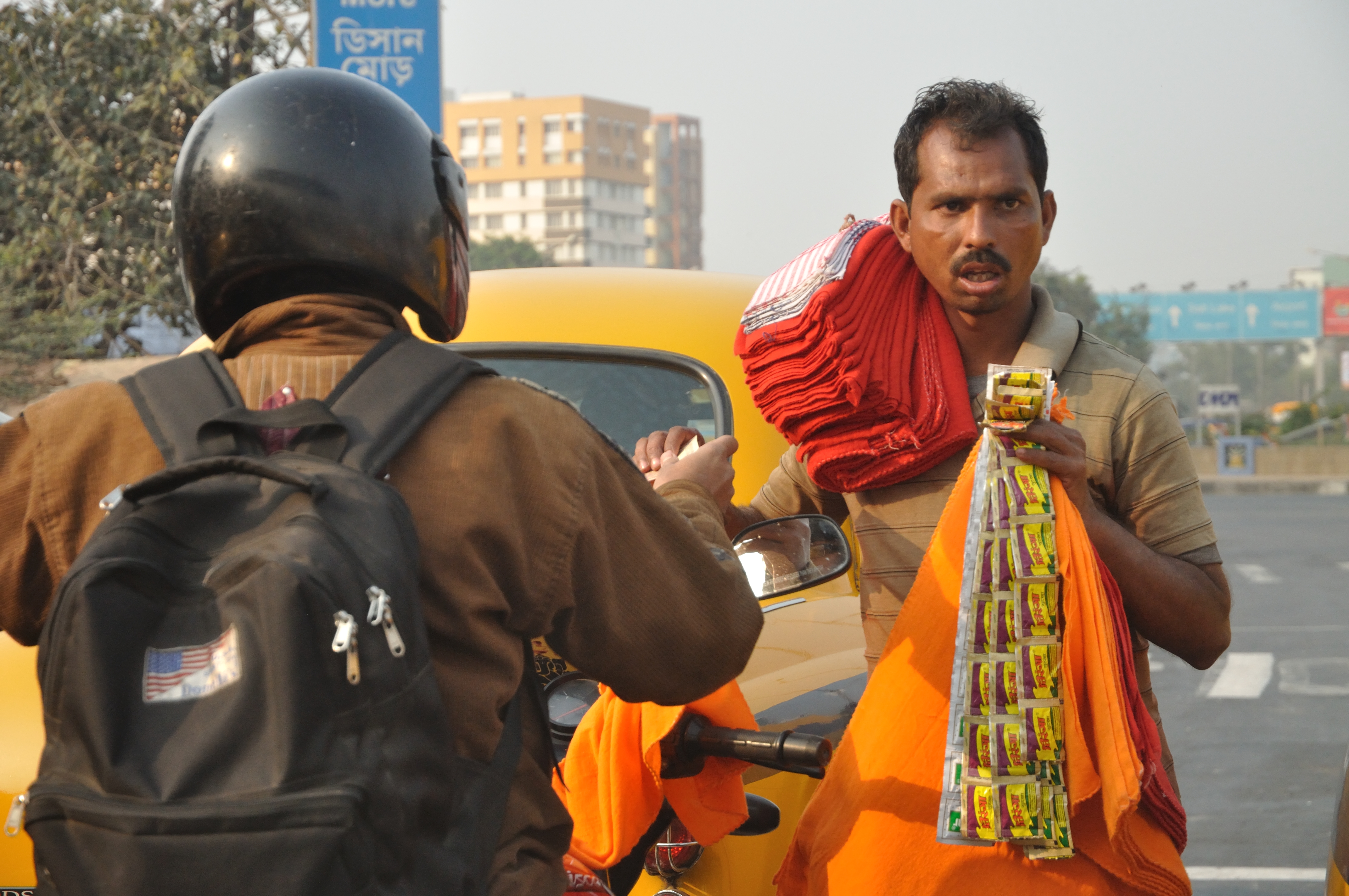
State governments in India are cracking down on chewing-tobacco products. What were once a royal delight have since become a “health menace”. On October 2nd Himachal Pradesh became the 15th state in India to ban gutka, a form of chewing tobacco made with crushed betel nuts. More than half of all states have done likewise and many others, including Karnataka, Andhra Pradesh and Tamil Nadu, are planning to follow suit.

More Indians chew tobacco than smoke it, 26% compared to 14%. Gutka, in particular, is prevalent among children who get addicted thanks to easy access and dirt-cheap prices (1 rupee or 2 cents per sachet). This means India suffers from one of the highest rates of oral cancer in the world, as much as twice the global average. Of the annual 5.6m cancer deaths in India, a third can be blamed on tobacco use.

The central government stands accused of inaction, even though the Supreme Court issued several warnings. Non-governmental organisations had been lobbying for a ban for quite some time. Finally in August 2011 the Food Safety and Standard Authority, aware of the health ministry’s indecisive stand on the matter, issued regulations under which no foodstuff, including gutka, may contain tobacco. The central government’s orders followed in March and the states’ bans followed.

But the tobacco industry is not taking it lightly. Many have dragged the states to court. They claim that gutka falls under the 2003 Cigarettes and Other Tobacco Products act, and cannot, therefore, be classified as foodstuff.

The bans are a crucial step forward, for the public-health campaigners. But challenges lie ahead. For instance, enforcement remains difficult—without a nation-wide ban, many users can get their fix from a neighbouring state quite easily. A recent report in the Lancet, a British medical journal, found that, on average, poor countries spend only $1 on tobacco control for every $9,000 they earn in tobacco taxes. According to the World Health Organisation many poor families spend up to 10% of their income on tobacco, leaving that much less to spend on education and health care. Any country’s health-care costs far outweigh the tax income raised through tobacco. A study by America’s Centres for Disease Control and Prevention showed that in 2011 American taxpayers paid $96 billion in health-care costs due to disease caused by smoking, while earning back only $20 billion in tobacco taxes. As their own health-care costs rise, Indian states could do worse than ensuring that the gutka ban stays and is enforced.

Also published on economist.com.

Image credit: Wikimedia Commons