Being young ain’t easy

courtesy: gapigvoid.com

These are not my words. They were written by Hugh McLeod (one of my internet superheroes) and, as it shows, he is certainly much older than I am. The reason I am sharing this with you is because those words made me feel better and they might make you feel better.

His work has this remarkable tendency to either kick you in the butt and get you to do the work or make you realise that being kicked in the butt is not such a bad thing and thus, help you appreciate the work you do. The above certainly has the latter effect.

Hugh says:

Once our youth is gone forever, and it always goes eventually, despite our best efforts to hang onto it, it’s tempting to idolize it, to look at it something far more glorious and emotionally satisfying than it actually was at the time.

And although, I am still in the thick of my youth, I can relate to this feeling of my past being ‘something far more glorious and emotionally satisfying than it actually was at the time’. When I write about my days in high school, I only write about the happy memories. And it is not because I want to write about happy memories, it is because those are the only memories that I have remaining of those days. My brain’s done the dirty work of removing the bad bits out. I suspect that this is the same thing that must happen to those much older than me. Making them see a rosier picture of their young selves.

This happiness filtering that our brain does might be a good thing. It might have some really good evolutionary reasons. But even if it does, it is not something that makes me proud. I have a bad feeling that not just do we lose the bad memories but we also lose the lessons (not all but many) that we learnt from experiencing those ‘bad’ things.

Ok, I don’t have any data to back me up and these conclusion are based on plain observations. I hope some of you are able to relate to it though. I draw such a harsh conclusion on the basis of having met and known people who are much older than me and having interacted with them at all levels for quite some time. People seem to struggle with the same things in life over and over again. A  20-something may be in the exact same situation (barring a few things) as a 50-something about an important life decision.

Enough of the cynicism though. Hugh’s poster made me feel better as I said before. I was happy about the fact that these turbulent years of my youth are actually quite hard and it is not all in my mind that I perceive them to be hard.

It is hard to appreciate the difficulties of being a young one because all around you people keep saying, ‘But you are young, you have so much energy to do all those things’. It makes you feel as if you aren’t making effective use of the fountain of infinite energy that comes with being young. It is as if having so much ‘energy’ is enough to manufacture the required amount of motivation to do things.

And then of course there is the comment on how many opportunities lie ahead of the youth. ‘Oh you are still quite young and you have so many years to try new things and achieve greatness’. That might be but we are also only just entering the professional world and will need some time to learn the art of doing things. We are also utterly confused and some times clueless about many things. And throwing around the word opportunities isn’t enough to actually turn them into real dividends.

Hugh is damn right, ‘Being young is difficult. Insanely so.’

The problem with paper

I was browsing through the archives of this blog when it struck me that very soon I am going to be completing the 5th anniversary of Contemplation and thus, 5 years of being a blogger. It has been a pleasure to share my musings-in-solitude with the world while, in the process,  I learnt some very important lessons in the art of writing and thinking.

This little realisation took me on a new train of thoughts. I started mentally browsing the history of events that have shaped this blog: I’ve moved countries, refined my idealogies, improved my writing and made many new friends. Each of these have affected me in ways which this blog reflects quite well.

There was one more realisation though. Perhaps not a very insightful one. Over the time of these years, I realised, more and more of my writing happens on the computer screen rather than on paper. So much so that, now days, I find paper an inconvenient medium for writing.

When I first started blogging, I was still an undergraduate student. Most hours in the day were spent attending lectures where I jotted down important bits in hardbound notebooks and in the labs procedures, observations and conclusions were all noted in a lab-book. Our examination answer sheets were made of paper (!). Sure I spent a few hours in the evenings in front of the computer screen but most of those hours I either played computer games or watched some movies (social networking was yet to take over the world). So paper remained the primary raw material for writing.

My foray into writing began with this blog and the first serious venture that shaped my writing was my undergraduate institute’s newsletter The Spirit. For both the publications, I wrote on my computer using Microsoft Word and published either through the web or through a designing software (QuarkXpress). Although, the smell of the freshly printed (paper) copies of the Spirit was enchanting, paper had lost it’s place as a serious requirement for writing.

The last time I wrote over a few 100 words on paper was when I wrote a letter to my mum last week. Not because she does not do email but because I felt that writing in my own handwriting will make a stronger impact on her than sending her an email. After finishing the letter I re-read it just to make sure that it was all coherent. It was coherent and I seemed to convey the message that I intended to. But I was dissatisfied with the inability to be able to edit my own writing.

Usually, when I write, I tend to re-arrange the words, change the phrases, organise the paragraphs, expand on some idea, cut out some unnecessary flab and most of the times I do all this together. Writing on paper made that much harder. I felt my abilities were limited. And moreover, writing at the pace of thought made my handwriting look terrible.

It is not just writing though. For me paper seems to have also lost the title of the most preferred medium of reading too.

During my days in Mumbai, newspapers were cheap enough to subscribe even with the limited money that I got from my parents. I received a copy of the Times of India and Hindustan Times delivered to my doorstep in the hostel every morning. Only rarely did a day pass when the copy received in the morning wasn’t read. Someone flipped through the sports section without fail.

All the textbooks I had were big fat hardbound kilos of paper. Other non-academic reading was also in the form of cheap paperbacks or pirated copies of classics that circulated from one room to the other. Social networking hadn’t pervaded our lives as much and thus I did not read things only because it was recommended by someone (which is what I do now!).

After coming to Oxford, although we still have big fat textbooks, most of the research papers are read online. I print an article only if I am desperate. As for the non-academic reading, I rely on my twitter feed, google reader and facebook feed to give me my reading dose (and by the way, newspapers in the UK are just too expensive to buy!). Since I’ve got the Kindle, I don’t carry paperbacks any more. Actually, the Kindle has enhanced my reading pleasure, especially with its text-to-speech option. Now I prefer a Kindle book over a paperback anytime.

These days the use of paper sometimes surprises me. For example, I came across an academic in Oxford who doesn’t do email. He prefers communicating on paper by passing information through pigeon-holes (University’s internal post). No surprise he has a good handwriting because of all that practice.

Of course, paper still holds some value. I like to receive a hand-written letter or greeting card. It is still a good note-taking tool but I think EverNote is going to replace even that functionality of paper for me. And although I can’t see a future where it will be extinct, paper just seems to have too many problems.

Photo credits: rjhaffke.com

The illusion of time

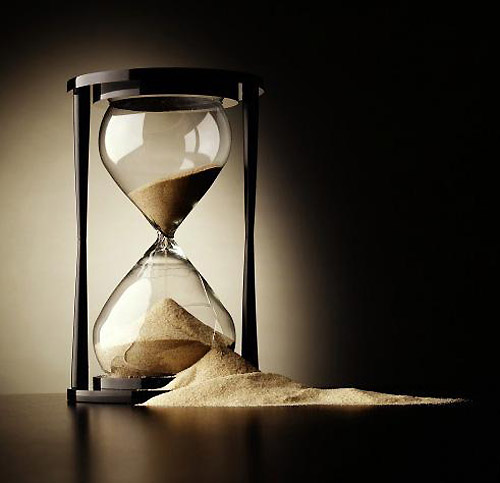
How often do you find yourself saying, “I wish I had the time to do ABC”?

That ‘ABC’ can be to read a new book, learn a new language, travel to a new country or even just to visit the pub that opened round the corner. It doesn’t matter whether ‘ABC’ will take only a few minutes or many hours or even days to do. It seems like you never have the time to do it.

My ears hurt when I hear the phrase being used as an excuse. Even if it comes up in some mundane conversation. You create this illusion of time for yourself. It’s a lie that you can use to fool yourself (and sometimes even others). A very convenient lie indeed.

You do this probably because somewhere inside you feel good about making this excuse. It means that you are a very busy person. That you have so many other things to do. That even though doing ABC is important, you just don’t have the time.

Well, here’s the truth. You will always have enough time to do what you really want to do. This façade of busyness that you create for yourself or for others is only a façade. If you are doing this unknowingly then take this as a warning to fix your ways. And if you are doing this knowingly then this is a warning to inform you that your façade will not last very long. Give it up now.

The illusion of time

Prioritising is a hard thing. All of us are troubled with it all the time. Especially because all of us underestimate the time needed to do something (and sometimes overestimate our abilities to do it). But beyond all that faff, what you really want to do… you do anyway.

If you can’t do something then it is not because you don’t have the time. It is because you did not really want do it in the first place.

Get over this illusion of time. You don’t need time…. you just need to decide.