This is where I come from

This year is my fifth living abroad, which means I’ve spent a fifth of my life not in India. Although I may never forget my Indian roots, not living there means I am not constantly faced with the life I once had. Economically my life in India and here in Britain is pretty much the same. Not so socially.

Walking the streets of Nashik or Mumbai, there was no escaping the plight of the poor. Most have to learn to turn a blind eye to it, because there is only so much you can do to help. Even then just that constant reminder is a humbling experience.

There is nothing nice about watching people defecate or having a beggar at every corner, but it is a good reminder of the privileges that we happen to have. And it is this nostalgia which takes me to Mumbai Paused ever so often. It is a blog run by a photographer who calls himself Slogan Murugan. Without telling you more, I’ll let his pictures do their job.

Screen Shot 2013-02-16 at 10.18.43 AM
Id
Christmas
Christmas
Diwali
Diwali

While I am using words to help me, Murugan simply posts pictures. And the juxtaposition of images or subjects within an image make a powerful story, leaving you to judge what to make of it.

Shave
Shave
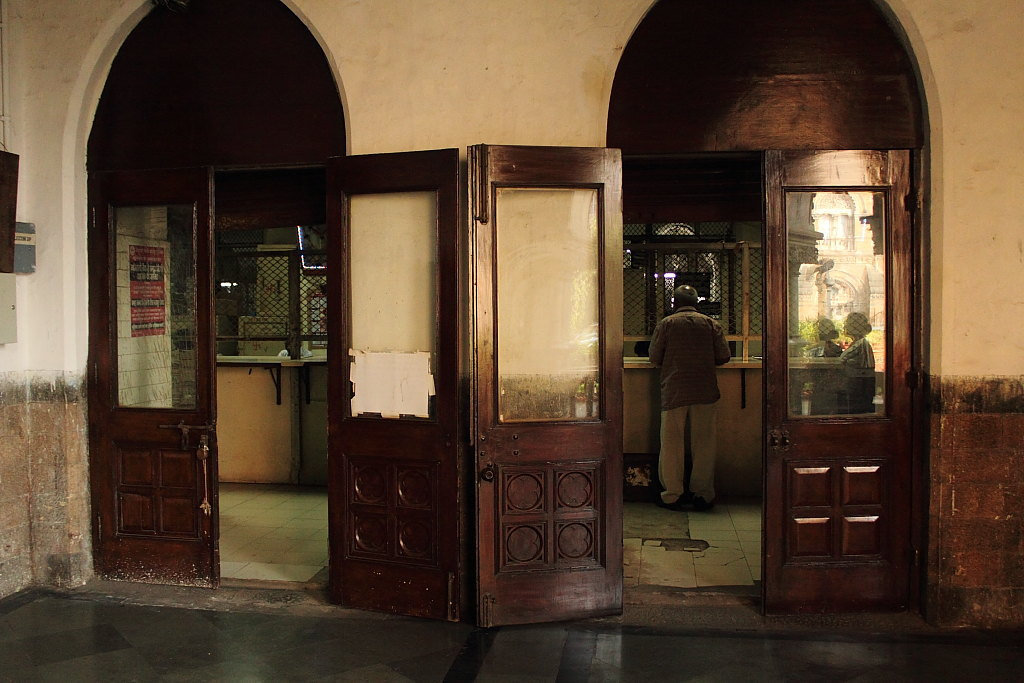
Ticket counter
Ticket counter
The ride
The ride

And it’s not all just about poverty. He brings to life some of the most mundane views of the city.

Ruins
Ruins
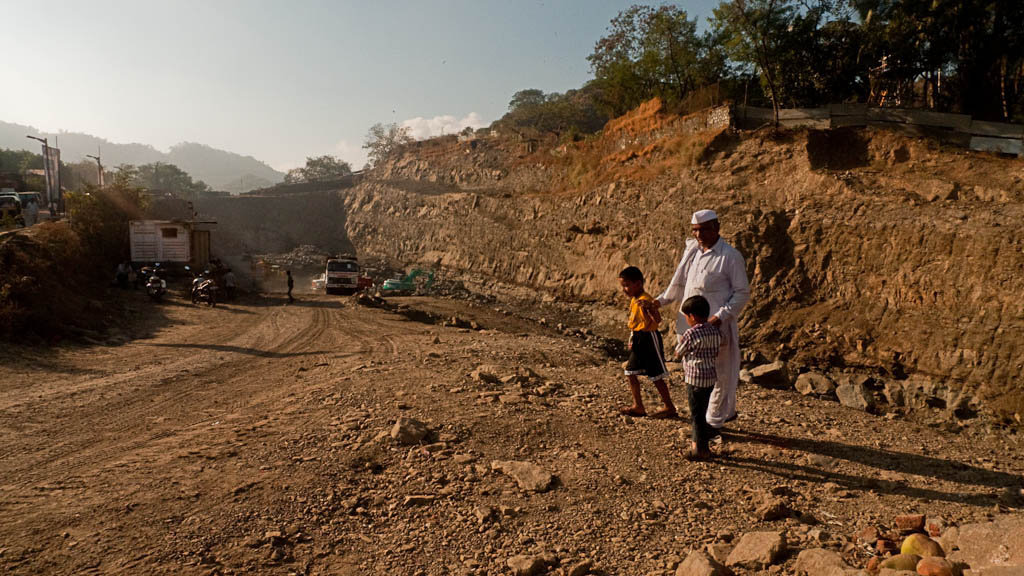
Eastern freeway
Eastern freeway
Every shop
Every shop

All images belong to Slogan Murugan.

Why memorising matters and what I’m doing about it

I hate rote learning as much as anyone can. My high school exams were a nightmare to prepare for. I detested the process of memorising facts, just so to vomit them out on an exam paper. So much so that I did not feature in the top few of my class till class 10. My teachers’ regular complain to my mum on open days at school was: “He has so much potential. He just needs to put in some efforts.”

The Indian education system made the words memorising and learning synonyms. Even during my days at one of the best engineering schools in India, I found that there were many who did much better than me because of their sheer ability to “maro ratta” (commit to memory). Ask them a critical question, one that doesn’t usually feature in an exam paper, and they would be clueless.

The UK school system is much less focused on memorising. A good portion of assessment is based on assignments done through the year. The US system, I get the impression from reading Moonwalking with Einstein, is quite opposed to memorising. I know that open-book university exams are quite common there. In the age of the Internet, it makes sense that rote learning is given as little attention as possible.

But memorising facts has an important role to play in almost all professions. For instance the more writing I do, the more I feel the need to be able to remember all the wonderful things that I read, just so that I am able to either cite them or use their ideas to develop new ones. Invention is a product of inventorying, as Joshua Foer explains.

To that end, I’ve decided that I need to take memorising seriously. So far I’ve been committing to memory without paying attention to how I do it. But as we know, to get good at something requires deliberate practice. So here is how I plan to do it henceforth.

Conceptopedia 

I’ve created my own private version of Wikipedia. It’s a google doc where I store all the information that I know related to a thing or an idea. I call it conceptopedia because, even though it’s mostly full of facts, it is a place where I externalise the memories that helped me understand a concept (hoping of course that in time I will internalise them enough to delete them from there). Example of how an entry looks: 

GM

– Science writer Mark Lynas delivered a speech in which he admitted that he made a mistake by starting the anti-GM movement. Apparently he had changed his mind much prior to the speech. He even wrote a book called The God Species praising GM in 2010.
– 1st traceable genetic modification is that from 10,000 years ago when Turkish farmers mutated the Q gene on chromosome 5A of wheat. (Ridley, WSJ, 2013)
– 50 years ago scientists irradiated the barley to create a high-yielding, low-sodium variety called “Golden Promise”. (Ridley, WSJ, 2013)
– 20 years ago scientists inserted specific sequences into rice plants to create a version that synthesises more vitamin A. They knew what letters to insert but no idea where they went. (Ridley, WSJ, 2013)
– Now precise, multiple editing of DNA is here claims Ridley. And it is being done by a private enterprise. (Ridley, WSJ, 2013)

Wherever possible, they are hyperlinked to where I got that piece of information from if I need to refer to it again. I know that this is going to be an exercise that might take quite a bit of my time, and I’m trying to build tools to make it easy. One way is to use Evernote’s Clipper add-on in Chrome (there is even an iPhone app, EverClip) to save important pieces of information with the right tags. Then once a week or so I go through the clipped bits and add them to the conceptopedia.

Mind maps

I chose to read Moonwalking with Einstein early on in my #100bookschallenge for a good reason. I want to ensure that I retain a lot more than I usually do from reading these fantastic 100 books. Normally, after a few months, I only have a vague idea of what the book was about. This time it has to be better than that.

As I wrote in the review of the book, the book gave me tools on how to remember to-do lists, phone numbers and the order in cards in a deck. Whereas what I was looking for was how to remember ideas. Foer subtly mentions that things that you often remember are things that you paid really careful attention to. If some fact blew your hat off, then you will remember it. You will also want to share it with someone which will only reinforce that memory.

mindmap

But not all facts are that amazing. So the alternative is to build mind maps. These can really work if done well, and I plan to find ways of making the most effective mind maps. The plan is to make a mind map of every article I write before writing it and of every book as I go along reading it. And of course I am planning to review each one, so that should help me synthesise that information in my head too.

What do you think about memorising? Are there any techniques you use to commit things to memory? Are there any tools for managing your notes that you would recommend?

Image from here.


Where can you strike gold in the next decade

Review of Ruchir Sharma’s Breakout Nations, as part of my #100bookschallenge.

In Breakout Nations Ruchir Sharma, a globe-trotting investment banker of emerging markets at Morgan Stanley, takes the reader on a ride too. Claiming to spend a week every month in one of the world’s emerging market economies, Sharma shows the depth with which he grasps the landscape of these oft-misunderstood economies.

The book’s timing is no accident. The 2008 crisis, which Sharma calls the Great Recession, has reshaped many future predictions, especially for emerging markets. And yet, Sharma claims that the world will miss opportunities because it is still looking with the wrong lens. He constructs his own rules (see below) and, apart from standard metrics, he uses his own indices to figure out the next economic miracles: lists of billionaires with how many billions each amassed, second-city populations, prices of cocktails and hotel rooms.

These emerging markets have grown to represent almost 40% of the global economy. which makes treating them as one class a big mistake. Each country comes with its own set of quirks, challenges and opportunities. A point that Sharma makes with great conviction (and few examples) is that economics of a country doesn’t depend on the political ideology of the country, but on the character and vision of its politicians.

His shortlisted nations that will grow at over 3% per annum over the next decade are: Czech Republic, South Korea, Turkey, Poland, Thailand, Indonesia, the Philippines, Sri Lanka, Nigeria and the East African union.

The Economist claims that some of what Sharma wrote is wrong. For instance, he treats economies like companies: “The growth game is all about beating expectations, and your peers”. Whereas the success of a country can mean more opportunities for others. While that may be the case, my fundamentals of economics aren’t anywhere good enough to spot such mistakes.

For me the book was a good read to gain perspective on the most exciting economies of the world. An important part of which was to see how Sharma connects past and present leaders of these economies and their impact on them. And for a number-heavy book, Sharma’s writing makes it interesting enough to read large chunks in one-sitting.

PS: Sharma’s rules of the road

  1. Different operating rules apply in different nations, depending on rapidly changing circumstances. Popular understanding tends to lag well behind the reality: by the time a regime’s rules have been codified by experts and hashed over in the media, it is likely already in decline.
  2. Watch the changes in the list of top billionaires, learn how they made their billions, and note how many billions they made. If a country is generating too many billionaires to the size of its economy, it’s off-balance.
  3. If the local prices in an emerging market country feel expensive even to a visitor from a rich nation, that country is probably not a breakout nation.
  4. Strong companies and stock markets should, but do not necessarily, make for strong economies, so don’t confuse the two.
  5. Be alert to the moment when rulers have outlived their usefulness. No matter what the system of the government, it is a worrying sign when leaders try to extend their hold on power.
  6. Watch for steady momentum behind economic and political reform, particularly in good times.
  7. Check the size and growth of the second city, compared to the first city. In any big country the second-largest city usually has a population that is at least one-third to one-half the population of largest. The ratio reflects regional balance in the economy.
  8. Watch the locals, they are always the first to know. They will be bringing money home to a breakout nation and fleeing one in trouble.
  9. Don’t get hung up on rules.
  10. The sight of local companies going global is often celebrated in headlines as a national success, but the more accurate interpretation depends on the circumstances. If more than 50% of a nation’s corporate earnings are coming from abroad, it could be reason for concern.