Crowdfunding science: Many a mickle makes a muckle

Necessity, so the proverb has it, is the mother of invention. And science is nothing if not inventive. So, as conventional sources of money get harder to tap (the success rate enjoyed by those applying for research grants from the National Institutes of Health, America’s biggest science-funding agency, has fallen from 30% in 2003 to 18% in 2011), some of science’s more creative minds are turning elsewhere.

Philanthropic sponsorship of science, particularly in the form of expensive pieces of kit such as large telescopes, or sponsorship for expeditions to far-off places, has been around for centuries. But the internet now permits what might be thought of as microphilanthropy. Through a technique called crowdfunding, in which members of the public donate small sums to projects they like the look of (sometimes in the knowledge that the donation will be taken up only if sufficient other pledges are made to surpass a stated target), the possibility of scientific philanthropy has been extended to those of more slender means.

On October 4th, for example, Ethan Perlstein, a pharmacologist at Princeton University, launched a bid on a site called RocketHub to collect $25,000 to study the effect of drugs such as methamphetamine on the brain. He has until November 18th to raise the money.

Kristina Killgrove, an anthropologist at the University of West Florida, has already raised over $12,000 on RocketHub to examine the DNA of Roman skeletons. And on another crowdfunding site, Petridish, the California Academy of Sciences (CAS) offered to name any new species of ant discovered during a conservation project in Madagascar after those who donate more than $5,000 to the enterprise.

Although the crowdfunding of science is not raising the sorts of sums sometimes attracted by those with ideas for things like video games, it has already spawned a couple of specialised platforms of its own. Petridish is one. Another is called Microryza. And academic institutions are starting to follow the lead taken by the CAS. The University of California, San Francisco, has made a deal with a site called Indiegogo that will allow the university’s charitable status to make money donated via Indiegogo tax deductible. It will launch the first such project later this month.

Donors can expect no revenue if a crowdfunded science project is successful, of course. But they can expect to be kept up to date with progress. Dr Perlstein has promised to upload all data from his experiments onto a website, for his sponsors to look at. And even those who are not immortalised in the myrmicine literature, as the CAS proposed, may still get a warm glow from the feeling that they are making a contribution to the advancement of knowledge in a way which was previously open only to philanthropists with rather fatter wallets.

First published in The Economist. Also available in audio here.

Image credit: VentureBeat

Geek philanthropy

An innovative charity rallies geeks for a good cause

Businesses avidly mine data to improve their efficiency. Non-profit groups have plenty of information, too. But they can rarely afford to hire number-crunchers. Now a bunch of philanthropic geeks at DataKind, a New York-based charity, are helping other do-gooders work more productively and quantify their achievements for donors, who like to see that their money is well spent.

A typical DataKind two-day “hackathon” last month in London attracted 50 people who worked in three teams. One pored over the records of Place2Be, which offers counselling to troubled schoolchildren. Crunching the data showed that boys tend to respond better than girls, though girls who lived with only their fathers showed the biggest improvements of all. The charity did not know that.

The expertise is far beyond what is available to a typical charity. The small-talk among the volunteers was of dizzyingly complex statistical and artificial-intelligence techniques. Volunteers included an analyst at Teradata, a data-analytics firm. Around 20 employees attended from Aimia, a firm that mines data from consumer-loyalty programs.

In a previous hackathon in San Francisco, DataKind volunteers analysed the data from Mobilising Health, a non-profit group that connects rural patients in India with doctors in cities that are usually many hours away. Volunteers record symptoms and relay them by cellphones. The doctors then may prescribe drugs or recommend a hospital visit. The charity wanted to use the many months’ worth of accumulated text messages to evaluate the medics’ performance. Thanks to DataKind the charity was able to rejig the system to take more account of urgency and to direct requests to the most responsive doctors.

Thomas Levine, a data scientist at ScraperWiki, a provider of data-processing services, says he has attended DataKind events out of altruism but also for education. Would anyone care to measure that benefit?

First published in The Economist. Article written with Kenn Cukier. Also available in audio here.

Image from here.

Tobacco in India

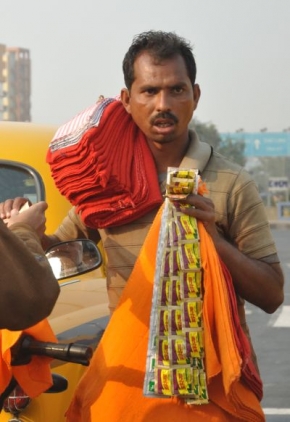
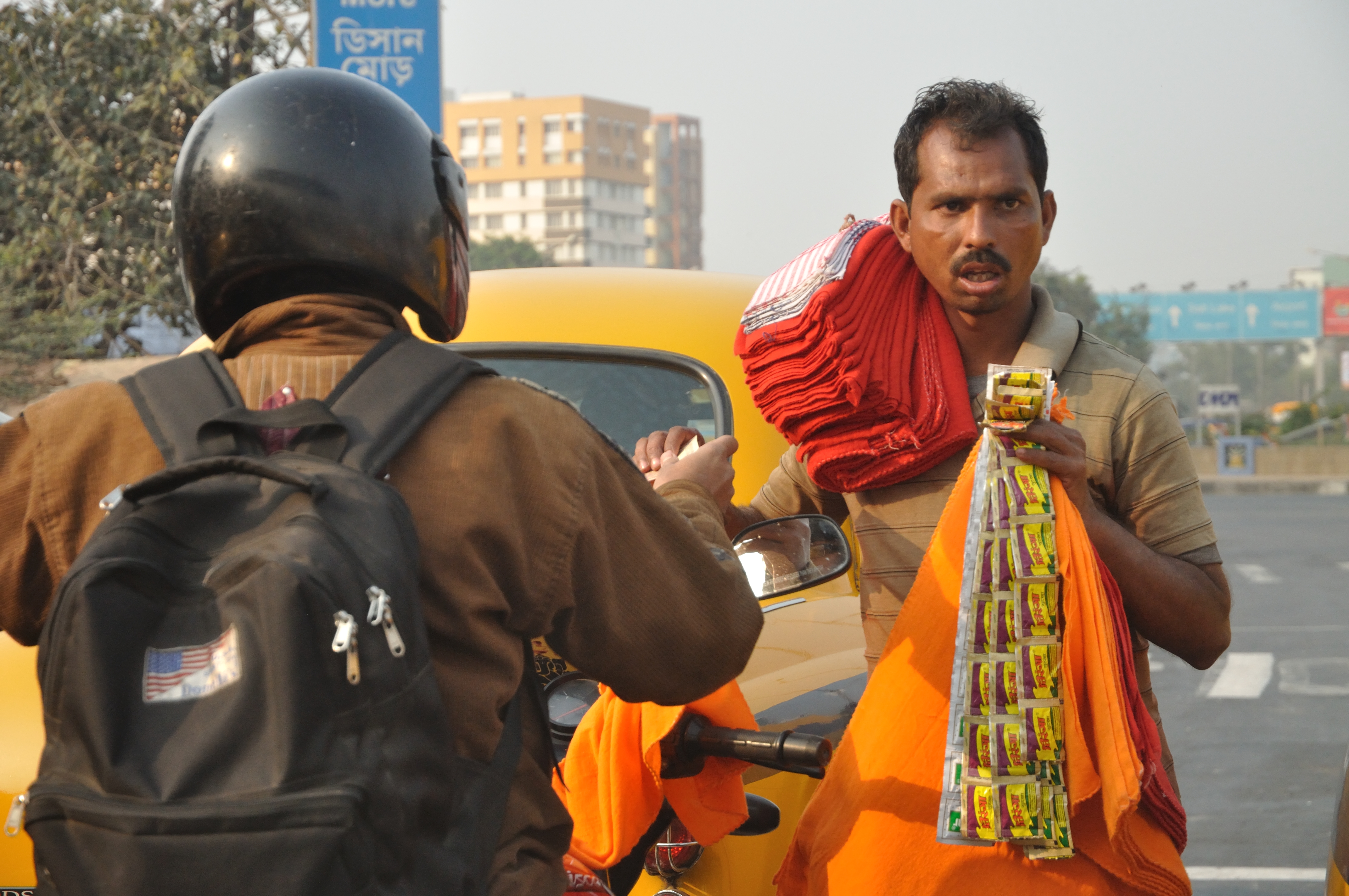
State governments in India are cracking down on chewing-tobacco products. What were once a royal delight have since become a “health menace”. On October 2nd Himachal Pradesh became the 15th state in India to ban gutka, a form of chewing tobacco made with crushed betel nuts. More than half of all states have done likewise and many others, including Karnataka, Andhra Pradesh and Tamil Nadu, are planning to follow suit.

More Indians chew tobacco than smoke it, 26% compared to 14%. Gutka, in particular, is prevalent among children who get addicted thanks to easy access and dirt-cheap prices (1 rupee or 2 cents per sachet). This means India suffers from one of the highest rates of oral cancer in the world, as much as twice the global average. Of the annual 5.6m cancer deaths in India, a third can be blamed on tobacco use.

The central government stands accused of inaction, even though the Supreme Court issued several warnings. Non-governmental organisations had been lobbying for a ban for quite some time. Finally in August 2011 the Food Safety and Standard Authority, aware of the health ministry’s indecisive stand on the matter, issued regulations under which no foodstuff, including gutka, may contain tobacco. The central government’s orders followed in March and the states’ bans followed.

But the tobacco industry is not taking it lightly. Many have dragged the states to court. They claim that gutka falls under the 2003 Cigarettes and Other Tobacco Products act, and cannot, therefore, be classified as foodstuff.

The bans are a crucial step forward, for the public-health campaigners. But challenges lie ahead. For instance, enforcement remains difficult—without a nation-wide ban, many users can get their fix from a neighbouring state quite easily. A recent report in the Lancet, a British medical journal, found that, on average, poor countries spend only $1 on tobacco control for every $9,000 they earn in tobacco taxes. According to the World Health Organisation many poor families spend up to 10% of their income on tobacco, leaving that much less to spend on education and health care. Any country’s health-care costs far outweigh the tax income raised through tobacco. A study by America’s Centres for Disease Control and Prevention showed that in 2011 American taxpayers paid $96 billion in health-care costs due to disease caused by smoking, while earning back only $20 billion in tobacco taxes. As their own health-care costs rise, Indian states could do worse than ensuring that the gutka ban stays and is enforced.

Also published on economist.com.

Image credit: Wikimedia Commons