Repairing voices: Good vibrations

How to restore people’s voices

Injury, disease or sheer old age mean that as many as 7% of Americans (and, presumably, a similar proportion of the population of other countries) have some kind of voice disorder caused by scarring of their vocal cords. Such scarring makes the cords stiff, and stops them producing sound in the normal way. But that could be overcome if a method were found to restore the cords’ flexibility.

Robert Langer, a pioneering biomedical engineer at the Massachusetts Institute of Technology, and his colleagues think they have one. They have developed a material that mimics the characteristics of natural vocal cords and could thus help restore distorted voices.

To make their new material, Dr Langer and his team took polyethylene glycol, a substance widely used in the cosmetics industry and thus known to be safe, and altered the chemical linkages between its molecules. This allowed them to control the polymer’s viscosity and elasticity. After some trial and error, as they described on August 20th to a meeting of the American Chemical Society held in Philadelphia, they hit on a mixture which matches the traits of human vocal cords. Laboratory tests have shown that when air is blown through a model of the vocal cords made from this material, the model responds in the way that real cords do.

The new polymer gel is not intended to heal scarred tissue, but rather to make the whole tissue flexible enough to restore vibrations to normal. To achieve this Dr Langer proposes to inject the gel under the tissue membrane (a thin layer of cells that covers the vocal cords), forming an additional layer within. Patients with different voices could be treated with gels that had different physical characteristics, in order to produce the desired effect.

There is a limitation. The new gel is prone to degradation and in some cases would need to be topped up regularly. But trials on animals suggest the procedure is safe, and human trials are expected to start soon.

First published in The Economist.

References:

  1. A material to rejuvenate aging and diseased human vocal cords (Press release)
  2. Karajanagi et al, Annals of Otlogy, Rhinology and Laryngology, 2011
  3. InVivo therapeutics

A list of main references here. Image credit: The Economist
Oceanic carbon sinks: That sinking feeling

Nature has her own way of dealing with excess carbon dioxide. When human activities spew CO2 into the atmosphere, plants absorb more of it than usual, leading to profuse growth. The ocean, too, swallows more than it otherwise would. Many scientists fret that these so-called carbon sinks risk getting clogged up. Some even suggest that this has already started happening.

Ashley Ballantyne, a geologist at the University of Colorado, and colleagues are less gloomy. In a paper published recently in Nature they show that over the past 50 years Earth’s absorption of CO2 has nearly doubled. Yet they see no evidence of a slowdown in the rate at which this takes place. If the climate models suggest otherwise, the researchers argue, then the modellers must have got their sums wrong.

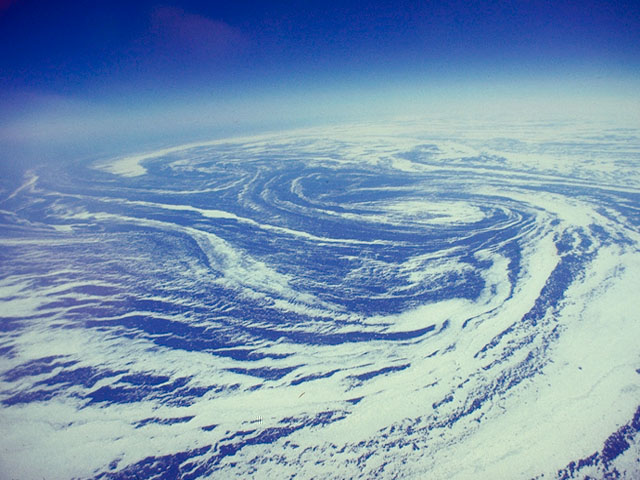
One reason, points out Jean-Baptiste Salée, an oceanographer with the British Antarctic Survey, might be that little is known about how exactly the CO2 is absorbed by the ocean, which quaffs more than half of the man-made stuff. There has been much speculation about this, but little hard evidence. Theory points to three main mechanisms: mixing the ocean’s surface layers (up to a few hundred metres) by wind; mixing of deeper layers by ocean currents; and eddies, swirls created when warm ocean currents meet cold ones, blending large swathes of the ocean 10-100km across. It had been assumed that most of the CO2 is captured by the surface layers, which would then be stirred by wind, distributing the carbon dioxide over a larger patch, and pulled down by ocean currents, freeing the surface layers to absorb yet more.

To test this hypothesis Dr Salée’s team examined a decade’s worth of data from thousands of robots and hundreds of ships spread across the southern hemisphere ocean, approximately between the southernmost tips of Africa, Australia and South America, and Antarctica, whose large, unbroken waters take in most of the world’s man-made CO2. Every nine days the robots dive to 2km and then slowly come up to the surface, recording the temperature, saltiness and speed of currents they encounter along the way. The robots are too small to carry the instruments needed to measure the quantity of dissolved carbon dioxide so this had to be done by researchers aboard ships.

As Dr Salée and colleagues report in in Nature Geoscience, eddies suck up as much carbon as the other two mechanisms do, something most current climate models fail to account for. Dr Salée is quick to urge that the fact that Earth’s carbon sinks seem to be running smoothly for now does not justify complacency. Just as the oceans gulp CO2, they might release vast quantities of it back into the atmosphere. More data delivered by global programmes like Argo, which operates the robot flotilla, and Climate Variability and Predictability, which runs the ships, will help researchers understand how this might occur—and make more accurate predictions about when it is likely to happen.

Also published on economist.com.

References:

  1. Ballantyne et al.Nature, 2012, 488, 70
  2. Salée et al.Nature Geoscience, 2012, ASAP
  3. Climate change: What lies beneath – The Economist
  4. Argo project, UK Met Office
  5. Climate Variability and Predictability (CLIVAR)

Image from here.

Squirrels and climate change

Winter is a pain in the animal kingdom. Birds can flee it by migrating to warmer climes but grounded beasts, including mammals, have no choice but to stick around. To cope, many species have learned to hibernate. Some, like the Columbian ground squirrel, spend up to nine months of each year in their alcoves. This conserves energy but leaves them with only three months to plump up for the next winter and, crucially, to procreate.

To make matters worse, climate change is leading them to emerge from hibernation later than usual. On the face of it, global warming should mean that the critters have longer ice-free periods in which to go about their evolutionary tasks. But it can also disturb weather patterns, which may have the opposite effect. Jeffrey Lane, an evolutionary biologist at the University of Edinburgh, in Britain, points out that in the squirrels’ natural habitat of the Canadian Rockies, climate change manifests itself in late-spring snow storms.

Because female Columbian ground squirrels remain in their place of birth, the researchers were able to tag and observe them and their offspring each year for the past two decades. A typical female would bear three kittens. On average, only 30% of them survive the first winter, enough to sustain population numbers since female squirrels can expect three or four litters in their lifetime. If the proportion falls, however, the population dwindles.

As Dr Lane and his colleagues report in Nature, in the first decade of the study the number of squirrels dropped just once. But it fell in four of the past ten years. Dr Lane speculates that this might be explained by the fact that over the past 20 years the late snow has delayed the melting of ice by half a day each year, on average, shortening the squirrels’ breeding and feeding season by several days and disrupting their life cycles. Since mothers have less time to squirrel away (if you will) nutrients in their bodies before it is time to hibernate, the suckling kittens are left more vulnerable.

Correlation is not causation, of course, and other factors might be behind the decline in the number of squirrels. But longer winters are unlikely to help.

Also published on economist.com.

References:

  1. Lane et al.Nature, 2012.
  2. Lane et al.J. Evol. Biol., 2011, 1949.

 Image credit: Jeffrey Lane.