Akshat Rathi is a senior reporter for Bloomberg News. He has previously worked at Quartz, The Economist and The Conversation. His writing has appeared in Nature, The Guardian and The Hindu. He has a PhD in chemistry from Oxford University and a BTech in chemical engineering from the Institute of Chemical Technology, Mumbai.
There are many types of conversations. One that concerns me today is the result of self-contemplation. During this phase, you tend to build a train of thoughts that lead to a question. The question needs to be answered, but you can’t find the answer. That’s why the need for a conversation.
For this purpose, you usually seek a person who knows you well. And these people are usually in short supply. But as unreasonable as it seems sometimes it is important to talk about something at that very moment. I don’t think I am alone in feeling this way, am I?
A simple molecule with two bromine atoms in it caused a whole generation of kings and priests to treat purple-dyed textiles as status symbols. Making that molecule in the 4th century wasn’t an easy task, though. The only thing that could do it then was a sea snail, and each snail could produce only a small amount. As many as 12,000 needed to be crushed to extract enough dye to colour the trim of a single garment. Since then we’ve understood a lot about this element, and making indigo, the royal dye, is no longer a big deal.
Researchers have developed novel ways to tap the pharmacological potential of an infamous and deadly gas
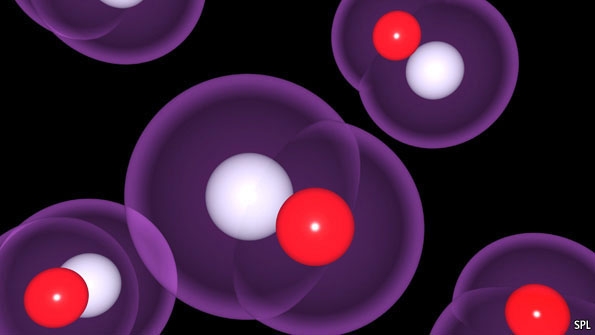
Carbon monoxide gets a bad rap. The gas, produced by incomplete combustion of hydrocarbons, causes hundreds of deaths every year by poisoning and sends many thousands to hospital. Most of these are the result of leaking cooking and heating equipment, but the colourless, odourless and tasteless substance, known to chemists as CO, has also aided many a suicide. Most horrifically, Nazis used it in gas chambers.
But there is more to the “silent killer”, as CO is sometimes called. It is produced by many cells in the human body, where its molecules play a crucial role in activating enzymes involved in controlling the dilation of blood vessels, and thus blood flow. Mice in which the gene for producing the compound has been knocked out develop faulty organs and die young.
Exploiting this insight, researchers have successfully used CO to treat a number of ailments in lab animals. These include pulmonary hypertension, an otherwise incurable disease in which thickened arteries obstruct the flow of blood, leading to heart failure. The gas can also keep inflammation in check, in particular after organ transplants.
Frederick Montgomery and Duncan Bathe think they have come up with a way to hit the sweet spot. Their Coke-can-sized gizmo, which they devised while working at Ikaria, an American drug firm that both have since left, contains a cartridge of pressurised CO, a tube to deliver the gas to the patient’s nose, and a few buttons to set the required dose. A sensor connected to a nozzle at the end of the tube constantly measures the patient’s breathing rate and adjusts the amount of CO dispensed with each breath. Safety features, including automatic shutdown if anything seems amiss, are meant to eliminate the risk of CO overdose and ensure that none leaks out, endangering others.
Scientists at another American pharmaceutical company, Sangart, meanwhile, have been encasing the gas—or, strictly speaking, CO-ferrying haemoglobin—in a polymer pouch. Kim Vandegriff and her colleagues have been using polymer wrappers a mere nanometre (a billionth of a metre) across. These can be designed to break open only where their payload is needed. Early trials have shown promise in treating sickle-cell anaemia, a disease caused by a faulty haemoglobin gene.
Unlike most drugs, CO is not broken down by the body. Instead, once its job is done, it is transported to the lungs and exhaled. As a result, it produces no side-effects. Given the right dose, then, it can heal silently, too.

 Akshat Rathi