The quirks of human nature

Human nature is mysterious and beautiful. What goes into making it gives each one of us the uniqueness that we possess. If we were able to define human nature as the sum of a certain number of components then I am sure that we will have many many components and that a unique amount of each of those components goes into making us who we are.

Too philosophical? Well, I say this because I made some peculiar observations. They led me to believe in what I just described above. I will now stop talking like I have just made the world’s greatest discovery and tell you what led me to these thoughts… you can make up your own mind about it then.

Observation 1: I have a housemate who likes to see a clean house. Sometimes he can get really annoyed if it isn’t in an acceptable state. We’ve come to love him as he is and are happy to put up with his little requests. But he’s been away for the past few months and that has meant that the house has slowly become messy (not that bad at all but if he were to see it then he would definitely be annoyed). I realised today looking at the state of the house that I don’t mind it really. If the others living in the house have no problem with it, I am not going to cause a fuss about it either.

But that’s half the truth. I know that I will get the house in a presentable state before my housemate returns. The funny thing is that I know that when he does come back I will want it to be in a better state than it is now.

Observation 2: I had two lab-mates. One a freak for cleanliness and organisation, the other the exact opposite. I was between the two. I don’t mind some disorder but too much of it made me crazy too. So we had been working together for over six months pretty much keeping to our ways of working without bothering each other very much. We only rarely ever had grievances against each other’s ways. So far so good.

But last week the messy lab mate finished his time and left. Now, it was just the two of us, the organised one and me. The very next day when I came to the lab, I had this urge to get rid of all the mess in my work space. And I did just that, I cleared all the clutter. Suddenly my work place resembled the organised lab-mate than the messy one.

Discussion: I like being organised and live and work in a clean good-looking environment. But I don’t obsess about it too much. But that’s not it. It seems my level of ‘messy’ness is influenced by the people I am surrounded by, and unknowingly so. I say ‘unknowingly so’ because the realisation I had today in observation 1 and the urge I had in observation 2 came to me very naturally. I wasn’t thinking about the people whose presence or absence influenced my decisions. I just took the decisions.

I was troubled to see my peers could influence me in such subtle unknown ways. I knew it happens. Of course, peer pressure is a real thing but seeing it in action on myself was quite disconcerting. So I thought about it for a while and I found something interesting.

If my state of ‘messy’ness was affected by my lab-mates, how come their states weren’t affected by mine? Surely, my organised lab-mate should have become messier than he was and my messy lab-mate should have become more organised because of the presence of each other and me. But no, that did not happen. Then I thought – why consider only ‘messy’ness, if I was affected by my lab-mate’s ‘messy’ness and then surely there must be something that affects them and but not me. And sure enough I found that I am not affected by social pressures as much as my lab-mates. There are plenty of stories to tell about this but I don’t want to bore you. You will have to take my word for it or grab me to tell you that story if don’t believe me (and are ready to get bored).

Conclusion: So the only sensible conclusion that I could draw from all these thoughts was that we individuals have strong preferences for certain things and not for other things. Those things that we don’t have a strong preference for we let it get affected by our peers and swing the way our peers would want. But for things that we have strong preferences, we are ready to battle out the peer pressure and stick to our ground.

Not such a great discovery after all you say. Well, that may be. But hey, I noticed something important about myself, that in itself has tremendous value I think. Observing yourself, and I mean really observing yourself, isn’t easy. If I am able to tune that ability then I know that I will be able to spot my own faults better than I could before, which in turn will lead me to become a better person. Good enough for you?

If that’s not good enough for you then I have some more wisdom on sale today. The thing is that if our preferences for things can easily influence how much we are affected by our peers then we must really pay more attention to the preferences we have and may be think about which preference we should have and which we shouldn’t have. I know that changing oneself is hard but if peer pressure can act as a catalyst for change then why not use it for the desirable changes and stop it from making undesirable ones!
Here’s the geeky version of the post: If we were able to write an equation with variables that all add up to make human nature then would be large enough to have enough variables with large enough range of values to account for the uniqueness displayed by all of us. In those n variables some will have the ability to fluctuate and some not depending on the individual and the circumstances the person finds themselves in.

Written while RJD2 played Ghostwriter on repeat.

It’s ok if the Spirit dies

The very first issue: October 2006

As a student in the third-year of my undergraduate degree, with a few friends, we brought to our Institute a bi-monthly newsletter called The Spirit. It was an attempt to give a platform to the students to voice their opinions, explore their interests, develop good writing and editing skills but most of all it was an attempt to have fun doing something interesting. If the newsletter were still in print it would have been in its sixth year of publication. But like everything that is born, it will die…

While I worked on the newsletter, we spent many many hours putting little things in place. There used to be some special kind of energy that I derived from working on it. Not just while I was there but even after having left the Institute. Believe it or not, I followed up on the progress of the newsletter till last year, its fifth year. Whenever I had a chance, I used to speak to the team working on it. Of course, all the work was done by the particular team but it gave me tremendous pleasure that our baby was still being looked after and I was always ready to do what I could to help them in some way. But the signs of it’s ‘death’ were visible.

Things had started to change as soon as I had left. The teams that came did not seem as motivated as the teams I had the pleasure to work with. They had new ideas which was great but implementation of those great ideas, more often than not, did not happen. The co-ordination amongst the teams fell quite rapidly and it was not hard to see why the number of issues being printed kept falling till finally in its fifth year the students decided to make it an online-only publication.

One of the reasons that I was very keen to keep it going was because we had made a promise that we will ensure that it will go on. We weren’t allowed by our faculty members to start a newsletter until we had thought of how we would be able to sustain students’ efforts to keep it going in the future. We were also told that we had to find our own money to get it printed. For the first two years, we managed alright. It was hard work but the enthusiasm of the team and the response we got from the readers made the effort worthwhile.

I don’t know what went wrong. I wasn’t there to watch what happened. Sure I spoke to people but there wasn’t a clear reason. Money was a concern but it wasn’t a big enough worry because one way (Institute’s backing) or the other (contributions from alumni) it could be tackled. The lack of motivation might have been the biggest reason. Looking back I think our team was so motivated because we had made public commitments and also because we were the guys who started it. The responsibility combined with the thrill allowed to us to go that extra-mile.

Amongst the other reasons, of course, could be what has been one of the most difficult questions that the print media faces today. People spend more and more time reading online than in print. (I probably pick up a newspaper once in a month!) When we started the Spirit, it was the time when internet was becoming cheap enough to afford a personal connection in your own room in the hostel. I imagine that now everyone has their own in the Institute. Of course, the move to making it an online-only publication should have worked then, no? But it hasn’t. Or so it seems.

Moreover, the Spirit unlike Manzar or Sportsaga (both inter-collegiate events of ICT which I believe are still going strong) was not a one-off ‘event’. So a team of ten people had to work round the year to sustain the newsletter as opposed to a team of fifty or more people who worked for a few months to make the events happen (I am not trying to undermine the work put in to make the events happen but merely commenting on the sustained efforts needed for the newsletter).

I suppose once the team that had started these things had left, the main motivation for students to keep doing anything would be the value they get out of doing it. Value in learning new skills, in having fun while doing it, in making new relationships and, of course, adding to the CV fancy titles that come with doing these things. In that respect, all these activities taught people how to manage people and relationships, how to market/sell what you are doing, how to be responsible for your actions, etc. But one unique advantage of working on the Spirit as opposed to other activities was that the students would develop the critical skill of writing and editing.

Many of those at this esteemed Institute will one day be leaders in their own fields and one way or the other will have to learn how to communicate effectively using written words. In my opinion, the sooner that skill is developed the better it is. But may be that isn’t a priority for the students in the Institute anymore.

You may be wondering where am I going with this. Well, I brought up this issue today because of two reasons. First, I wanted to put down in words my experience of working on the Spirit so that if by chance in the future someone decides to bring it back to life (even under a different name) there will be something that they can read about and may be do it better than we did.

Second, I am now ready to close this chapter of my life and wanted to do it justice by giving it the respect that it deserved. The Spirit meant a lot to me (as it must to the teams that worked on it), I learnt a lot of time on it during those days. Whatever little writing that I do today, I know that the Spirit played a key role in making that happen. As such, I feel a little hurt that I am closing the chapter much sooner than I wanted to. In our days while working on an issue of the Spirit, we used to talk about coming back to the 10th anniversary celebrations of our graduation and still finding copies of the Spirit. I don’t think that will happen but I hope I am proved wrong.

***

Don’t believe a word I say. See for yourself what people had to say about The Spirit:

M Sriram: Hope you and your team are able to come up with the second issue rising to the higher expectations which your first issue has triggered.

Raghavendra Ravi: I saw “The Spirit” It is very nice.. UDCT has changed a lot. In our times ( sorry to sound old – 1975-78 ) such thing were not easy. Though the notice board journalism was on.

Prashant Mullick: Surprisingly fresh! It was interesting that H(B)ollywood figured in a substantial number of stories. Overall a nostalgic eclectic mix of UICT news and social topics. I enjoyed it. Hope to see you guys continue putting this together.

Smita Lele: UD – UG = Body – Spirit!!!!

In other words UG’s are the fire, the electricity in the UD environment
and the knowledge pool created by PGs and research will loose its charm
without bright UGs who are the star personalities at this young age.
Let me share a secret of UD’s research story — why most of the UD
teachers want to combine teaching and research and do not want to be only
full time researcher in any National or International Research lab? The Undergraduate teaching charges the battery of the researcher’s mind
and intellect and keeps him (her) young at heart!

That is why I feel, UD – UG = Body – Spirit!!!! Best wishes to “spirit”.

Asmita Atre: The issue 3 has come up really well. The presentation is very attractive and I am certain that you people will continue working the same way.

Anil Nair (the guy who motivated us to start this newsletter): More than anything, it is your verve and the enthusiasm which brought Spirit to such levels. As in case of any magazine the passion tells the story. I don’t know if it is inappropriate to tell this — the first day when Akshat sat with me through the night skipping a date with his girl-friend to design Spirit, I knew where the magazine will reach. Most often, when I got the magazine I read it cover to cover. Everyone’s contribution was excellent. I am not surprised by all the accolades for Spirit. At the risk of sounding patronising I should add that the new team should keep the good thing going. Also, all of you should try to touch base with your friends in the pretext of Spirit. Friendship is more important than anything.

End of the diet and the lessons learnt

Friday was the last day of my four-week slow-carb diet experiment. It has been a great experience and I have learnt many lessons which I plan to implement in my diet for the future.

Stats first: I now weigh 66 kg which is 2.8 kg less than the day when I started the diet. My total inches have gone down to 129.0 from 133.5 (lost 1 inch on the thighs, 2 on the waist, 0.5 on the hip). Even after taking experimental errors into consideration, this is definitely a good enough reduction.

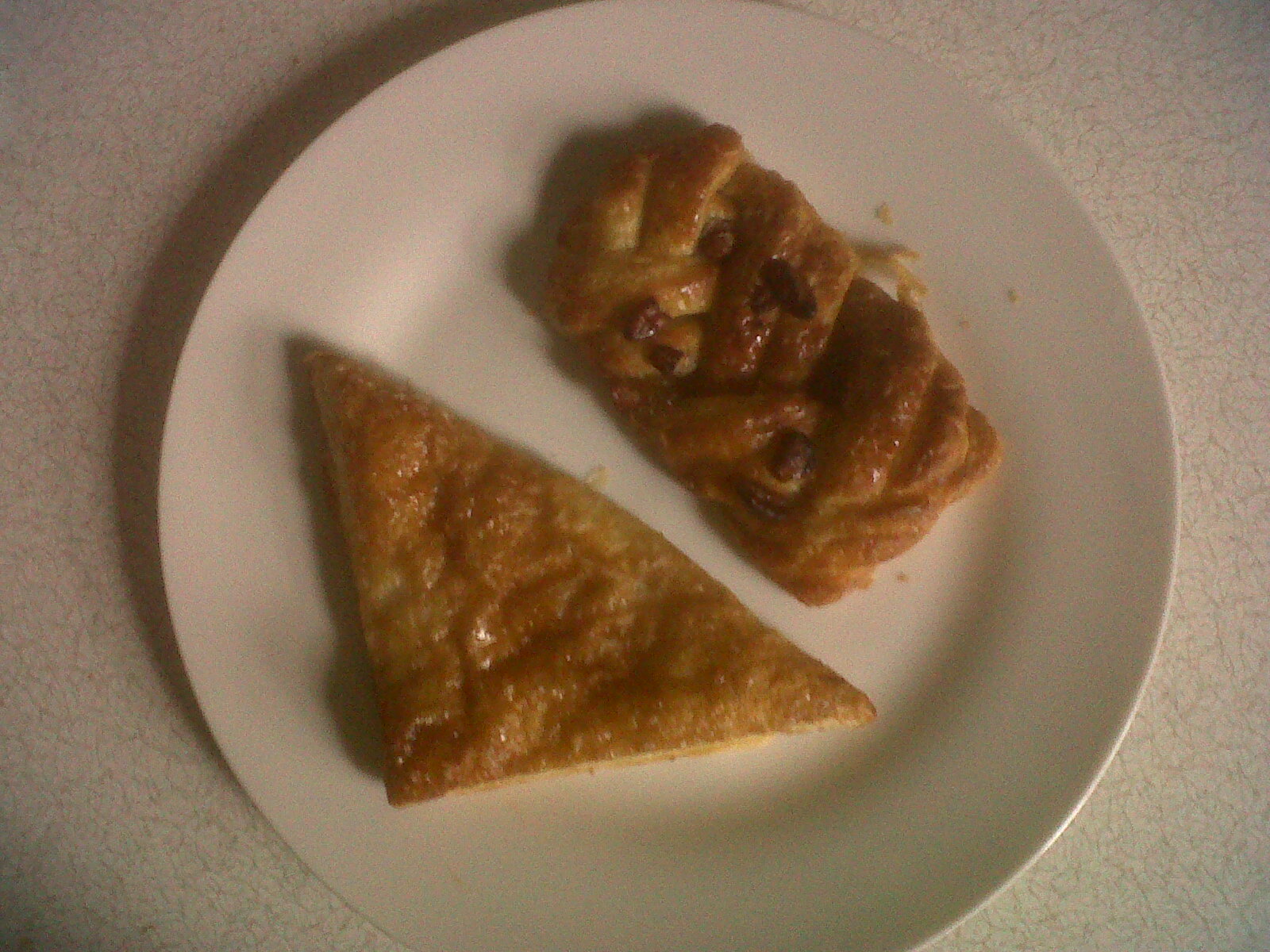
cheat day breakfast

Before I talk about the lessons learnt, I have to admit that I have allowed myself a few deviations from the diet in the last two weeks. I’ve had a few chocolates (two or three in the week) and beer twice in the last two weeks. These weren’t allowed on the diet as I had planned but I happened to have them anyway. Apart from these confessions, I have stuck to pretty much everything i.e. no fruit, no milk, no white carbohydrates and no sweetened drinks.

Here are the lessons then:

  1. Sweets: I need tighter control on my sweet tooth. Normally, I need something sweet after every meal even if it’s something small. Then I tend to have something sweet in between my meals – cookies, chocolates, biscuits, muffins, etc. Now on, I am going to be careful about these. Try to keep to having only one sweet thing a day, if I can manage it.
  2. Breakfast: Before starting the diet, I rarely had breakfast. I was usually in a hurry to get to the lab and that meant skipping breakfast was an easy option. Not any more. A healthy breakfast (spinach and sweet corn is awesome) does plenty to keep me active till lunch time.
  3. Low carb: Too much carbohydrate isn’t good to maintain weight. I am definitely ok to skip french fries, bread and rice. I will have roti but only if I really want to. I will also be restricting my intake of sweetened drinks allowing myself only fruit juices.
  4. Snacks: As I realised at the end of the first week, on this diet I had to have five meals. Usually, my snack used to be something sweet but in this diet I instead chose to have carrots or peppers with humus. I think it’s a much healthier choice. I eat more but take in the same number of calories.
  5. Cheat day: I think it’s a great idea. I will keep up with it. On Saturdays, I will allow myself to gorge on whatever I like (a cheesy pizza, yum!). On the remaining days, I will try to keep my carbohydrate intake low.

One of the important aspects of doing this experiment was to understand the difficulties of keeping control on my diet. I have to admit, it’s hard. I don’t think that a low-carb diet is something I can keep forever even if that’s a healthy alternative. But it’s doable. I know if ever I add those unnecessary kilos to my body, there is a way to get rid of them.

But more importantly, I know the cost of losing just 3 kg is substantial. So it’s better to keep an eye on the diet. Eating habits are amongst the  hardest habits to change. Now that I’ve already spent four weeks trying to adopt a diet, it should be easier to keep the lessons in mind and to continue with the habit that I’ve formed.