I stepped out of a chemistry lab to receive a shiny doctorate a little more than two years ago. Then, against the wisdom of many, I decided to become a journalist. That decision was made not because I despised academia, but because it seemed to me that journalism was where my strengths would give me the best chance to succeed.
In doing so, I was leaving behind a world that I had tremendous respect for. Dedicating one’s life to pursuing hard questions in a narrow field of knowledge enriches the world in countless ways. That enrichment is the result of two things: production of new knowledge and new knowledge-bearers (ie students). What you read in popular press about universities is mostly what new research has found about the world. A less talked about, and perhaps greater, contribution that universities make is in educating new students.
Teaching the same course year after year sounds boring to me, but I’ve been assured by many that it is one of the reasons they enjoy being academics. This yearly practice of coming up with new and better ways of explaining fundamental concepts combined with the struggles on the edge of knowledge in a particular field gives these academics the power of conveying the meaning of complex concepts in simple and powerful ways.
A new experiment
If I were asked to give one reason for choosing science journalism, it would be that I get to learn new things about the world all the time. Hardly a days goes by when there isn’t something awesome in science news to read and write about. That is why when I was offered, a year ago today, to be the launch editor for the science and technology section of The Conversation’s UK edition, I wasn’t going to let the job go.
But there was another reason why the job appealed to me: the idea was to get academics to write for the public. The hope was that, with their expertise and skills at explaining ideas, they would help put news in broader context and convey the “meaning” of events to help improve public dialogue on important topics.
While the scientist in me was dancing with joy, the journalist was sceptical. What academics usually write is meant for fellow academics. Their use of passive tense and jargon can put off even the most interested non-experts. They also work on vastly different timescales. Journal articles can take from months to years to get published. News articles usually take only few hours or days to get to the reader.
Marrying the two professions for a public service project was a great idea, but would it work? Could the third major contribution of universities be educating the public (not just a promise, but a reality)?
Is there demand?
“Professors, we need you!” said Nicholas Kristof in the New York Times. The Conversation Media Group, founded in 2011 in Australia, got to work before Kristof made the public demand. By the time it launched in the UK in May 2013, it had shown that the Australian public had an appetite for this experiment.
The success down under was swift for one more reason—The Conversation represented a “third choice”. Until 2011, most newspapers and online news websites were owned by either Fairfax or News Corp, which allowed The Conversation to tap into a readership eagerly looking for alternatives.
The UK was different. It had (and still has) some of the most respected publications in the world. There was plenty of choice for an average reader across the political divide. Yet, it seemed that The Conversation stood a chance. Many of the best publications were under financial constraints, cutting staff, especially specialist reporters in science, environment and health. There was scope for explaining news better, and bringing new stories that journalists missed or didn’t have the time to cover.
Readership figures show that the experiment has been successful so far. For the last few months, which is less than a year since launch, the UK edition alone has been reaching more than 2 million readers, and that number is growing quickly. All this with a small team (seven editors at launch, then 14 since February) and no marketing budget.
As a Creative Commons publisher, The Conversation’s authors and their articles have featured in some of the top publications worldwide, which have different aims and leanings—The Guardian, Washington Post, New York Times, The Independent, The Hindu, Daily Mail, New Statesman, The Week, The Atlantic, Quartz, Business Insider, Scientific American, Popular Science, Discover Magazine, Ars Technica and Slate, among others.
Much of my scepticism about this job was reasonable. But, right from the start, I was pleasantly surprised at the both the quality and the speed of writing. When given a brief and a deadline, academics usually delivered. Sure first-time authors needed (and still need) lots of help, but most of them were also prepared to learn and improve in this form of communication. What surprised me the most was their enthusiasm. Whoever thinks academics don’t like to engage with the public should spend just one day in our office.
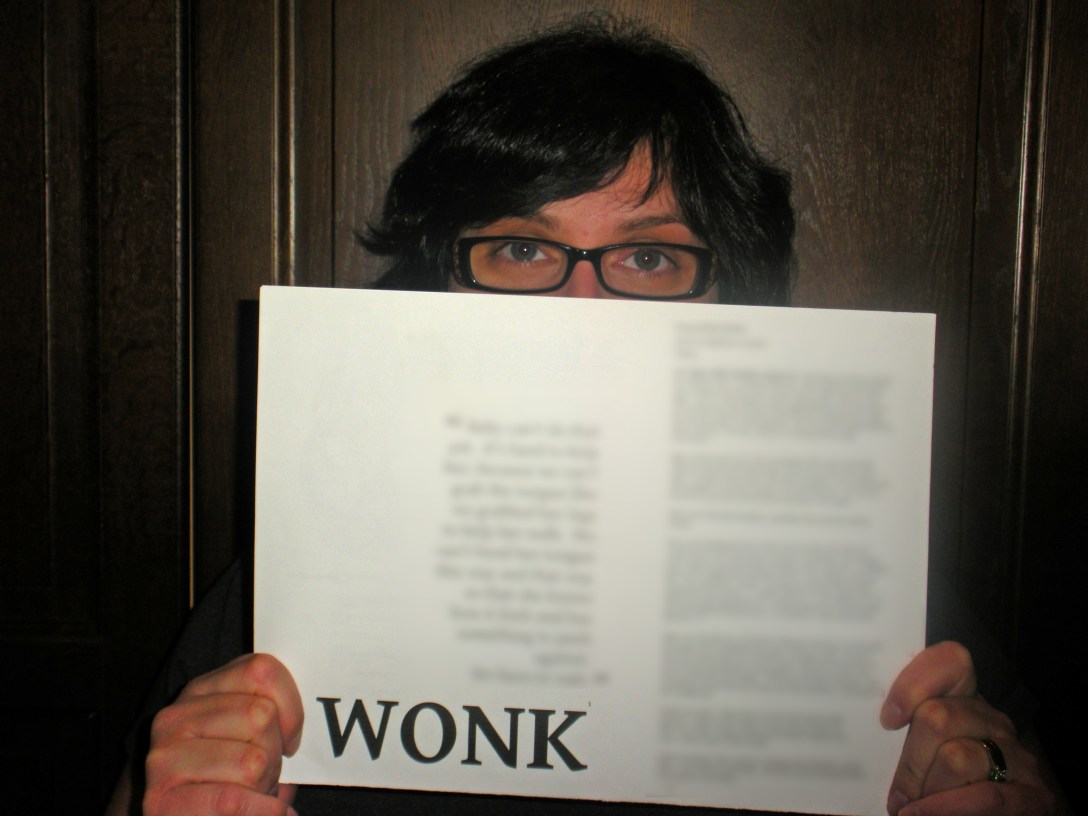
For the first few months, about four in five stories were those where I had to approach an academic with an idea and commission them to write an article. But as The Conversation’s name started spreading, I started getting in more pitches. This was what I was waiting for. Academics who understand what The Conversation does, who get what the public reads, and who were willing to spend the time to write such articles. These academics were bringing through new stories or new angles to old stories, all of which journalists had missed. Here, I realised, were the true wonks.
What is true wonkery?
Recently Felix Salmon of Reuters asked, “Is there a wonk bubble?” In answering that question, he mainly referred to the launch of two websites Vox.com, which wants to “explain the news”, and FiveThirtyEight.com, which wants to use data to tell news stories. I agree with Salmon that both these experiments are great for journalism, but I don’t think that they represent “wonkery” in the true sense.
The new publications are being built on the back of the wonkery of its Editors-in-Chief: Ezra Klein (politics and economics wonk) and Nate Silver (data wonk). The rest of the editorial staff, while quite capable and of high calibre, can’t all be classed in the same category as wonks, definitely not in Salmon’s narrow definition of journalists who know their subject really well and built their reputation through blogging (mostly about policy and politics).
Wonk’s definition as “a person who is obsessively interested in a specified subject” is actually much more accurate for academics (or even PhD students). That is why I class them as the true wonks. Being able to tap into this wonkery, or expertise (as most people would call it), can bring through stories that journalists would just not find on their own.
Economists such as Tyler Cowen, Paul Krugman, Simon Wren-Lewis and David Blanchflower command large audiences already. Scientists have had a long tradition of popularising science, be it Carl Sagan or Brian Cox. Now, beyond promoting the good work of already engaged academics, what The Conversation provides is a platform for new and diverse voices with fresh ideas, which would have otherwise remained in the ivory towers. More than 11,000 academics from over 700 institutions have already contributed to this new conversation.
To give you a flavour of what I mean, I have selected some of my favourite science stories on The Conversation from the past year. They have been split into four categories: the first is explanatory (The Contextual) and the other three are stories that journalists missed or couldn’t dig up (The Newsworthy, The Amazing and The Strange). I trust you can judge for yourself whether the experiment is worth it.
The Contextual
The Newsworthy
The Amazing
The Strange
Image credit: Lucas Warren


 Akshat Rathi