One may become a wordsmith by learning to choose the right words and crafting them into beautiful sentences that flow like a wonderful stream. But that writing is of little value unless it is also telling a good story.
Author: Akshat Rathi
Akshat Rathi is a senior reporter for Bloomberg News. He has previously worked at Quartz, The Economist and The Conversation. His writing has appeared in Nature, The Guardian and The Hindu. He has a PhD in chemistry from Oxford University and a BTech in chemical engineering from the Institute of Chemical Technology, Mumbai.
This is the best new year resolution you can make
New year resolutions should be about multiplying your strengths, while making a note of your weaknesses

Soon many of us will be tempted to make new year resolutions. Perhaps you’ve been egged on by someone who successfully managed to keep theirs. Or perhaps that reflection time you got over the Christmas break has made you renew old resolutions with more, well, resolve. Or maybe it’s just that you need those resolutions because you don’t want to appear lazy.
Rationally speaking, any given time of the year should be a good time to make resolutions. But the new year tempts us to believe that it is instead the best time for resolution-making. It’s marked by celebrations with friends and family, who often have advice on which resolutions work and which don’t. Some even have tips on how to make sure you stick to them.
We should all strive to make good resolutions. But most new year resolutions we make are just terrible. Here are the most positive results I could find in the scientific literature on new year resolutions: a 1989 study in the journal Addictive Behaviours showed that
77% participants kept their primary resolutions for one week. 55% for one month. 40% for six months. These success rates were probably elevated because of volunteer composition, self-reporting and study’s demand characteristics.
Even without the caveat, the research says that nearly half of all participants were not even able to stick to their primary (ie the most important) resolution after a month.
Psychologists find that the most common reason we cannot stick to our new year resolutions is because we choose resolutions that are radically different from our current lifestyle. For instance, the most common resolutions are to exercise every day or, in case of smokers, to stop smoking altogether.
At the heart of keeping resolutions is the art of self-control that decades of study have shown is a limited resource. The sort of new year resolutions we choose tend to require a lot of self-control, which means they are also the easiest to give up.
And, even if we leave science aside, I contend that nothing more than your own personal history of sticking to new year resolutions is needed to convince you why this year’s resolutions should be different. So what’s the alternative?
The better thing to do is to resolve to multiply what you are already good at. In any given year, however good or bad it has been, there will always be things that you did that worked quite well and vice versa. The good bits may have come to you naturally, or maybe you had to work really hard to get to them. Either way, to better what you’re already good at is easier and requires less self-control to achieve. It may also bring in more positive results than you think.
When we make resolutions, we solely focus on our weak points. That is of course what we think will bring us the most gain. If we were able to stick to our resolutions, working on the weaknesses would indeed bring huge gains. But because our resolutions fail so easily, it is better to choose the low-hanging fruit for now.
This is not to say that you should not aim to make fundamental positive changes to your lifestyle. You should but you would be more successful if you choose to do that later on in the year. All the articles coming your way about new year resolutions would be better used then!
Insulin pill may soon be a reality
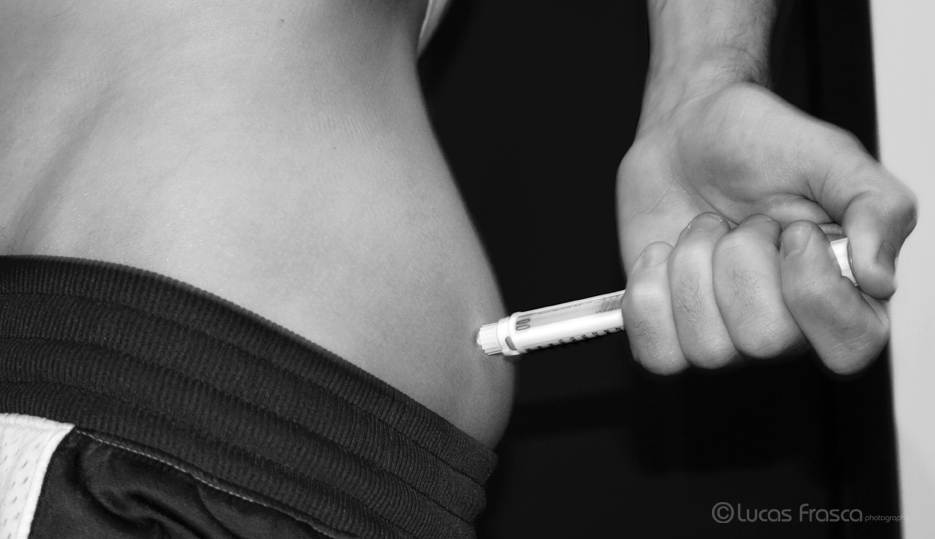
Daily jabs of insulin are a painful reality for many with diabetes. That may change if researchers who have successfully tested oral insulin in rats are able to replicate those results in humans.
Nearly 350m people worldwide suffer from diabetes and that number is predicted to grow to more than 500m by 2030. While the more common form, type-2 diabetes, does not always need insulin treatment, nearly quarter of all diabetes patients depend on insulin jabs. Oral insulin’s estimated annual sales could be somewhere between $8 billion and $17 billion.
The benefits of an insulin pill are more than just ease of taking the drug. The pill will mean that patients can start taking insulin earlier in the development of the disease, which could reduce some of the secondary complications, which can include blindness and impaired healing that leads to amputations.
The idea of oral insulin has been around since the 1930s, but the difficulties of making it seemed too big to overcome. First, insulin is a protein – when it comes in contact with stomach enzymes, it is quickly destroyed. Second, if insulin can pass through the stomach safely, it is too big a molecule (about 30 times the size of aspirin) to be absorbed into the bloodstream, where it needs to be in order to regulate blood-sugar levels.
Sanyog Jain at India’s National Institute of Pharmaceutical Education and Research and his colleagues have been working on delivering insulin in the oral form for many years. Their first fully-successful attempt came in 2012, when they developed a formulation that successfully controlled blood-sugar level in rats. But the materials used were too expensive to consider commercialising the technology.
Now, in a paper published in the journal Biomacromolecules, they have found a cheaper and more reliable way of delivering insulin. They overcome the two main hurdles by, first, packing insulin in tiny sacs made of lipids (fats), and, second, attaching to it folic acid (vitamin B9) to help improve its absorption into the bloodstream.
The lipids they use are cheap and have been successfully employed to deliver other drugs before. These help to protect insulin from being digested by stomach enzymes, which gets it to the small intestine. When the lipid-covered sacs enter the small intestine, special cells on its lining called microfold cells are attracted to the folic acid in them. The folic acid helps activate a transport mechanism that can let big molecules pass through into the blood. The amount of folic acid used in the formulation also seems to be in the safe region.
In rats, Jain’s formulation was as effective as injected insulin, although the relative amounts that entered the blood stream differed. However, it was better in one key aspect. Whereas the effects of an injection are quickly lost (in less than 6 to 8 hours), Jain’s formulation helped control blood-sugar level for more than 18 hours.
The most important part of the research comes after successful testing in animals – the formulation needs to be given to human volunteers. But, Jain said, “at a government institute like ours, we don’t have the sort of money needed for clinical trials.”
He may not have to wait for long, as big pharma companies have been searching for an insulin pill formulation for decades. Two of them, Danish pharma giant Novo Nordisk and Israeli upstart Oramed are in a race to come up with a solution. Google’s venture capital arm, Google Ventures, recently invested $10m in Rani Therapeutics with the hope it will help develop oral insulin. Indian firm Biocon also does oral insulin research, and it recently signed an agreement with pharma giant Bristol-Myers Squibb.
Oramed is ahead, with their oral insulin product soon to enter phase-II clinical trials, which is the most advanced stage any oral insulin formulation has ever reached. Its chief scientist, Miriam Kidron, said of Jain’s research: “Most people have the same basic idea to develop an insulin pill, but its the little differences that will determine ultimate success.”
While Kidron did not reveal Oramed’s formulation, she said, “we attempted liposomal delivery before, just like Jain’s work, but we weren’t successful.” She warned that translating success from rats to humans is very difficult. And she is right – most drugs have a high cull-rate at each stage of their development. Even so, research like Jain’s give hope that an insulin pill may not remain a dream for long.
First published at The Conversation.
 Akshat Rathi