Frozen plants from the Little Ice Age regenerate spontaneously

Retreating glaciers are proving to be good news for plant scientists. Underneath one such glacier on Ellesmere Island in Canada, researchers have found plants they believe have regrown after being entombed in the glacier for more than 400 years, since a cold period called the Little Ice Age.

These plants are called bryophyte, a group that includes mosses. They are non-vascular, which means they do not have tissue that distributes resources throughout the plant and they do not reproduce through flowers and seeds. They use spores instead. But they also possess the ability to regrow from tiny fragments of themselves through a process called clonal growth. “This ability makes bryophytes pretty tough,” Andrew Fleming, a plant scientist who was not involved in the study, said.

The discovery reported in the journal Proceedings of the National Academy of Scienes was made by a team led by Catherine La Farge, an expert on bryophytes at the University of Alberta. Because the bryophytes found were not much different from similar variety found in the wild today, La Farge used radio carbon dating to confirm the age of their find.

The plants were trapped during a period known as the Little Ice Age, between the 16th and 19th centuries, when glaciers were growing in size. Arctic glaciers have recently been retreating and, since 2004, the rate of ice melt has increased dramatically. La Farge is hopeful that, in addition to these plants, the melting glaciers will release other interesting flora and fauna of that time.

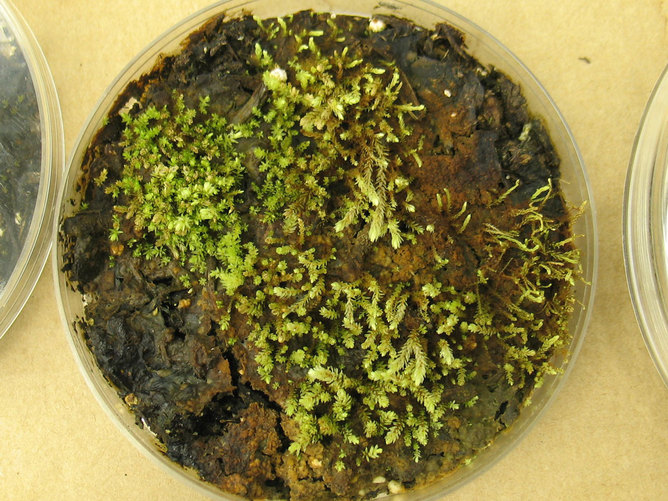
When these bryophytes were found they were blackened, but sported a hint of green. See to the right of the rock in the middle. Catherine La Farge

This discovery does not displace the record of the oldest frozen plant to be regenerated. That belongs to a 32,000 year old specimen of Silene stenophylla, which was regrown by using tissue extracted from its frozen seeds.

These bryophytes are also not the hardiest plants we know. That title belongs to what are commonly known as resurrection plants, which are able to survive extreme dehydration. Some of these are commonly found in deserts, such as Selaginella lepidophylla found in Chihuahuan Desert on the border of Mexico and the US.The Conversation

First published on The Conversation.

Image credit: Catherine La Farge
The art of asking questions

NYT correspondent Jodi Kantor writes:

There is no one question that works for everyone. In fact, the secret to asking great questions is avoiding generalities or broad philosophical inquiries. Hypotheticals are worst of all, because they’re going to give you the opposite of what you want, which is the person’s real, lived experience. To ask a really high-yielding question, you need to have done your homework. The most illuminating questions are simple and specific.

‘Clone by phone’ means faster vaccine preparation

The 2009 influenza pandemic prompted the fastest effort in history to develop a vaccine. Within six months of the pandemic declaration, vaccine-makers had developed, produced and distributed hundreds of millions of doses. Unfortunately for some of the flu’s victims, even that response was not fast enough.

Now researchers in the US have created a vital part of a flu jab using a process that takes less than five days. As reported in Science Translational Medicine, the team led by Philip Dormitzer of drug company Novartis has shown that their method is superior to traditional vaccine efforts in both speed and quality. Their hope is that it will make regulators rethink current practice, which does not allow the use of their technology.

Approved methods for making vaccines involve collecting flu virus from patients and, if it’s different enough from previous strains, sending it to vaccine-makers. Once researchers complete the necessary genetic manipulation, a version of the virus is injected into chicken egg cells and allowed to replicate. After safety tests, this version of the virus becomes the vaccine that gets distributed.

These methods are regulated by the World Health Organisation, and have been used for many decades without much change, Sarah Gilbert, professor of vaccinology at University of Oxford said.

Instead, Dormitzer and his colleagues wanted to use a technique that has become much faster: gathering genetic data on site, for example, where the flu breakout occurred in China, and manufacturing a synthetic version of the virus in a lab, for example in the US. They also wanted to replicate the modified version of the virus in cells derived from a dog’s kidney, because they allow for faster production of virus “seed stock”, which can be used to manufacture vaccines.

To test whether these ideas stood the test, Dormitzer was provided genetic data of an unknown flu virus by the US Biomedical Advanced Research and Development Authority on a Monday morning. Dormitzer’s team used the data to make DNA that would create a version of the unknown virus mixed with a laboratory strain, which is required to make the vaccine safe. Crucially, the hybrid they made contained information to instruct cells to make proteins (hemagglutinin and neuraminidase), from the unkown virus, that give new strains of flu the ability to evade the human immune system.

This was done by noon on Thursday, in just four days and four hours. The “seed” version was then successfully tested in ferrets, an animal model for flu vaccines. But Wendy Barclay, an influenza virologist at Imperial College London who did not work on the study, has warned, “This time does not account for the vast majority of time delay in rolling the vaccine out from seed virus.”

Nevertheless, the research shows that it is now possible to cut down the time needed to produce a seed virus significantly. Any time saved in responding to a flu pandemic is welcome. “Regulators need to capitalise on such developments,” Gilbert said.The Conversation

First published on The Conversation.

Image credit: ekigyuu