Marine biology: Flea market

A newly discovered virus may be the most abundant organism on the planet

What is the commonest living thing on Earth? Until now, those in the know would probably have answered Pelagibacter ubique, the most successful member of a group of bacteria, called SAR11, that jointly constitute about a third of the single-celled organisms in the ocean. But this is not P. ubique’s only claim to fame, for unlike almost every other known cellular creature, it and its relatives have seemed to be untroubled by viruses.

As Jonathan Swift put it in a much-misquoted poem, “So, naturalists observe, a flea/Hath smaller fleas that on him prey”. Parasites, in other words, are everywhere. They are also, usually, more abundant than their hosts. An astute observer might therefore have suspected that the actual most-common species on Earth would be a “flea” that parasitised P. ubique, rather than the bacterium itself. The absence of such fleas (in the form of viruses called bacteriophages, that attack bacteria) has puzzled virologists since 1990, when the SAR11 group was identified. Some thought the advantage this absence conferred explained the group’s abundance. But no. As they report in this week’s Nature, Stephen Giovannoni of Oregon State University and his colleagues have discovered the elusive phages. Swift’s wisdom, it seems, still holds good.

Tracking down a particular virus in the ocean makes finding a needle in a haystack look a trivial task. A litre of seawater has billions of viruses in it. Modern genetic techniques can obtain DNA sequences from these viruses, but that cannot tie a particular virus to a particular host.

To do so, Dr Giovannoni (pictured) borrowed a technique from homeopathy: he diluted some seawater to such an extent that, statistically speaking, he expected a 100-microlitre-sized aliquot to contain only one or two viruses. The difference between his approach and a homeopath’s was that what homeopathy dilutes almost to nothing are chemicals, and thus cannot breed. A virus can, given a suitable host. So he mixed each of several hundred aliquots into tubes of water containing P. ubique. Then he waited.

The race is to the Swift

After 60 hours, he looked to see what had happened. In most cases the bacteria had thrived. In a few, though, they had been killed by what looked like viral infection. It was these samples that he ran through the DNA-sequencing machine, in the knowledge that the only viral DNA present would be from whatever it was had killed the bacteria.

His reward was to find not one, but four viruses that parasitise P. ubique. He then compared their DNA with databases of DNA found in seawater from around the world, to find out how abundant each is. The upshot was that a virus dubbed HTVC010P was the commonest. It thus displaces its host as the likely winner of the most-common-living-thing prize.

That does depend, of course, on your definition of “living thing”. Some biologists count viruses as organisms. Some do not. The reason is that a virus relies for its growth and reproduction on the metabolic processes of the cell it infects. This means viruses themselves are hard to parasitise, since they do no work on which another organism can free-ride. Which is why the next two lines of Swift’s poem, “And these have smaller fleas to bite ’em/And so proceed ad infinitum”, are wrong—and why, because HTVC010P itself can have no parasites, it probably really is the commonest organism on the planet.

First published in The Economist.  Also available in audio here.

References:

  1. Zhao et al., Abundant SAR11 viruses in the ocean, Nature2013.
  2. Brown et al., Global biogeography of SAR11 marine bacteria, Mol Syst Biol2012.
  3. Swift, Poetry: A Rhapsody, 1733.

Image credit: Lynn Ketchum

Drug development: Teaching old pills new tricks

Exploding research costs and falling sales: there seems to be no cure for the pharma industry’s two big afflictions. But it may have found a way to both cut costs and open up new markets: repurposing drugs already approved for treatment of one disease or those that failed to gain approval in the late stages of development. Alas, this is not as easy as it sounds—mostly for legal reasons.

Finding new uses for old or failed drugs is on average 40% cheaper than inventing a new drug from scratch: it allows to skip the early stages of development. Since coming up with a new drug can cost more than $1 billion, such savings are nothing to sneeze at. Repurposing also trims the risk of failure because new drugs hit a dead end mostly during the early stages of development.

In 2007, a report in Nature, a science journal, counted 41 drugs that have found new uses. But there should be many more, experts say. This is why America’s National Institutes of Health, the country’s biggest government agency financing drug research, and the Medical Research Council, its British counterpart, each have launched new grant programmes. Worth $20m and £10m ($15m) respectively, they are meant to allow university researchers analyse failed drugs from big pharma firms such as Pfizer, AstraZeneca and Eli Lilly and see whether they can be repurposed.

Yet such schemes are not enough, as work by Grant Churchill, a researcher at Oxford University, shows. In a recent paper in Nature Communications, another science journal, he describes how he and his colleagues looked for a drug to treat bipolar disorder, which causes uncontrollable mood swings. Instead of developing a new compound, they tested a library of known ones and found that ebselen, a drug first developed to treat stroke, was a candidate. Their claim, based on animal tests, is that ebselen is as good as and much safer than lithium, currently considered the best treatment for bipolar disorder.

But this was where things hit a hurdle that is hard to overcome. Universities do not have the money to further develop promising drug candidates that need to be tested on a large scale. Expensive human trials are usually carried out by pharma firms, which own the patent for a drug and thus can hope to make their money back. But in the case of many repurposed drugs, like ebselen, the patent has expired. Filing for a new one, which is possible, is not of much help: patients could simply buy versions of the drug which are already available from other makers.

One way of solving this problem would be to change the patent system, for instance by extending the length of patent protection, but this could hamper innovation in other ways. A better solution, argues Benjamin Roin, a law professor at Harvard University, is to have regulators grant the drugmaker that has repurposed the drug some exclusivity and thus time to recover research costs: it is rare that a drug is used in the same form and the same dosage for two different diseases; regulators could wait a few years before they allow other firms to offer the drug for the new purpose. If old drugs can learn new tricks, regulators should do so, too.

First published on economist.com.

References:

  1. Singh et al., A safe lithium mimetic for bipolar disorder, Nature Communications2013.
  2. DiMasi et al., The price of innovation: new estimates of drug development costs, Journal of Health Education2003.
  3. Chong & Sullivan, New uses for old drugs, Nature2007.
  4. Roin, Unpatentable Drugs and the Standards of Patentability, Texas Law Review2009.

Image credit: The Economist

Chest X-rays are not effective at detecting TB infections

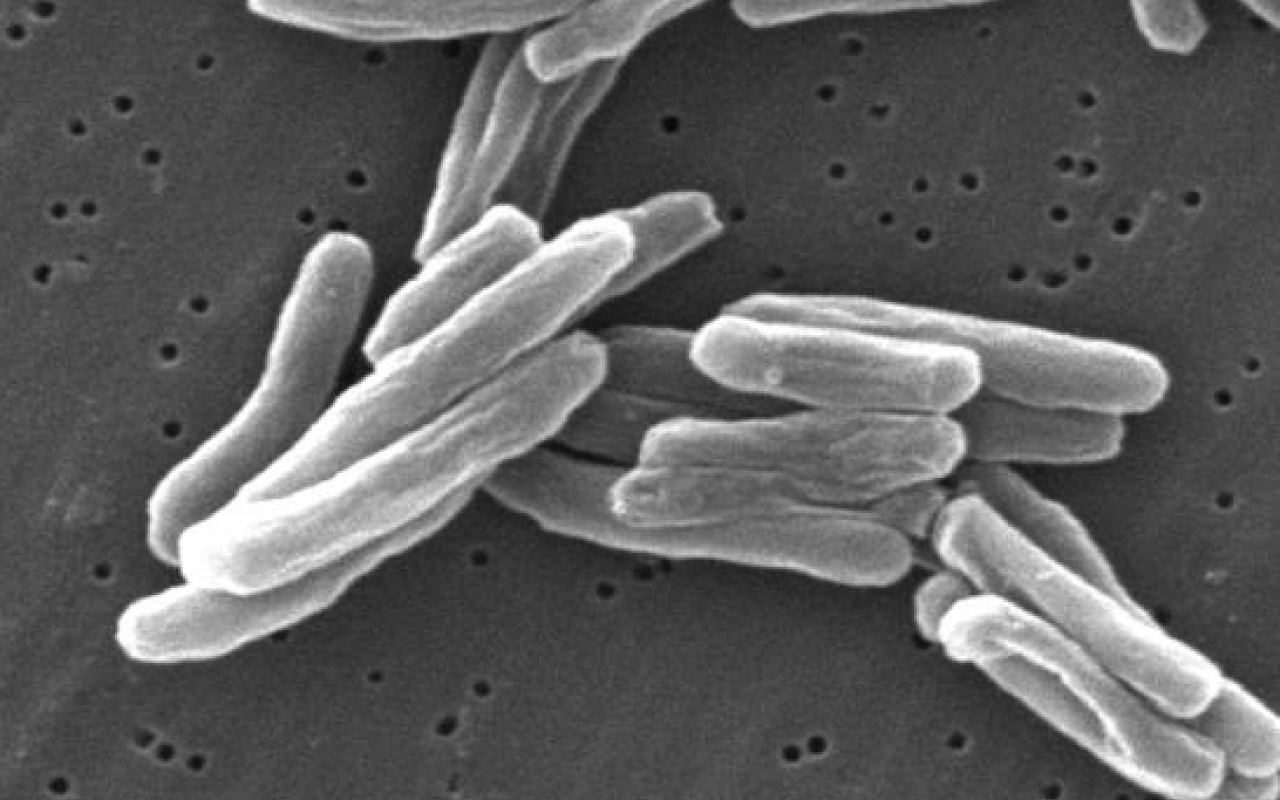
Enlarged microscopic image of TB-causing bacteria, Mycobacterium tuberculosis

When I immigrated to the UK as a student, I had to do something that I wasn’t expecting. I had to carry with me a recent chest X-ray. I thought this was completely unnecessary. Why should I be exposed to X-rays for no good reason?

Turned out that there was a reason. It was to stop the spread of tuberculosis (TB) in the UK. Immigrants from sub-Saharan African and the Indian subcontinent are more likely than other immigrants to be infected by TB.  The UK has seen TB cases increase continuously over the past 30 years. Between 1998 and 2009 the numbers rose by 50% to 9040 cases. Most of those affected are foreign-born people. TB infection rates in the UK today are as high as they were in the 1930s, and they are among the highest in any developed country.

The rise in number of cases is despite chest X-ray screening that immigrants have to undergo. That’s because of TB’s quirky ability to show up many years after the TB-causing bacteria infected a person. Researchers find that early detection makes it easier to treat TB, because more severe infections are becoming resistant to current treatments.

With an aim to improve detection rates, Onn Min Kon, a physician at Imperial College London, and colleagues report, in a paper just published in Thorax, that chest X-rays are actually not as effective at detecting TB. Instead, they suggest, the UK government should use an advanced test called interferon-gamma release assays (IGRA).

IGRA works on the principle that when the TB-causing bacteria are exposed to a set of chemicals, which are harmless to humans, it causes them to release a protein called interferon-gamma. If a patient who has been given these chemicals breathes out interferon-gamma, then he is infected by TB (the latent variety or not).

Although a previous consultation with the National Institute for Health and Clinical Excellence had recommended the use of IGRA, it had made that recommendation in combination with chest X-rays. What Dr Kon’s work finds that a more cost-effective, and still efficient, method would be to just use IGRA. It would also spare the patient from being exposed to X-rays!

This research is one among many other papers published in Thorax’s special issue dedicated to TB which coincides with the upcoming World TB day.  

Reference: Pareek, Bond, Shorey, Seneviratne, Guy, White, Lalvani & Min Kon, Community-based evaluation of immigrant tuberculosis screening using interferon γ release assays and tuberculin skin testing: observational study and economic analysis, Thorax 2013http://dx.doi.org/10.1136/thoraxjnl-2011-201542

Image from here.