Midday meals for schoolchildren in India: More good than harm

On July 16th at least 23 children in the Indian state of Bihar died after eating a midday meal that was provided for free by their school. Nearly as many are in critical condition in a local hospital. Tests have revealed that adulterated cooking oil, perhaps containing pesticides, is likely to blame. A government inquiry has determined that the principal of the school, who is in hiding, must be held responsible for the bad ingredients or unsafe methods used in preparing these meals.

This event is horrific, without a doubt. Yet its damage could be even worse, if it raises too many doubts about the value of a largely successful programme. The midday-meal scheme, which began on a small scale decades earlier, received the support of India’s Supreme Court in 2001. Since then most Indian states have adopted it, offering free meals to children in state-run or state-assisted schools. More than 120m children, including many who would otherwise go hungry, receive these meals every school day.

According to a recent analysis by Farzana Afridi of Syracuse University and the Delhi School of Economics, at a cost of three cents per child per school day, the scheme “reduced the daily protein deficiency of a primary-school student by 100%, the calorie deficiency by almost 30% and the daily iron deficiency by nearly 10%.” Ms Afridi also found that, after controlling for all other factors, the meals scheme has boosted the school attendance of girls by 12%. Abhijeet Singh of Oxford University found that, in some parts of India where children were born during a drought, the health of those who had been brought into the meals scheme before the age of six was compensated for earlier nutritional deficits.

What the disaster in Bihar has done, at the very least, is to highlight some of the pitfalls of the scheme. As with any programme of this size in a country rife with corruption, the meals scheme is riddled with problems. The corruptible state is not alone in funding the programme; it is joined by private companies and NGOs. Corruption exists not just among state entities but among the supporting agencies too, as was demonstrated in 2006 when a Delhi NGO was caught dipping into rice that was meant for midday meals. In the states of Bihar and Uttar Pradesh, where the levels of malnutrition are among the highest in the country, it was found that only three-fourths of the food meant for children reached them. Food is often stolen by the administrators’ faking their students’ attendance. Beyond that, reports of adulteration—not only with shoddy or unsafe foodstuffs, but including finding worms, lizards and snakes—are common.

Next month, the Indian government will be voting on a food security bill which aims to provide food to 60% of the entire population, by means of a public distribution system. This one school’s tragedy comes at an especially crucial moment, when officials ought to be forced to inspect the leaky pipeline of distribution. At the same time it will be important to bear in mind: This scheme has done a lot more good than harm.

First published on economist.com.

Image credit: GlobalPartnership for Education
Shellfish and the human revolution

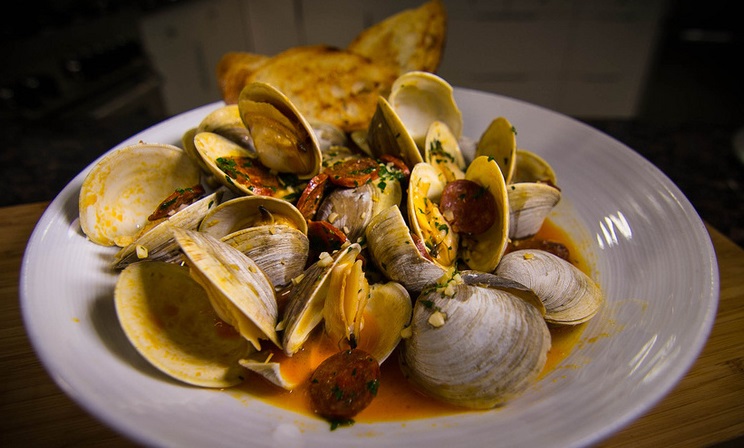
About 50,000 years ago, modern humans left Africa and began occupying the rest of the world. The common thought is that a sudden growth in population caused the so-called “human revolution”, which gave birth to language, art, and culture as we know it today. Now, based on something that’s not obviously related to human culture—the size of shellfish fossils—researchers have challenged that model.

Shellfish size may disprove cause of ‘human revolution’. The Conversation, 27 June 2013. Also published on Ars Technica.

Image credit: Breville

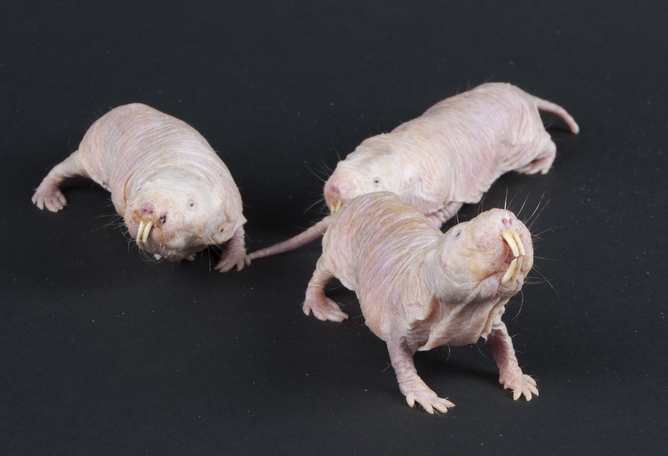
Cancer immunity of strange underground rat revealed

Researchers have discovered how one of the world’s oddest mammals developed resistance to cancer, and there is hope that their work could help fight the disease in humans.

Naked mole rats live underground, where environmental conditions are harsh but predators are few. They can live for more than 30 years, almost seven times longer than its close cousin the house mouse, which is particularly susceptible to cancer. They breathe slowly due to the limited supply of oxygen, survive on very little food, have poor sight and are largely indifferent to pain.

They are also the only mammals that do not regulate their body temperature. Because they live in colonies where the queen rat does the job of producing progeny and only a few males father the litters, their sperms become lazy.

For cancer researchers, mice and naked mole rats fall on two extremes of the disease spectrum. Mice are used as animal models of disease because of their short lives and high incidence of cancer. These help researchers study the mechanism of cancer occurrence and test drugs that fight the disease.

Naked mole rats, on the other hand, have never developed cancer in the years that they have been studied. In labs, researchers often don’t wait for their animal models to develop cancer. Instead they induce cancer by blasting the animals with gamma radiation, transplanting tumours or injecting cancer-causing agents. Do that to a naked mole rat, though, and nothing happens.

Now, Vera Gorbunova and Andrei Seluanov at the University of Rochester think that they may have found one mechanism by which naked mole rats defend themselves against cancer. Their results, reported today in the journal Nature, make for a strange tale.

While studying cells taken from the armpits and lungs of naked mole rats, they found an unusually thick chemical surrounding the cells. This turned out to be hyaluronan, a substance that is present in all animals, where its main job is to hold cells together. Beyond providing mechanical strength, it is also involved in controlling when cells grow in number.

Cancer relies on the unregulated growth of cells, so hyaluronan was thought to be involved in the progression of malignant tumours. According to Gorbunova, there are aspects of hyaluronan may regulate cell growth: as well as its amount and thickness. As a polymer, the greater the number of hyaluronan molecules in a single chain the thicker it becomes.

When the molecular mass is high, cells are “told” to stop increasing in number. When the molecular mass is low, they are “asked” to proliferate. In the case of the naked mole rat, Gorbunova found that the molecular mass was unusually high, as much as five times that of mice or humans.

To understand whether this unusual hyaluronan was responsible for cancer resistance in naked mole rats, Gorbunova increased the amount of enzyme that degrades the chemical, reducing its molecular weight. Soon after, she observed that the rat’s cells readily started growing in thick clusters, like cancerous mouse cells do.

In a separate experiment, she also tested this hypothesis by reducing the amount of hyaluronan by knocking out the genes that encode for its production. Then on injecting cancer-causing virus, instead of resisting, the naked mole rat’s cells became cancerous.

Gorbunova thinks that having thick hyaluronan might have helped increase the elasticity of the rat’s skin, allowing it to live in small tunnels underground. This trait might then have accidentally developed a new role of preventing cancer.

Rochelle Buffenstein, a physiologist at the University of Texas Health Science Center, who has studied naked mole rats for years was pleased to see that some light has been shed on this creature’s remarkable resistance to cancer. “As we learn more about these cancer-resistant mechanisms that are effective and can be directly pertinent to humans, we may find new cancer prevention strategies,” she said.The Conversation

First published at The Conversation.

Image credit: Smithsonian National Zoo