Nearly three-fourths of all diseases caused in India are due to water contaminants. Despite that, one in eight Indians still lacks access to clean drinking water. The poor now realise that paying for clean water can save much more in health-care costs later. It was this market that Sarvajal, a social enterprise in India, wanted to cater to.
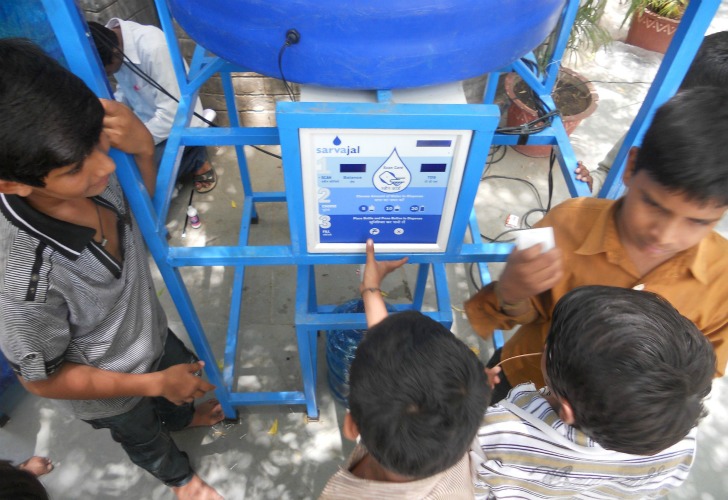
Founded in 2008, Sarvajal—which in Sanskrit means “water for all”—now sells clean drinking water to more than 70,000 people in rural India. In bigger villages, it employs local people to man filtration plants and sell water. In small villages it installs solar-powered water dispensing machines (pictured) that use prepaid (or pay-as-you-go) smart cards that can be topped up just like a mobile phone. The machines send data to a central server via SMS, which helps Sarvajal ensure regular supply of clean water.
Sarvajal started with some help from the Piramal Foundation, a charity. And it is not alone: Water Health International was launched with an investment from the Acumen Fund and the Naandi Foundation’s not-for-profit company was backed by a charity with the same name. What sets Sarvajal apart is that it has stayed away from government subsidies while still keeping the price of water low. It sells 10 litres of water for four pence (or six cents), just as much or lower than its competitors.
“Subsidies are not a long-term solution,” says Anand Shah, Savajal’s founder, who grew up in America and moved to India to become a social entrepreneur. It took a healthy bit of tinkering to lower the price of installation and maintenance for its water supply infrastructure. It costs on average $2,500 to install a filtration plant, which is about half the expense of similar projects. Sarvajal claims to recover those costs within three years.
Setting up its project was not easy. Savajal needed to deal with things that few businesses in rich countries have to worry about: lack of proper roads in villages, irregularity of power supply, unreliability of water sources and devising a system of money transfer. Having reached a respectable size, Mr Shah is hopeful that scaling up his business further will be less challenging.
Apart from villages, Sarvajal’s other obvious market is the urban poor. Nearly 100m people live in very densely populated slums in India’s cities. They are more willing to pay a higher price for water than villagers who have a much smaller disposable income. But Mr Shah says that “water barons”, sellers of bottled-water, have been trying to block Sarvajal’s entry into cities. After many months of efforts, this time not without help from the government, Sarvajal will soon be launching its first filtration plant in Delhi.
First published on economist.com.
Image credit: Sarvajal


 Akshat Rathi