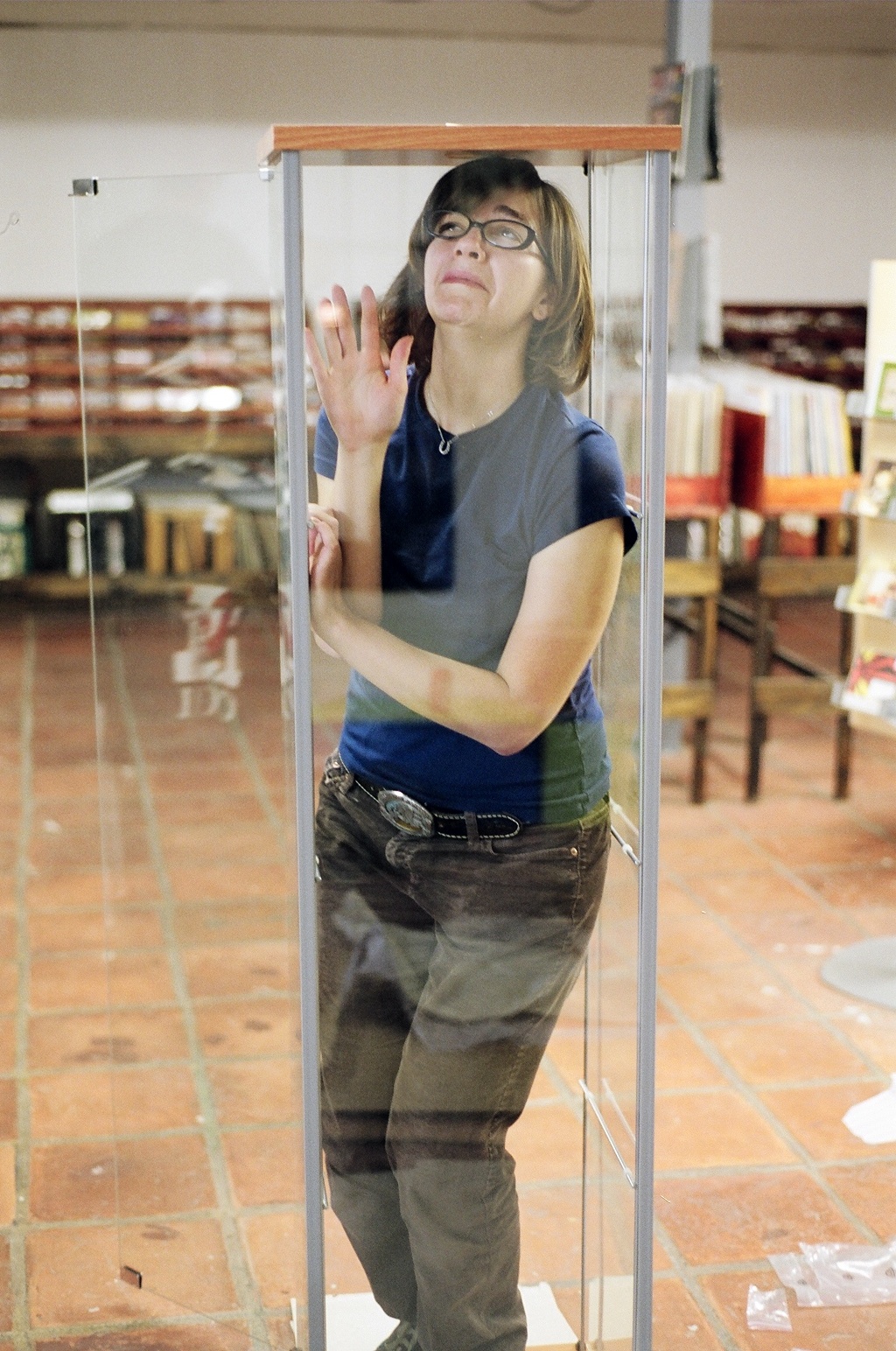

Creativity in a box

Trapped-in-a-box
Not so bad. Dan Machold

As a writer, I suffer from a disability that I suspect isn’t unique. I am never pleased with anything I write. There must be, my critical self nags, a better idea to write about or a better way to write what I just wrote.

Perhaps it is this disability that has forced me to work as a journalist, rather than, say, a novelist. For example, both the aforementioned problems go away when I’m on an assignment.

The first disappears because once my idea has been accepted by an editor, I know that’s what I have to write about. The second vanishes because the acceptance comes with a deadline, which I’m forced to honour so it keeps my easy-to-distract mind on a leash.

This it turns out isn’t a bad way of learning to be a writer. As it happens, Neil Gaiman, a best-selling English author of fiction and comics, found that the restrictions placed on him as a journalist were great for learning to be a creative writer.

In an interview for the Financial Times, he said:

(After school I went) straight into work, as a journalist – a wonderful thing for a writer. You learn you can ask questions, you learn compression and you learn probably the single most important thing for any writer: delivering more or less on time.

Of course, the idea of tethering your mind to a task at hand isn’t a new productivity tool. What is counter-intuitive, though, is that putting yourself in a box that is governed by self-set rules does not kill creativity. If anything, it is enhanced in a way that may produce more results.

The blue light of death

Death begins with an organised and consistent pattern of change. This is the conclusion drawn by a study that observed a simple worm (C. elegans) dying. When UV light was shone upon it, they found that as it began to die, the intensity of blue light emitted from it grew travelling from one end of the intestine to the other, and it reached its maximum density at the moment it died, before fading away.

This blue light is created because of fluorescence of simple molecules called anthranilic acids. These are generated when cell walls break open releasing them. Because the intensity slowly increased, it meant that cells were dying sequentially before the death of an organism occurred.

This is counterintuitive to theory which has persisted about death. That theory states death occurs because damage accumulates in cells. If that were the case then all cells in the worm should’ve glowed simultaneously and the intensity ought to have increased in all of them, which was not observed.

Reference: C Coburn et al. PLOS Biology 2013 

Further reading: Luc Henry in The Conversation

Image credit: Wellcome Trust

Psychology holds the key to solving world’s problems

If you think hard, you’ll realise the problem lies in people’s thinking. Credit: Mutiara Karina (flickr)

We have reached, in terms of technical solutions, if not a plateau, at least a point of diminishing marginal returns. The technology for cutting carbon emissions, for storing nuclear waste, for supporting forays into Alzheimer’s disease research and for taking science education to students in the developing world already exists.

In a post for the Lindau blog, Ashutosh Jogalekar suggests that, at a meeting of Nobel Laureates meant to inspire the young, there should be a place for psychologists. That is because, as he explains,

…while technological solutions can be challenging enough, changing people’s minds is a truly herculean task, often spread over several generations and entire social movements.

And this thought has often troubled me. Technology has developed rapidly in the past few centuries, but human psychology has remained the same for thousands of years.

We know today that there are certain things that humans will be predictably doing wrong. These biases and heuristics affect us all and force us to make these mistakes. Two psychologists received the economics Nobel for their work in this area and that work has have also hinted at some solutions to these problems. After all, as Ashutosh puts it,

Science and technology can only take us so far. Ultimately nothing changes until people and politicians’ thought processes change, and no number of sound technical fixes will work if people refuse to believe in their benefits and change their behavior.

Dealing with climate change is a prime example of this. For many years, there has existed the technology to do something but not the political will. The trouble is, as many have said before, even after it is too late to do something about the climate, we will be seeking technological fixes. Of course we still need to improve the efficiency of solar cells and to understand the dangers of geoengineering, but all those tweaks and minor developments will happen if, say, the world adopts carbon-trading and rewards green solutions over polluting ones.

Psychology is often looked as a soft science. In recent years, it drew attention because of malpractice of a few scientists. At the moment, though, it seems to also be one of the most powerful weapons we have to deal with the world’s problems. Yet, few look at psychology from that perspective.