In praise of the Persian melon

Once in a while, life presents you with a perfect. That is the story of the Persian melon for me.

It’s perfect from the moment you see it. It’s unmissable, even as it sits among seven different types of melons at our local Eastern European grocery in north London. The Persian melon is shaped like a rugby ball, with light orange skin that has ridges. Even though it’s large (weighing about three kilos), it’s easy to hold and drop into the tote bag.

It’s nothing like the smooth, round and all-too-heavy watermelon. You don’t have to clench your stomach and tighten your sphincter before you lift one. You don’t have to worry that it will accidentally slide out and splatter on the shop floor, splaying its insides in places hard to reach.

And the Persian melon smells good: sweet and summery. You can be sure it’s ripe and soft enough. Just give it a firm squeeze and a satisfying sniff. Unlike most other melons, you don’t have to wait to cut it open to find a mistake. You can be assured that the Persian melon will be worth the slightly awkward stares you get as you walk back home lugging around one of the heaviest fruits that you can buy at the grocers.

Now let’s face it: how many melons have you ended up spoiling because you could not bring yourself to cutting them? You picked one up at the shop because you wanted a tasty and healthy treat. But when it’s time to cut it (often days after you bought it), you don’t have the same enthusiasm.

I’m not blaming you. The undoing of a melon is a messy affair. Melons are nothing but balls of water held together by some thin biofilms and wrapped in a seemingly bullet-proof jacket. It’s never going to be as easy to cut into pieces as an apple.

The easiest melons to cut are cantaloupes. And, fortunately, the Persian melon is just like a large cantaloupe. The green rind is thick, but not too firm to cut out. That means there’s little risk of applying unnecessary force on the rind and cutting your hand instead. All the seeds are in the middle and thus there’s no need to spit out seeds when you eat the melon.

Once served in a big bowl, it’s a pleasure to eat. You can push in the fork without effort, and yet when you lift it the piece holds perfectly firm. There’s no drip and no risk of accidental spillage. So far so cantaloupe, except its color: a lovely white with a yellow tinge.

The best part is the magic in the mouth. This is where the Persian melon one-ups the cantaloupe (and the others). All melons are watery, but the Persian melon lets you taste the sweet water for as long as you’d like to taste it. The taste is subtle and refreshing. It hydrates the body and pampers the tongue. It’s sweet, but not too sweet. Once you stop eating, the sweetness stays with you for at least 15 minutes and the memory forever.
How do you define what is “Indian”?

In his wonderful new book, The Sceptical Patriot, Sidin Vadukut, a journalist with LiveMint, tries to assess the haughty claims Indians make. Was the zero really invented in India? What about plastic surgery? Did India never invade another nation? And was it the richest country in the world at some point?

As a trained scientist, I’ve learned to be sceptical about everything. So it is no wonder I enjoyed the book. But, for me, the best part of the book was the last few pages. In them, Vadukut tries to explain the value of knowing history. One of his epiphanies from the exercise of writing the book is that “there is no such thing, ethnically speaking, as an Indian.”

There is a genetic basis to this argument, because for thousands of years the native south Asian population has mixed with Mongols, Greeks, Persians, British, Mughals, French, Portuguese and Arabs, and those populations have previously mingled with others around the world. Indeed, centuries of casteism has left its mark on Indians today, but it would be near impossible to find a citizen today who is “purely Indian”.

But some people will easily dismiss this biological mixing, and point out to our distinct Indian cultural heritage. Surely that is different and unique from the rest of the world?

Columbus, Columbus

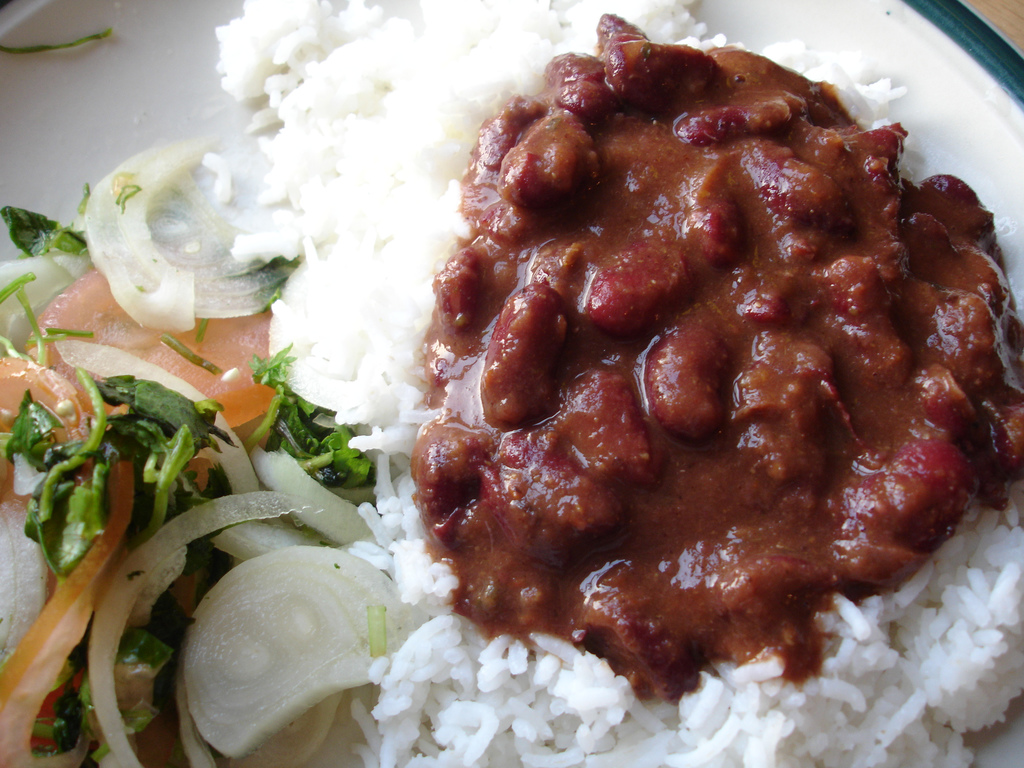
Well, not really. Vadukut argues that “an entire planet’s worth of history courses through our veins”, and there is no better way to look at that than to look at our everyday meals. Consider the ingredients of just two such quintessentially Indian dishes: rajma and aloo gobi.

Kidney beans, tomato, green chilli, potatoes and cauliflower are all foreign imports. Apart from gobi, which came from Turkey, all the ingredients were given to the world by the Spanish and the Portuguese, after Christopher Columbus’s famous 1492 voyage to the Americas (or as he assumed, then, to India). The contribution is known as the Columbian Exchange, and marks the time when a whole bunch of other foods started being used in cuisines around the world. These also include maize, cocoa, vanilla, oranges, bananas and pineapples.

Many of the spices that make up garam masala are not of Indian origin. But, without potatoes and tomatoes, we wouldn’t have delicacies such as pav bhajidum aloo or masala dosa. 

I pick out these two ingredients because their arrival in India is a lot more recent. According to British records, potatoes became a mainstay in Indian diets only in the 1700s. And, according to the great food historian KT Achaya, Indian cooking adopted tomatoes as late as the 1880s.

“In less than a century, an entire country, with about 18% of the world population and impossibly diverse culinary cultures and preferences, went from looking at the tomato with suspicion to consuming it with absolutely everything,” writes Vadukut. How, then, do you define what is “Indian”?

First published in Lokmat Times. Image from Wikipedia.