Rotavac is not India’s first indigenous vaccine

While the recently released low-cost rotavirus vaccine, Rotavac, is a great achievement for the country, it is not the “first indigenously developed vaccine”, as the prime minister’s office claims and then was parroted by newspapers. The honour goes to the bubonic plague vaccine developed in Bombay in 1897.

This is also not just a matter of semantics, where we ought to assume that the prime minister’s office implies “indigenous” to mean developed in Independent India. Because, as we have seen in the past, the prime minister is only too happy to (wrongly) claim centuries-old achievements to be “Indian innovations”.

India has played an important role in the history of vaccine’s use to fight disease. Their use means that the poorest of the poor today can live well beyond the age at which most kings died not too long ago. And the least we can do when we take vaccination forward in India today is to honour our past achievements.

Honouring history

The use of the first vaccine was pioneered by English scientist Edward Jenner in 1798. In the two centuries since, we have developed vaccines to fight 25 diseases. Fittingly, the disease against which the first vaccine was developed – smallpox – has been eradicated globally. The next disease on the list of diseases to be eradicated by the use vaccines could be polio.

But for nearly 100 years after the smallpox vaccine came in to use, the process of developing vaccines against other diseases remained difficult. This is because a vaccine then needed a naturally existing weak form of the disease. In the case of smallpox, that weak form was found in cowpox.

However, almost by accident, Louis Pasteur developed a laboratory method to generate a weak form of a disease. He used the method to create a vaccine against anthrax and chicken cholera. This is what revolutionised the work against infectious diseases.When injected into or ingested by the human body, vaccines work by stimulating the immune system and preparing it for when the real thing attacks in the future. Many vaccines provide lifelong immunity to a disease.

A young Russian, Waldemar Haffkine, was keenly following Pasteur’s work. At the time, cholera epidemics were common worldwide and someone had claimed to have isolated the bacteria that caused the disease. Despite Pasteur and Jenner’s work, many believed that that bacteria can’t be the sole cause behind cholera.

However, Haffkine agreed with the theory and worked hard on developing a cholera vaccine. He achieved success in 1892 and conducted the first human trial of the vaccine on himself. Having survived, he made the findings public but was dismissed by senior scientists.

The Plague Laboratory

Determined to see his invention have some impact on the world, he travelled to India where cholera epidemics had caused hundreds of thousands of deaths. His trials in Uttar Pradesh succeeded and he managed to vaccinate thousands. In 1895 he returned to France having caught malaria. But in 1896 was requested by the Governor of Bombay to help develop a vaccine against plague, which was ravaging the population of Bombay and Poona.

Against the advise of his French doctor, Haffkine travelled back to India and worked persistently to develop a plague vaccine. He succeeded within months, and, like the last time, tested the vaccine on himself. Within a few years, the vaccine was used to inoculate millions of people.

In 1899, a former residence of the Governor of Bombay was turned in to the Plague Laboratory and Haffkine made its director. The lab was renamed the Haffkine Institute in 1925, and remains an active institute for biological research in the country.

Haffkine was knighted by Queen Victoria in 1897. A London magazine wrote this about the announcement: “a Russian Jew, trained in the schools of European science, saves the lives of helpless Hindoos and Mohammedans and is decorated by the descendant of William the Conqueror and Alfred the Great.”

If you forgive the colonial tone, it is an apt eulogy in a rapidly globalising world that was being created then. His work is arguably no less “indigenous” to India than Rotavac, so it is sad that we forget such a legacy in celebrating the country’s new achievements.

First published in Lokmat Times. Image from Wikipedia

Why India must invest more in science

You must have read that 38% of doctors in the US are Indians, as are 36% of scientists at the space agency NASA and so are 34% of Microsoft employees. Daggubati Purandeswari, former MP and the minister of state for human resource development under Manmohan Singh’s first term as prime minister, had heard this too. Unfortunately Purandeswari parroted those numbers in a Rajya Sabha session without verifying and, because those statistics are not true, shewas ridiculed in the press for it.

The true numbers are are estimated to be smaller (but still significant). About 5% of doctors in the US may be Indians or of Indian origin, same for about 5% of NASA scientists and perhaps a similar proportion of Microsoft employees. What is probably also true is that most of these people with an Indian connection studied abroad in top universities before taking on these prestigious jobs.

We love to brag about what our fellow citizens achieve, and it is great to see that patriotism. But, sadly, we also love to exaggerate our achievements and inflate our egos in the process.

While it is great that Indians abroad have achieved and keep achieving great things, we must also reflect upon the fact that the country doesn’t do enough towards training its young to achieve those things at home. And a reminder of these facts and fables is necessary today in light of the recently released Indian budget.

Stopping the brain drain

India invests less than 1% of its GDP  in scientific research. Compare that with China’s investment of nearly 2%, the US’s of about 3% and South Korea’s of almost 4%. India’s ambition of featuring among the big nations of the world is being cut short because of our poor investment in science, and the results show.

The Times Higher Education ranking of world’s universities released today does not feature a single Indian educational institute in the top 100. Brazil, Russia and China—countries often considered India’s equal in the global economy—all feature at least one university in the prestigious list.

This mattes because, while we like to proclaim proudly that we are a nation full of engineers and doctors, we must also face the reality that the best of them go abroad to fulfil their dreams and aspirations. India needs to do better to hold on to its talents, and the easiest way to ensure that is to invest more in creating world-class universities for higher education and research.

Many bright minds have paid attention to this problem, and there has been some progress. The new Indian Institutes of Technology and the Indian Institutes of Science Education and Research, for instance, are welcome developments, but they must be provided enough support to flourish. The recent budget for science has even not managed to keep up with inflation—it is only 3.4% more than that in 2014.

Dheeraj Singh of the Indian Institute of Technology Kanpur thinks science departments need at least 15% more funds each year to live up to their promise. CNR Rao, former head of India’s Scientific Advisory council, told Nature, “There are scientists in India who want to do cutting-edge science. But to be competitive you need more funds.”

Paisa wise, Rupee foolish

And this plea is not without precedent. According to Space Foundation, for every $1 that the US government spends on NASA, the country’s gets $10 in economic benefit. Such a return is made possible because of the knowledge and expertise that NASA creates. Technologies such as global positioning systems used by smartphone users to find their location on a map and weather forecasting using satellites were developed by NASA researchers. The recent success of the Mars Orbiter Mission shows that Indian space research can do similar things with smaller investments.

Some may argue that India needs to invest in healthcare before it invents new rockets. While that argument has problems, even if accept it, the recent budget did worse for healthcare than for science. A 15% cut to the healthcare budget means that India’s health crisis is going to get worse. For all that prime minister Narendra Modi has promised, his actions speak louder than words. His government prefers the short-term benefits much more than long-term growth.

First published in Lokmat Times. Image credit: NASA.

Drug resistance risks sending humanity back to the 19th century

Swine Flu is back, and it is spreading with a vengeance. The total number of recorded cases in India has crossed the 20,000-mark and it has led to more than 1,000 deaths. While this number is much smaller than the number of those killed by the 2009 swine flu pandemic, it is worrying because the new strain appears to be harder to treat. According to Om Jaslok, director of the infectious diseases department at Jaslok Hospital in Mumbai, patients need to be treated with anti-viral medicine oseltamivir for an average of 10 days, which is twice the length of treatment in previous outbreaks.

The World Health Organisation (WHO) had warned of such a swine flu outbreak as far back as 2013. The phenomenon of pathogens developing resistance to drugs is not new. Those few pathogens that survive the onslaught of drugs pass on their traits to the next generation, giving birth to a drug-resistant strain. What is worrying is that drug resistance is increasing at a much faster rate than the pace at which humans can come up with new drugs or treatments.

Disaster-in-waiting

While flu epidemics come and go, drug resistance in persistent diseases is even more worrying. Take the example of malaria, the biggest single killer of humans since our species began walking on this planet. In the last century, the increased attention to malaria produced drugs that could effectively treat the disease. One such drug is chloroquine, which was widely used across the world and saved millions of lives. However, since the 90s, chloroquine is no longer a weapon in the medical arsenal. Mosquito parasites—responsible for causing and spreading malaria—have become resistant to the drug, and we have been forced to develop newer drugs.

A bigger worry is the development of antibiotic resistance. Antibiotics, first discovered in the early 20th century, turned lethal diseases, such as pneumonia, into treatable conditions. These drugs have become the bedrock of effective modern medical treatments. They are used in surgeries to protect patients from acquiring diseases via open wounds, and given to cancer patients to help boost their immunity against pathogens. But fewer of them are as effective today.

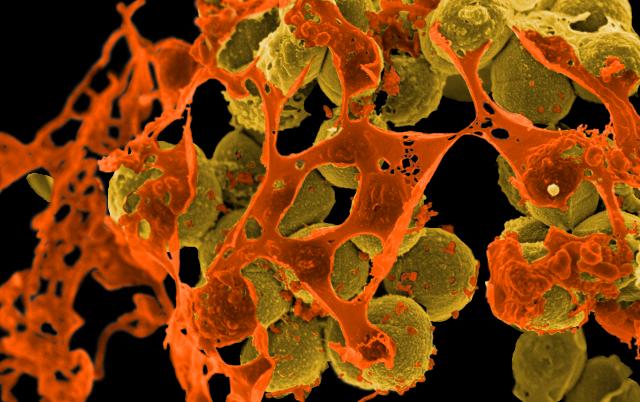
These antibiotic-resistant microbes are referred to as superbugs, and they kill ruthlessly. According to a report in the respected journal The Lancet, more than 58,000 newborns in India were killed in 2013 because of these superbugs, such as Staphylococcus aureus and Clostridium difficile. One particular enzyme, New Delhi metallo-beta-lactamase 1 (NDM-1), which helps create superbugs has been named after where it is believed to have originated, and we currently have no way of countering the enzyme’s spread.

You can act

The economic cost of drug resistance is potentially huge. According to the 2014 Review on Antimicrobial Resistance, the accumulated loss to global output by 2050 can be as much as $100 trillion, which is more than 50 times the current GDP of India. Even such a dramatic prediction may be an underestimate, according to Jeremy Farrar, the director of Wellcome Trust, one of the world’s biggest biomedical charities, because the review only includes direct costs. For instance, if routine surgeries become impossible because of antibiotic-resistant bugs, they will have an effect on healthcare as a whole and lead to more deaths.

There are ways in which we can fight against drugs resistance. One way is to invest more in finding new and more effective drugs. But success down this route has become much harder to achieve. The pharmaceutical industry is undergoing a crisis, producing fewer new drugs. The other way is to slow down the march of drug-resistant microbes. This requires that governments, doctors and citizens to work together.

Farrar notes that we have been taking antibiotics for granted, treating them as consumer goods. They seem to be “ours to demand from doctors and ours to take or stop taking as we see fit.” This is a huge problem. People stop taking pills as soon as they feel well, but that doesn’t mean the microbes have been completely eliminated. Instead the partial course of antibiotics leaves a great number of mildly resistant microbes alive, which then spawn new generations and spread drug resistance.

If we are not to return our healthcare back to the 19th century, where infectious diseases killed rampantly, we must learn to respect these wonder drugs. Doctors must be conservative in giving out prescriptions. And, if there is no option, the least patients can do is take the full course prescribed.

First published in Lokmat Times. Image by NIAID.