Self-medication: When waiting is not an option

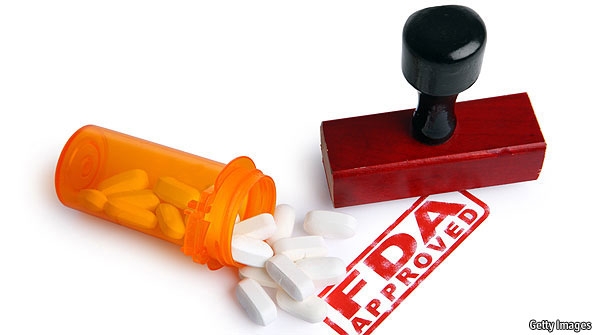
It takes eight years on average for a drug to receive approval from America’s Food and Drug Administration (FDA) after clinical trials have been successfully completed. Some patients of amyotrophic lateral sclerosis (ALS), with a life expectancy of two to five years after diagnosis, do not want to wait that long. Since September 2011 some of those diagnosed with the fatal disease have taken to injecting themselves with a substance whose chemical identity they deduced from published literature, and which they claim is currently being clinically tested.

Also known as Lou Gehrig’s disease, ALS, for which May has been the awareness month in the United States since 1992, causes rapid nerve-cell damage in the brain and spinal cord leading to a loss of muscle control. Breathing and swallowing are usually among the first to be affected, significantly reducing the quality of life. Although using substances which have not been approved by regulators like the FDA can be dangerous, easy availability of scientific literature and online support groups to swap usage information, more people with rapidly-progressing, fatal diseases like ALS are second-guessing drug makers.

In November 2010 Neuraltus Pharmaceuticals, an American firm developing ALS treatments, reported positive “phase I” trials for the drug codenamed NP001. (Phase I is the first of three stages of human clinical tests in which the drugs are primarily screened for safety.) Based on published papers and patents, Eric Valor, an ALS patient who did not participate in the trial, concluded that NP001’s active ingredient is sodium chlorite, a chemical used mainly in bleaching paper pulp or to disinfect water.

Although Neuraltus is still keeping the true identity of NP001 under wraps, Mr Valor’s conjecture prompted a number of patients, including some who had participated in the NP001 trials, to start taking sodium chlorite last September. They also began sharing data on dosage, therapeutic effect and side-effects on sites like PatientsLikeMe. In effect, they conducted a crowd-sourced clinical trial.

When pharmaceutical companies test a drug’s efficacy they tend to plump for randomised, double-blind trials. They are randomised because patients who get the medication and those who receive a placebo are drawn at random, eliminating selection bias, and double-blind because neither the patient nor the doctor knows whether the substance administered is the real thing or a sugar pill.

Self-medicating groups like those on PatientsLikeMe clearly lack such controls. However, in a paper published last year in a respectable journal, Nature Biotechnology, the founder of PatientsLikeMe, James Heywood, and his colleagues showed that randomisation can be mimicked by feeding results from patient networks into clever algorithms; though such pseudo-randomised trials still lack blinding and are therefore no substitute for fully fledged clinical research like that being undertaken by Neuraltus for NP001, whatever its actual composition.

Mr Heywood’s piece of citizen science showed that another substance, lithium carbonate, was ineffective in treating ALS, a result confirmed by traditional trials. Sodium chlorite may yet suffer the same fate. That is a risk some ALS patients are willing to take.

Also published on economist.com.

References:

  1. Neuraltus Pharmaceuticals press release
  2. James Heywood et al. Nature Biotechnology, 2011
  3. Eric Valor’s conjecture
  4. ALS Study Shows Social Media’s Value as Research Tool – The Wall Street Journal
  5. Frustrated ALS Patients Concoct Their Own Drug –  The Wall Street Journal
  6. PatientsLikeMe – Lithium and ALSsodium chloriteNP001
  7. ALS Chlorite

 Image credit: The Economist


India’s new anti-malarial drug

Indian pharmaceutical firm Ranbaxy has launched the drug Synriam, which it claims will prove a more efficient and simpler treatment for malaria. With its affordable price, Synriam may well be a step towards achieving the WHO’s goal of eradicating malaria by 2050, but Ranbaxy cannot take all the credit for it.

Ranbaxy launches new anti-malarial Synriam – Chemistry World, 3 May 2012

A list of main references for the article is here.

Oral cancer in India: Chewed out

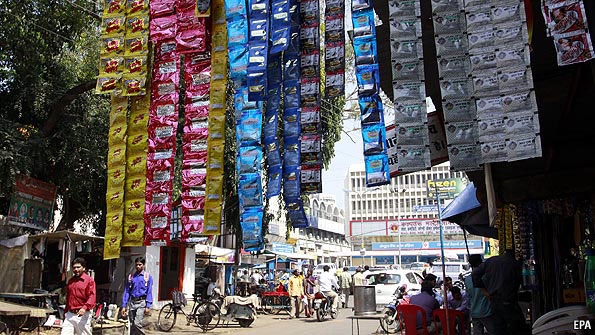
Many poor Indians addicted to nicotine are likely to indulge their habit by chewing gutka. In 2010 a survey by the National Cancer Registry Programme (NCRP) found that one in three inhabitants of the state of Madhya Pradesh aged 15 and older—or some 15m people—use the stuff, a preparation of crushed betel nut, tobacco and an acacia extract called catechu. Even more worryingly, a report in 2008 estimated that 5m Indian children were addicted. It is not uncommon for tykes as young as eight to be users. Gutka is also popular among women, in part because smoking among the fairer sex remains frowned upon in much of India. Add cheapness—1 rupee, or 2 cents, buys a sachet, whereas a cigarette costs at least twice as much—and it is little wonder that two-thirds of Indian tobacco users get their fix in chewable form.

As a result, however, India has one of the highest rates of oral cancer in the world. More than 80,000 new cases are reported every year across the country. The NCRP study reported 35,000 cases of oral cancer in Madhya Pradesh alone, equivalent to four times the national average of around 13 cases per 100,000 people—and almost eight times the world’s. The state’s government has now taken a drastic step. On April 1st it introduced a complete ban on the sale of all chewing-tobacco products.

Bhavna Mukopadhyay, who heads the Voluntary Health Association of India (VHAI), an advocacy, has praised the move. Speaking after it was announced in March, she called for a country-wide gutka ban under the rules introduced in August 2011 by India’s Food Safety and Standard Authority. These followed a ruling by the Supreme Court in February that year, banning the use of plastic in gutka sachets and calling the gutka habit a menace to public health. Because it could not ban the sale of gutka without the government’s backing, the court chose to make the manufacturers’ life difficult by prohibiting the use of plastic in packaging. This forces producers to package it in paper instead, making transportation of large quantities trickier.

However, the VHAI has found that many were brazenly flouting the ruling. Others have simply decamped to towns in Nepal and continue to use plastic sachets which are then smuggled into India. There are also troubling reports that some gutka contains waste from perfumeries and tanneries as flavouring, making it even more noxious. The government lacks the labs needed to ascertain adulteration of this kind, Ms Mukhopadhyay laments. It may also be reluctant to enforce its own rules, wary of antagonising a $10 billion industry.

According to a recent paper in the Lancet, 5.6m Indians die of cancer each year. Many live in the countryside; most never seek medical attention. Tobacco, the paper’s authors write, is responsible for a third of those deaths. Getting Indians to spit it out might save millions of lives.

Also published at economist.com.

References:

  1. Most cancer patients in India die without medical attention: studyDown to Earth, March 29, 2012
  2. Madhya Pradesh bans gutkha and other chewing tobacco productsDown to Earth, April 3, 2012
  3. SC bans plastic gutka sachets from March 1Times of India, December 8, 2010
  4. Global Adult Tobacco Survey: IndiaWorld Health Organization, October 19, 2010
  5. Gutka still sold in plastic sachetsThe Hindu, March 13, 2011
  6. 2011 Census Data: Madhya PradeshGovernment of India

 Image credit: The Economist