Akshat Rathi is a senior reporter for Bloomberg News. He has previously worked at Quartz, The Economist and The Conversation. His writing has appeared in Nature, The Guardian and The Hindu. He has a PhD in chemistry from Oxford University and a BTech in chemical engineering from the Institute of Chemical Technology, Mumbai.
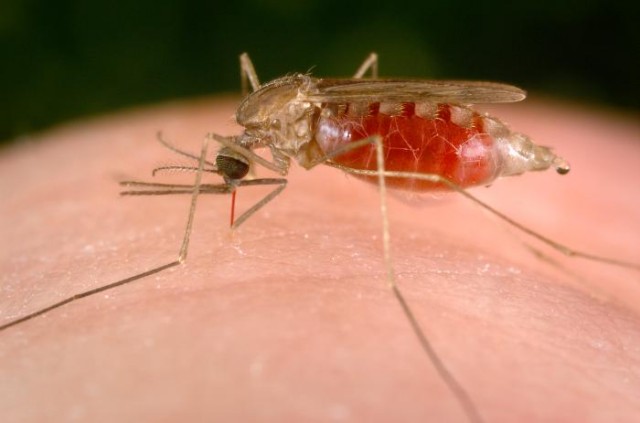
Several vaccines for malaria have been developed over the past few decades, but none offer complete protection. Now, for the first time, US researchers have developed a vaccine that protects 100% of those given five doses of the vaccine.
“Sir,” said a letter to Kafka in the last few years of his life, “You have made me unhappy. I bought your ‘Metamorphosis’ as a present for my cousin, but she doesn’t know what to make of the story.”
Having finished Kafka’s legendary story, which has “inspired countless stage adaptations and doctoral theses and scores of subsequent writers”, I can share the frustration of the cousin. This story of Gregor Samsa, a travelling salesman who one day wakes up to find he has become a giant bug, has a simple plot but is hard to make sense of without the right metaphors.
After shaking off the possibility that he is in a dream, Gregor does his best to fit in society that he was once part of. But as the story progresses, his attempts bear no fruit in a household which is finding it difficult to sustain their earlier lifestyle after losing the sole breadwinner. At the end, after enduring the growing distance from a family he still loves and feeling useless, Gregor dies of depression and self-inflicted harm.
Despite the dark plot, Kafka, through simple words and short sentences, keeps the mood cheerful almost all through, with comical interludes and many happy moments. Of the many analogies people draw to understand Gregor’s metamorphosis, this one convinces me the most:
The reasons behind Gregor’s transformation are not all that complicated. Kafka declines to spell out the specific reasons but still makes it clear that Gregor (and by extension, all the other Gregors in the world) had allowed himself to become a powerless insect long before actually physically turning into one. As someone who has selflessly sacrificed whatever independence he may have had to support his uncaring parents and their attempts to live an “upper class” life without actually having to suffer for it, Gregor has already willingly given up all the unique traits that make one a human.
The bit of the story that really gets me, though, comes right at the end, where, after the death of Gregor with whom the family still seems to have some attachment, they go on a drive and start thinking about what a “voluptuous” woman Gregor’s sister has become and how they would like to find him an upper class husband. And the fact that that end seems so out of place, forces readers to reanalyse what Kafka had in mind about Gregor’s metamorphosis.
Most of what is written in a newspaper on a daily basis makes no difference to the life of the common man the people on the streets. Indeed some have even argued that news is actually bad for you
That, though, doesn’t stop people from engaging with news. And, despite the struggles of the news industry, more people read news today than they did when the internet did not exist. This should not be surprising, because the price to read even quality writing has plummeted.
But the lack of a good business model, not surprisingly, has caused a lot of pain to journalists. A new debate has broken out among some veteran science journalists about the work that science journalists ought be doing but don’t. The main criticism is that science in the news is nothing but “pretty entertainments about mummies, exploding stars and the sex life of ducks”.
This, Dan Vergano of USA today, finds to be a problem. He feels that science journalists should instead focus on aspects of the news that should matter to people, such as “whether Iran really will have the bomb, whether Quantitative Easing will spark inflation or whether Peak Oil is a real concern”. Dan thinks in these dark times science journalists have formed a ghetto and that is hurting readers, who deserve better.
I’m sympathetic to some of the points raised. But, even though I’m new to the business of news, I can see some clear problems in Dan’s arguments. (Many of those have been pointed out in these comments).
For example, Dan should be addressing editors, rather than reporters. After all editors are the gatekeepers of news. But because he doesn’t make that clear, a lot of reporters have felt compelled to answer Dan. And rightly so.
There is also a problem with treating the news audience as Dan does. The nebulous idea of a reader who likes politics, sports, science, health and everything else on the news menu is just wrong. When the only way to find out who read your work was through expensive surveys conducted once every year, it made sense to assume such a reader to be your audience. Today, though, that is not true. (Perhaps not accepting that fact is the bane of a good business model to fund journalism).
Third, and this is the reason I was compelled to write this post, is that few journalists outside Dan’s “ghetto” understand the importance of science in the news. That though doesn’t stop readers from devouring science news. The fact is that science news, at least that written well, evokes a sense of wonder among readers. And few in the business of news really understand the value of that.
Oh wow, a duck’s penis is like a corkscrew!
Our sense of wonder, as Jesse Prinz aruges in a beautiful essay, may not have evolved out of any purpose but has been the source of the impetus behind humanity’s greatest achievements. Readers of science news may not always be able to put it such eloquent words as Prinz has done, but deep inside they connect with that feeling.
Three things usually appeal to our sense of wonder: art, science and religion. Religion is newsworthy, but not for its aspects that cause wonder. And perhaps art journalists (if they even exist today) have more to complain than science journalists when it comes to being featured in the news.
This leaves science news (and thus science journalists) to take on the responsibility of satisfying our readers’ wonder-tastebuds. And, you know what, science journalists are doing a splendid job at that.
This is one reason that The Economist’s readers time and again vote for the science and technology pages as their favourite in the weekly newspaper. Apart from that, I don’t have numbers to back me here but I’m willing to bet that, in those expensive annual surveys (some of which still happen) if the right questions are asked, readers will say that they love reading about science because it is wonderful.
As the world has got richer, and that it has despite the recession, and technologies like the internet has left a little more time at hand, it shouldn’t be surprising that more of us are feeding our innate curiosities. I have a feeling that despite the many problems that the world faces today, we might be living in a golden age. A different kind of enlightenment, if you will, where, not just the rich few understand and investigate the workings of the world, but the masses do so too.
Science and the news that it creates, even in its current shape, I contend is fuelling that age.


 Akshat Rathi