Developing world science journalists lose out

The organising committee of the upcoming global gathering of science journalists has made sudden changes to the programme last month, cutting several sessions that focused on developing country issues and leaving journalists disappointed. In recent years the World Conference of Science Journalists has attracted up to half its attendees from the developing world. That seems unlikely now.

Developing-world sessions purged from WCSJ2013 programme,  SciDev.Net, 2 April 2013.


Nanoparticles that trap viruses

Biology and nanotechnology are moving ever closer together. I recently wrote about the use of nanoparticles to aid delivery of stem cells in cardiac therapy. Now, Swiss researchers have developed nanoparticles that can detect, and one day could combat, viruses.

Nanoparticles formed using human viruses, to fight human viruses,  Ars Technica, 1 April 2013.

Image credit: Emil Alexov

Resetting humanity’s clock

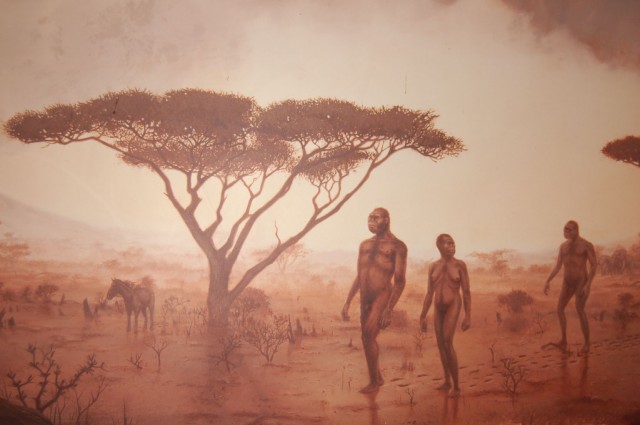
Some time in humanity’s past, a small group of Homo sapiens migrated out of Africa before spreading out to every possible corner of the Earth. All the women of that group carried DNA inherited from just one woman, commonly known as mitochondrial Eve, whose DNA was inherited by all humans alive today. But the exact timing of this migration is not clear, and it has sparked debate among geneticists. Now, new research published in Current Biology may help calm both sides.

Fossil DNA used to reset humanity’s clock,  Ars Technica, 28 March 2013.

Image credit: Dongyi Liu