Equine transport: A fun jump

Britain has won its first Olympic gold medal in show jumping in 60 years. But that isn’t the only thing that British horse movers are celebrating. Their business is booming, too. Hundreds of horses have been brought to London for the Olympics, many from thousands of miles away. In such elite competitions, horses need to perform at their peak. So every care is taken to help them not fall sick from the travelling.

A round trip from America to Britain can cost anywhere from £8,000 ($12,500) to £14,000 for a single horse. But that’s not all that it takes. A horse needs a passport, too: one that lacks a photo, but has vaccination details and identification marks, such as a white spot on the left ear. Owners must also get health certificates and export licences for the horse, which can take months.

Falling costs of air transport have meant that horses rarely get sent on ships anymore. Air travel makes the horses’ lives easier, and keeps their owners and jockeys happy. When the cargo is a horse, pilots take extra precaution such as taking off at a lower angle and taxiing gently, to ensure that the horse doesn’t topple off.

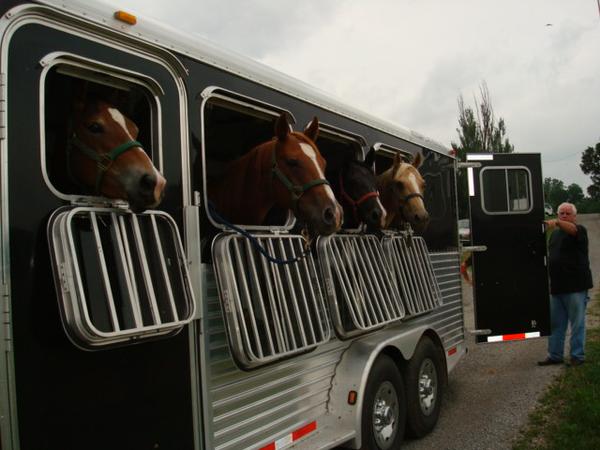
But such air freight carriers don’t operate at all terminals. An American horse coming to London flies in from New York to Amsterdam first. There she takes an overnight halt in a stable, because a well-rested horse is less likely to fall sick, says John Parker, the owner of a British equine transport firm. The next day, she gets a ride on a plush lorry, which either crosses the English Channel on a ferry, or goes through the Eurotunnel. The tunnel cuts down the crossing time by an hour, for which most customers happily shell out extra money. All through the journey, the horses have grooms to take care of them. The carriers are kept extremely clean to minimise travel sickness. Water and hay is kept in plentiful supply.

From the likes of this, it may seem that horses are getting better treatment than many Olympic athletes—at least on their way to Britain and back.

Also published on economist.com.

Image from here.
The physics of sand castles: Just add water

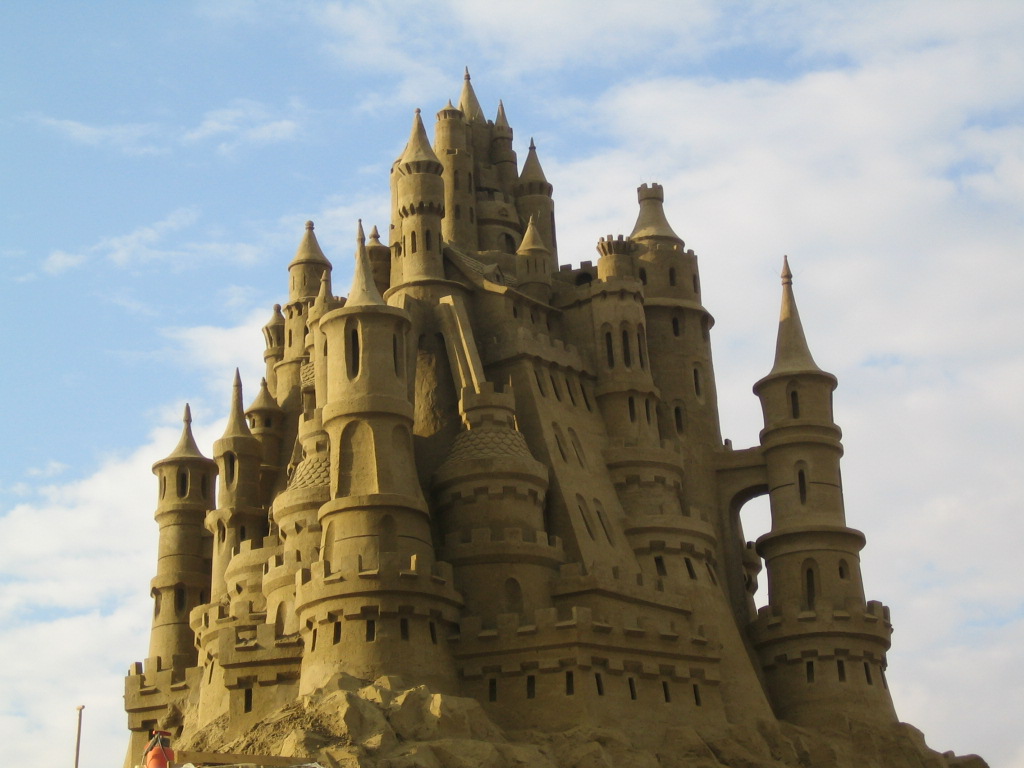
A day out on the beach would be incomplete without a sand castle. The mightier the castle, the better. But sand is next to useless as a building material. Without water it simply spreads out as wide as possible. So in search of a good recipe Daniel Bonn, a physicist at the University of Amsterdam, and colleagues have stumbled upon a formula for making the perfect sandy redoubt.

As they reveal in a paper published this week in Scientific Reports the key is to use sand with only 1% water by volume. Wet sand has grains coated with a thin layer of water. Owing to water’s surface tension this thin coat acts like skin stretched over many grains, holding them together by creating bridges between the grains. The strength of these bridges is enough to fight Earth’s gravity and prevent the structures from buckling under their own weight.

An easy way to achieve the right amount of water, Dr Bonn suggests, is to tamp wet sand in a mould (open at the top and the bottom) with a thumper at least 70 times, as he did in his experiments.

As for the design itself, unsurprisingly, the wider the base the taller the castle. According to calculations, using ideally moist sand, a column with a three inch diameter could rise as high as two metres. At 12 metres, the current world record for the tallest sandcastle, set by Ed Jarrett in 2011, used a base of roughly 11 metres. If Dr Bonn is right, sand engineers could in principle beat that with a castle thrice the height upon the same foundation.

First published in The Economist.

Image from here.

Interactive Medal Tally

With help from the excellent data team at The Economist, here’s an ‘Olympic medal map’. It is an interactive infographic that provides a daily update on which countries or regions have won what events and what is still to play for.

Infographic developed by Ændrew Rininsland. Daily updates from Kenn Cukier and me.

Olympic medal map, The Economist’s Graphic Detail blog, Jul-Aug 2012

Links: Day 1, Day 2, Day 3Day 4, Day 5, Day 6, Day 7, Day 8, Day 9, Day 10, Day 11, Day 12, Day 13, Day 14, Day 15, Day 16

Image from here.