I am changing my diet

I am reading Tim Ferris’ The 4-hour Body and it has prompted me to change my diet. I am 180 cm in height and weigh about 69 kg. It is not that I need to lose weight but I would very much like to lose fat and gain muscle. The book gives me good reasons to believe that with this diet and some exercise I will be able to achieve and maintain it.
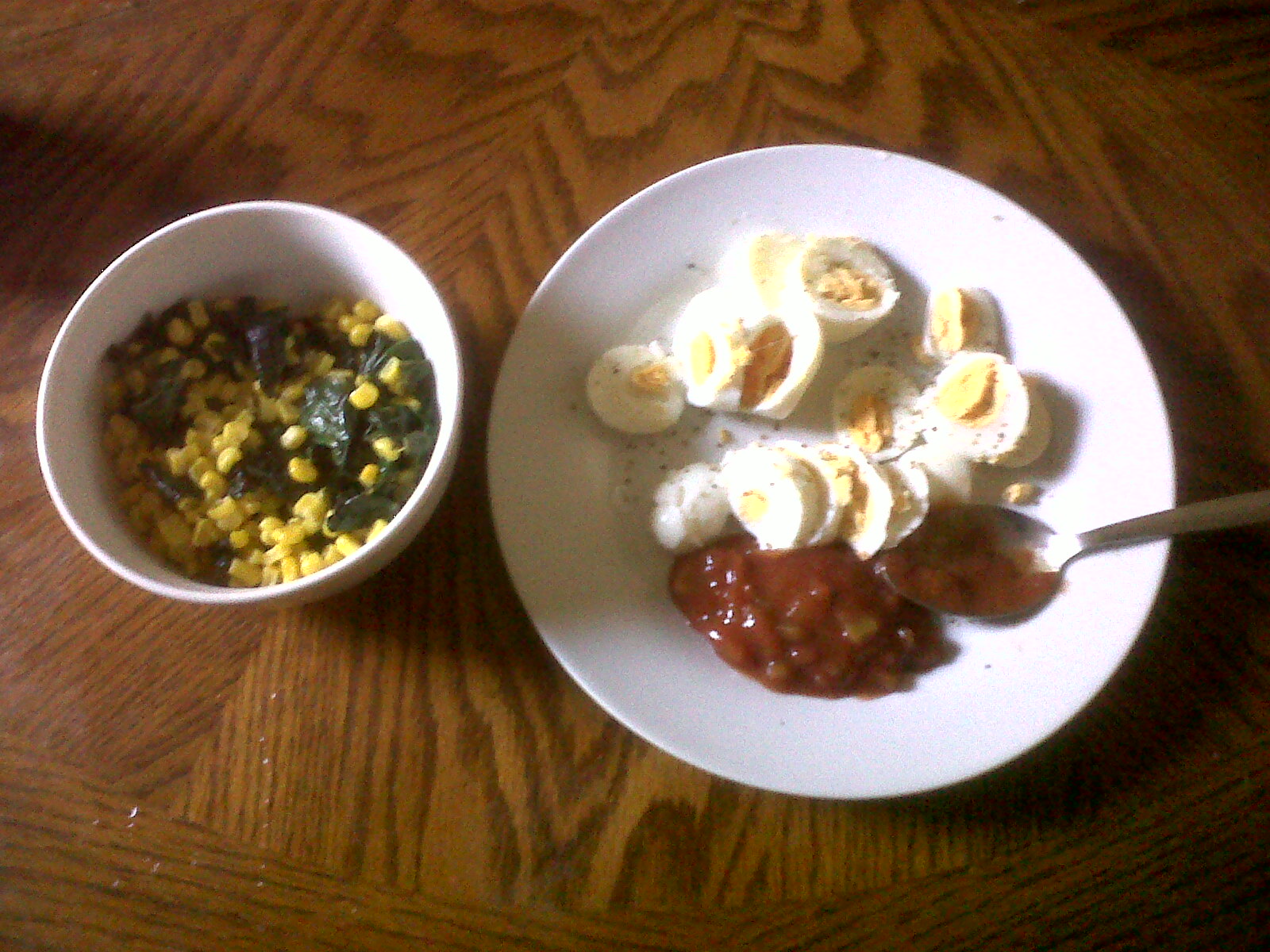
My breakfast and lunch. That's right the same meal for both!

The diet is described in detail here. Obviously, I am keeping to my pescetarian choices while doing this. That means no meat. Here’s what I will be eating:

  1. No white carbohydrates i.e. Rice, Bread, Cereal, Potatoes, Pasta
  2. All my diets will consist of eggs, lentils, beans and vegetables.
  3. I am allowed to use whatever spices I like in cooking.
  4. Lots of water and only unsweetened drinks.
  5. Some supplements: vitamins, calcium, potassium and cod oil.
  6. Saturday will be my day off i.e. I can eat what I want and how much ever I want.

Ferris gives me plenty of good reasons to do this:

  1. I can’t count calories. It makes me sick inside to think every time about what I am eating how much calories that will contribute. This diet allows me to keep my calorie count low enough to not have to worry about calorie contents.
  2. Thinking about what to eat every day is boring. Going out to eat is time-consuming. I can get by with this diet with minimal cooking.
  3. It blends well with my old diet.
  4. I really like the ‘day-off’ option. That way I can train myself to keep my temptations for this one day and not have to think about them the rest of the week.
  5. The science in the book seems convincing and so do testimonies from some people I read online.
  6. I’ve wanted to start quantifying myself and this diet gives me the perfect chance to begin. I start this diet with a count of my total inches (mid-biceps + waist + hips + mid-thigh) = 133.5. I’ve also downloaded the mappiness app and hope to monitor my daily food intake and mood.
  7. The diet is healthy. It will allow me to keep my LDL cholesterol, blood sugar and iron content low. With lots of spinach (which is one of the recommendations of the diet), I will be able to induce muscle growth.

Most importantly, this is an experiment. If after 4 weeks there is anything unhealthy about it, I will stop. Let’s see what happens.

Quick Fix Recipe 3: Onion + Tomato

This is part of a series on recipes that I use to fix myself a quick meal with as little number of ingredients as possible. The recipe below was put together by Deeksha. The speciality of this tomato chutney is that it can go with a lot of things. All kinds of rice, chips or bread.

Ingredients

  • 400g tomatoes
  • 1 large onion
  • Indian Spice Box (chat masala, cumin seeds, mustard seeds, fenugreek leaves)
  • 1 tbsp olive oil

Method

  1. Heat oil in a pan on low flame. To it add some cumin seeds and mustard seeds.
  2. While the cumin seeds get mildly roasted, chop the onion finely. In some time the cumin seeds will give a pleasant odour.
  3. Add finely chopped onions to the pan and let them fry till golden brown (tip: Add salt to the onions as they then get cooked faster).
  4. Add finely chopped tomatoes or an equivalent amount of tomato paste. Let it cook for atleast 15 minutes on a medium flame.
  5. Add 1tbsp chat masala and 1/2 tbsp dried leaves of fenugreek (kasturi methi), if available. Mix well and cook for another few minutes. (Honey may be added to taste)
  6. Once cooked, pour in a bowl and enjoy it with corn chips, pilao rice, khakra, or any kind of bread.

Overall cooking time: 25 minutes

The Treasures of Urine

Michelle Clement’s post on What can urine tell us? has arrived at an opportune time. I am reading John Emsley’s The Shocking History of Phosphorus and much of the first chapter is about the discovery of phosphorus from urine.

Alchemists of the day were desperately and highly secretively searching for the philosopher’s stone. Henning Brandt, the discoverer of phosphorus, thought because urine is golden there must be something in it which make is to golden. Possibly gold?

In his attempts to isolate gold out of urine, Brandt evaporate urine to a paste and heated the residues hard to find shining vapours rising from it. When condensed he found that the shining liquid burst into flames if brought in contact with air. So he started collecting the vapours under water instead. The waxy, white solid that formed at the bottom was phosphorus.

So why phosphorus from urine? We tend to eat a lot more phosphorus than is needed by our body. So most of it is excreted.

A typical sample of urine from an adult male contains (per litre) – 52 g creatine, 21 g urea, 6.5 g chloride, 4 g sodium, 2.2 g potassium, 2.3 g amino acids, 1.4 g phosphorus, 0.7 g ammonia and  0.3 g magnesium.

Although Brandt had discovered this light-giving element in 1669, he did not divulge the method of obtaining phosphorus until 1678, by which Johann Kunckel, professor at the University of Wittenberg, had succeeded to isolate phosphorus and was touring the  European royal courts showing off the element and claiming to be its discoverer.

For many years it was thought that Kunckel discovered phosphorus, until papers from Leibniz (yes, the same calculus guy!) revealed that he had conversed with Brandt’s wife about the discovery of phosphorus and which finally gave credit to the its true discoverer.

It seems that for at least a hundred after its discovery, urine remained the only source to obtain elemental phosphorus. Even today 3 million tonnes (worth ~$1 billion) of phosphorus is obtained from human excreta. Such are the treasures of urine.