The key to better living is forming better habits. Leo Babauta’s now famous blog Zen Habits started with that motto. Forming new habits or getting rid of old habits is difficult and we know that. Past experiences have taught us that lesson. But it has been shown by many that a period of about 30 days is enough to form new habits or break old ones.
Category: Wanderings
Numerical Context
We make sense of the world around us with help of numbers. They are everywhere. Not just in critical things like your body-mass index, the credit card debt or the speed limit on a highway but also in things that don’t affect you so much you like number of calories in that steak, the number of likes received by your latest status update or clinical trials data on a new drug. But numbers on their own mean little. They need to be put in context.
We do well in being able to put some of them in context (for eg. comparing your current speed with the speed limit) but most of the numbers that don’t directly affect us we don’t put in context. For example, what does a £15 billion cut in the UK defence budget over a decade mean? Looks like a big number but in actuality with a defence budget of about £45 billion per annum, over 10 years it’s less than 4% overall cut. Is that good or bad? With a £175 billion budget deficit and £1 trillion public debt, I’ll let you decide.
What difference do I make?

The poorest half of the world produces 7% of global carbon emissions. The richest 7% produces half the carbon emissions. – The Economist
An article in the Economist that argued that attempts at curbing population growth isn’t an answer to scarce resources caught my attention because of the two sentences above.
Even without looking at the figures that have been quoted to define the ‘poorest half’ or the ‘richest 7%’, I can safely assume, given that I am a poor graduate student in the UK, that I fall under neither of two categories of the world population. What does that say about my carbon emissions? Not much.
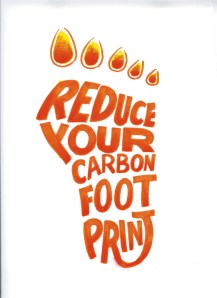
But I know that working in a synthetic chemistry lab that is air-conditioned, living in a house that has central heating and flying back home to India once a year probably means that my carbon emissions lie on the higher end of the spectrum. I do not take pride in this, but the choices that I made with the best intentions for my career have put me in this situation. I am well aware of my situation and I try my best to do something about it:
- I chose to become a pescetarian.
- I campaigned for a meatless day a week.
- I don’t shy away from asking difficult questions.
- I ensure lights are off when they are not needed.
- I turn off taps if the water isn’t being used.
- I turn off the heater in my room when I’m not there.
- I use a bicycle to go anywhere <10 miles.
I do this despite all the wasteful habits that people around me have. I have housemates who have no qualms leaving lights turned on. I have lab-mates who never think twice before mixing chlorinated waste with non-chlorinated waste. I have friends who won’t mind having a hot water bath everyday. I watch students in college halls everyday pile up food in their plates and then throw heaps of it in the bins because they’re ‘so full’. Every time I watch this happening, a little bunny dies inside me.
If I start calculating how much emissions I cut by following the things I listed above, the number will probably be small. Small enough to make me wonder, especially looking at those around me, what difference do I make?
But then I think that I do what I do not just for the absolute contribution that I make to cut emissions, but also because I care about the environment. I believe that it is important to be as morally responsible to your future generations as possible. I know that beliefs that I build today are going to affect my decisions to tomorrow. These decisions may well have large consequences then.
I’ve had a discussion about these little things that I do with many people. Some of them have wondered whether the effort I put in to doing them is worth the impact they make. Of course I believe the effort is worth it, especially if you take into account the effect of one’s belief systems. But actually, the effort put into doing them is much smaller than most people imagine it to be. Most of the little things I do have become a habit. I don’t have to consciously think that I should turn off the lights or turn off the heater, I just do it.
The other argument that I’ve come across is this: the fact that I do little things I give myself the pleasure of believing that I make some difference. In effect, I am more liable to not worry about the larger problem because in my own little world I am doing plenty. Actually, this argument has got the logic all wrong. If I do the little things, I am only more likely to do bigger things (like giving up meat or campaigning). As I said before, doing these little things has become a habit for me and I don’t derive ‘pleasure believing that I make some difference’ every time I turn off the light in an unoccupied room. So it’s definitely not offsetting me from the larger goal.
 Akshat Rathi